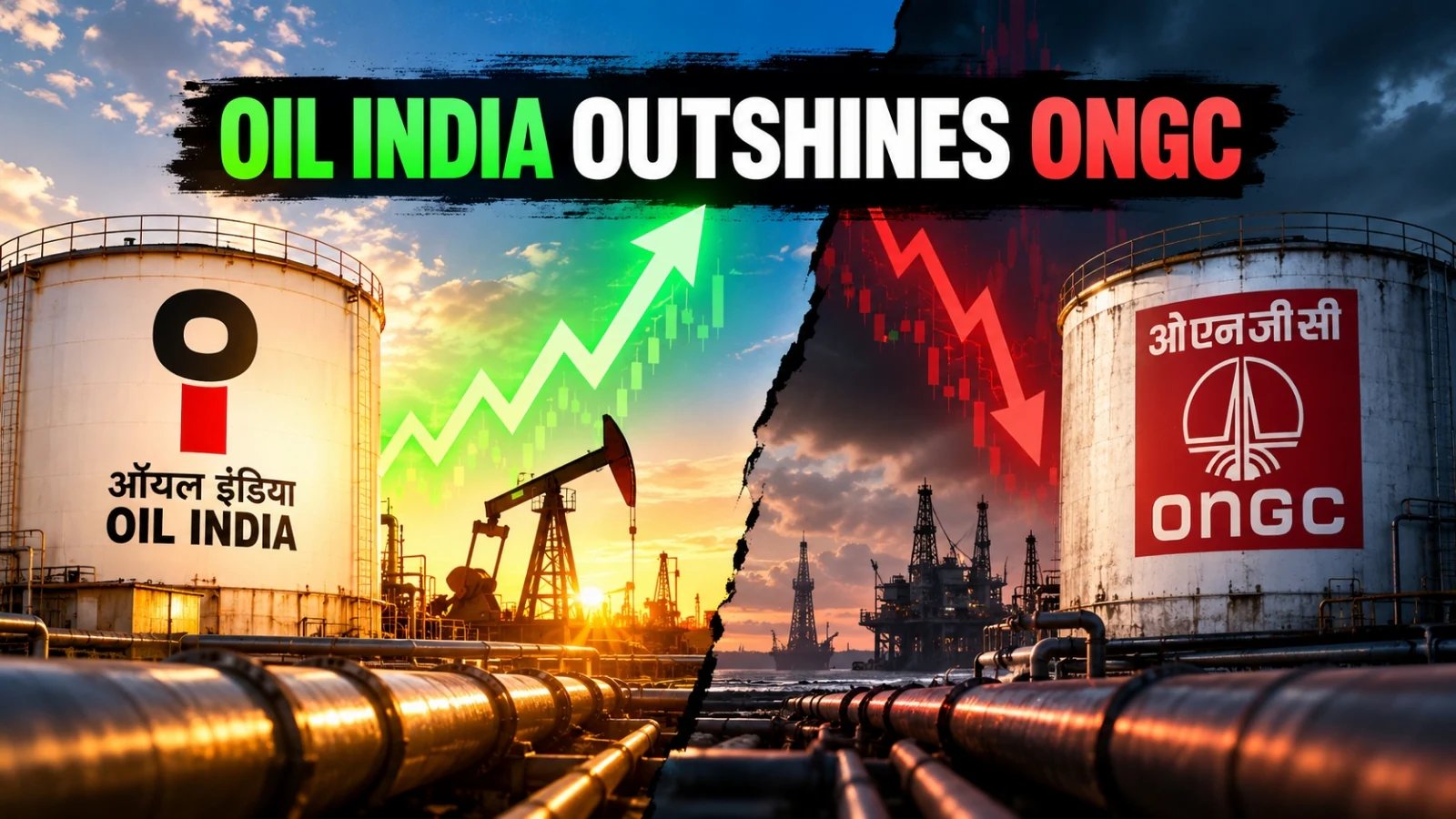
The numbers are hard to ignore. Oil India (NSE: OIL) has ripped higher, gaining 14% over the last three months, while its state-run sibling ONGC (NSE: ONGC) slid 4% in the same window. Since February 28, the divergence is stark: Oil India is down just 1%, whereas ONGC has shed 16%. Kotak Institutional Equities flagged this on September 21, calling the valuation gap "difficult to justify." The market is currently paying a massive premium for Oil India—7.7x one-year forward P/E—compared to a mere 3.4x for ONGC’s standalone operations.
Why is the money moving? Kotak points to a structural shift in fund flows. Mid-cap and small-cap mutual funds captured 32% and 42% of equity-oriented inflows in the eight months through August, respectively. Oil India benefits from this mid-cap preference, while ONGC, a large-cap, has seen low mobilisation. The weighted-average net asset value of mid-cap funds crossed its September 2024 peak in May 2026, fueling the rally in names like OIL. This flow dynamic, not fundamental superiority, is driving the disconnect.
Let’s look at the operation. Both companies sell crude at import-parity-linked prices and gas at administered rates. Yet, Kotak expects Oil India to deliver stronger volume growth in FY27, with sales rising 13.8% from 5.7 million tonnes of oil equivalent (mtoe) to 6.5 mtoe. ONGC’s growth is modest, up just 2.4% from 41 mtoe to 42 mtoe. This near-term volume edge gives Oil India a slight earnings boost, but Kotak notes both companies are riding the same wave of higher global crude prices due to the West Asia conflict.
Long-term, the tables turn. ONGC holds a decisive advantage in reserves. Its oil reserves-to-production ratio is 13.6x, compared to 8.3x for Oil India. For gas, ONGC sits at 13.3x versus Oil India’s 11.1x. ONGC also converts cash better: its free cash flow to profit after tax is 105%, while Oil India’s is 78%. Return on average capital employed stands at 11.2% for ONGC against 6.1% for Oil India in FY26. The market seems to be pricing in weaker terminal value for ONGC’s reserves, a view Kotak explicitly rejects.
The street sees the risk. Bloomberg consensus shows 16 of 23 analysts rate Oil India a "Buy" with a 12-month target of ₹546.09, implying 16% upside from ₹469.90. For ONGC, 22 analysts say "Buy" with a target of ₹293.79, offering nearly 25% upside from ₹235.70. If you believe in the long-term production curve, ONGC looks cheaper. If you chase mid-cap momentum, Oil India remains the play. The decision hinges on whether you trust the flow or the fundamentals.