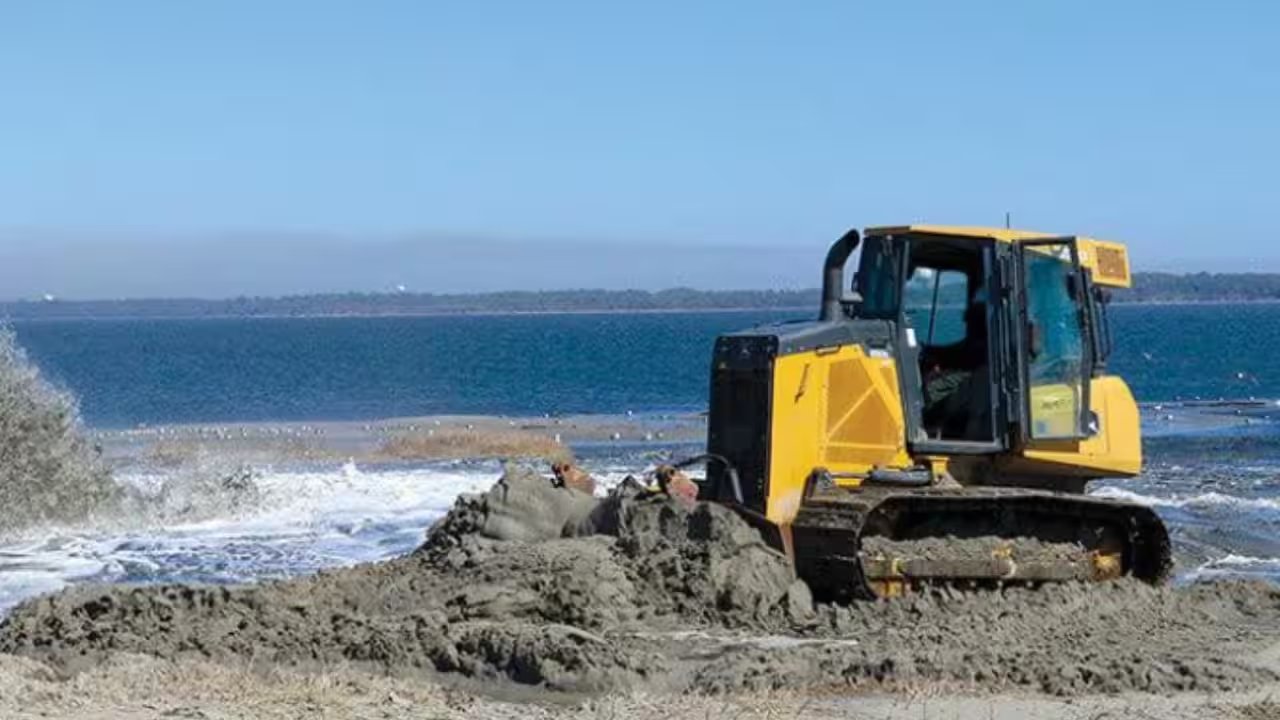
The project, finished in March, saw the US Army Corps of Engineers, Gator Dredging and the North Carolina Wildlife Resources Commission collaborate to repurpose material that would otherwise have been dumped offshore.
The Old House Channel, a vital navigation artery, required regular dredging to keep vessels moving. Instead of sending the sand to the sea, engineers piped it to Wells Island, a former nesting site that had been shrinking.
Temporary berms held the dredged material while bulldozers smoothed it into a wide, sandy expanse. The result was an open habitat suitable for wading birds that had lost land to erosion.
The island was one of 48 coastal sites studied by NCWRC. The analysis found 19 had no emergent habitat, 10 had lost 50–95% of their area and 19 had eroded up to 25%.
Within a week of the work, a team from NCWRC spotted a pair of American Oystercatchers and a group of terns exploring the new shore. Local fisherman, who had watched the island erode for years, said the sight gave him hope.
The restoration demonstrates how navigation maintenance can double as conservation. The NCWRC will monitor the island’s habitat through 2026, checking bird usage and erosion rates.