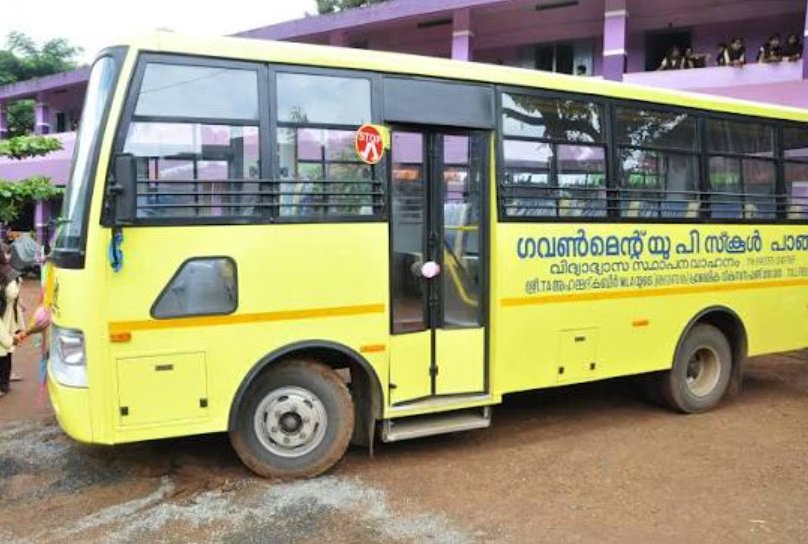
If you think a GPS tracker on a school bus guarantees your kid’s safety, the new data from Intangles might make you rethink that. In the first half of 2026, researchers tracked 598 buses across 61 cities and logged more than 75,000 distinct driving safety events. It’s a staggering number for a sector that is supposed to be the most cautious on the road. The study, titled “Interesting Angles – Episode 2: Beyond the Rulebook,” breaks down four specific behaviors: speeding, hard braking, harsh acceleration, and coasting. The takeaway? Compliance boxes are being ticked, but the driving isn’t getting safer.
Hard braking was the biggest culprit, accounting for 81.5% of all flagged alerts. On average, each bus in the sample logged 126 flagged events over six months, with around 103 of those being hard braking incidents. There’s a distinct pattern here. Intangles dubbed it the “Bell Effect.” Between 7 am and 8 am, hard braking spikes. It’s the morning rush. Drivers are fighting traffic, tight schedules, and the pressure to get kids to class before the bell rings. The report notes these factors likely contribute, though it stops short of claiming a direct causal link. It’s a human factor issue, not just a technical one.
Speeding is the other major concern. One in five buses recorded at least one speeding incident. In Delhi, the figure jumps to four in five. Even more alarming, 116 buses were flagged for speeding every two to three days. During these incidents, the average speed hit around 79 km/h. That’s double the prescribed limit of 40 km/h for school zones. It’s not a one-off lapse. It’s a routine. Anup Patil, CEO of Intangles, pointed out that speed governors and GPS tracking don’t tell you how a driver is actually handling the wheel. They tell you where the bus is, not how it’s moving.
The data also shows regional disparities. Maharashtra recorded a 30% share of harsh acceleration events, compared to the national average of 5%. Within that state, Pune led with 42%, while Mumbai sat at 15%. This suggests that local driving culture and road conditions play a bigger role than a one-size-fits-all national rulebook. City buses, for comparison, showed lower shares of harsh acceleration (1.8% vs 4.6%) and hard braking (38.9% vs 81.5%) alerts, indicating that school bus operations might be under unique pressure.
This isn’t just about blaming drivers. It’s about visibility. Vikram Melapudi, Chief AI Scientist at Intangles, argues that schools and safety officers need better tools to see these patterns in real-time. The industry is moving toward Advanced Driver Assistance Systems (ADAS) for new buses between 2026 and 2028, and states like Maharashtra have tightened rules with seat belts, CCTV, and panic buttons. But for the existing fleet, the gap between regulation and reality is wide. The study suggests that structured driver coaching and trip data analysis could close that gap. Until then, a GPS ping isn’t enough to keep kids safe.