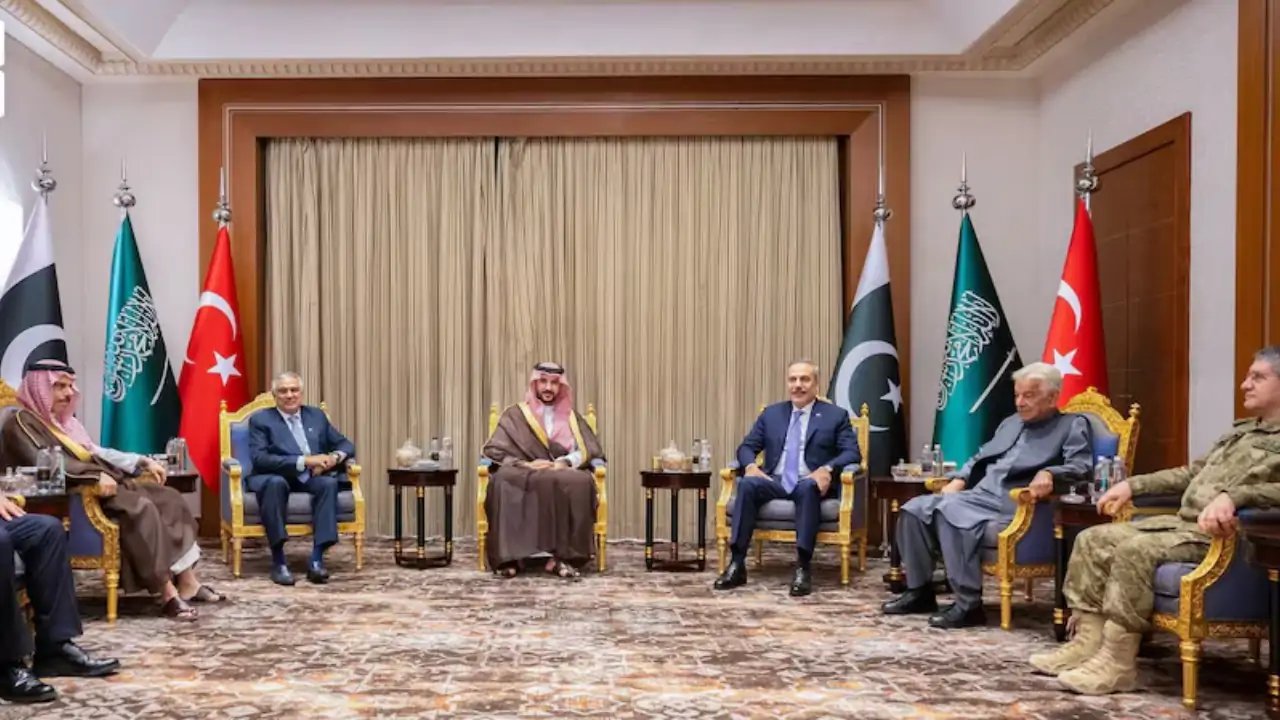
Four nations—Turkey, Pakistan, Qatar, and Indonesia—formally inked the Badr Memorandum of Understanding in Doha on Wednesday. The agreement marks a pivot from transactional arms deals to structural industrial cooperation. It mandates joint development in military manufacturing, technical training, and research and development. The Turkish Defence Ministry declared the pact a foundation for "strategic cooperation," emphasizing that it goes beyond off-the-shelf procurement. Haluk Gorgun, chairman of Turkey's Defence Industry Presidency, stated the initiative aims to transform complementary capabilities into concrete projects. He stressed the value of partnerships that build domestic human capital and industrial infrastructure rather than relying solely on foreign imports.
This accord sits alongside Turkey’s existing security commitments. In August, Ankara signed a mutual defence pact with nuclear-armed Pakistan and Saudi Arabia, establishing a collective security clause where an attack on one is an attack on all. Turkey maintains a military base in Qatar, a posture solidified amid regional tensions involving Iran. With NATO’s second-largest army, Turkey is leveraging its robust defence industry to cement influence in the Gulf and South Asia. The Badr MoU specifically targets the economic and technical dimensions of defence, seeking to integrate the unique production strengths of each member state.
The strategic implications are immediate. By binding these four diverse economies—from Southeast Asia to the Middle East—into a single industrial ecosystem, the pact creates a parallel supply chain for military technology. This reduces dependency on Western platforms and fosters a self-sustaining defence market. For Pakistan and Indonesia, access to Turkish technology offers a pathway to modernize their forces without incurring the high costs of Western licensing fees. For Qatar, it ensures a diversified defence portfolio beyond its traditional reliance on US and French systems.
Analysts watch how this alignment interacts with existing geopolitical fault lines. The pact does not explicitly name adversaries but operates in a region fraught with conflict. The next phase involves translating the MoU’s broad language into specific joint ventures. Officials in Ankara and Doha are expected to announce the first collaborative projects within months, focusing on areas where all four nations have overlapping needs, such as drone technology and cyber defence capabilities.