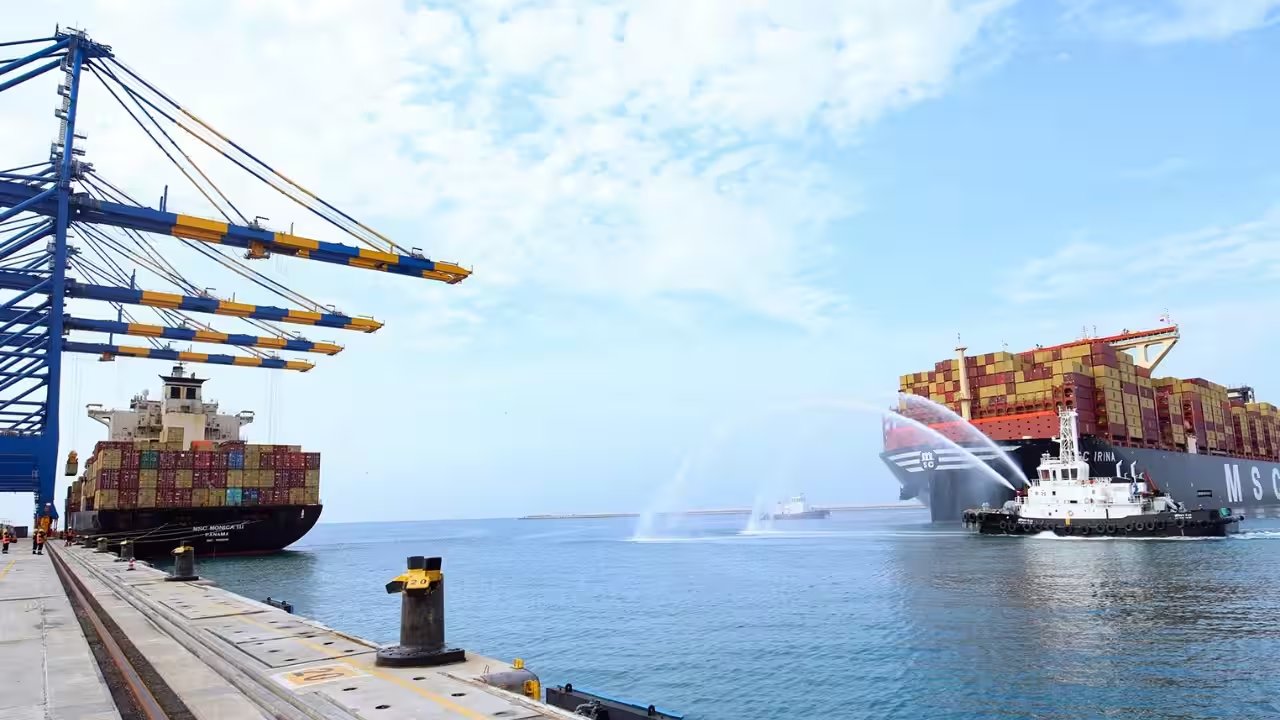
NEW DELHI — The central government is stepping in to break a crippling customs standoff that has trapped tens of millions of dollars worth of bulk Scotch whisky at Indian container terminals.
Speaking in New Delhi, Commerce Secretary Rajesh Agrawal confirmed that the Department of Revenue is working actively to untangle product classification disputes that stalled the consignments. The logjam will break within days, he signaled.
Port authorities clamped down after customs inspectors contested whether bulk liquor imports qualify for preferential tariff concessions under the bilateral trade pact sealed between New Delhi and London. That deal went live in July.
"Department of Revenue is working to resolve it," Agrawal stated. "Classification is among the key issues. It should be resolved very soon... We are very hopeful that it would be resolved in some days."
The friction follows urgent closed-door sessions between senior commerce and finance ministry officials and top delegations from the International Spirits and Wine Association of India (ISWAI) and the Confederation of Indian Alcoholic Beverage Companies (CIABC). Industry heads warned that container terminals have turned into bottlenecks, threatening supply lines across the country.
Cash is at the core of the fight.
Under the terms of the India-UK trade agreement, India slashed tariffs on imported British whisky from an onerous 150% baseline down to 75%. Importers rushed to book shipments under the lower threshold. But customs enforcement wings pushed back violently.
Customs investigators insist the concessional 75% duty applies strictly to finished consumer stock — bottled, labelled Scotch ready for retail shelves. They argue that concentrated bulk whisky destined for local bottling and compounding does not qualify.
In a confidential directive issued to customs commissioners nationwide on November 4, the Directorate of Revenue Intelligence (DRI) ordered field formations to enforce the full 150% tariff without compromise. Importers, the agency stated, were incorrectly claiming trade pact concessions on unblended liquor.
Preliminary investigation revealed that the imported goods are not finished whisky/brandy/rum as such, but are concentrated/compound preparations which are subjected to further manufacturing.
Directorate of Revenue Intelligence, Official Memorandum
The agency warned field officers that allowing concessional clearance for bulk concentrates carries "large-scale, recurring substantial revenue implications." Importers were reclassified under a separate Harmonised System (HS) code reserved for "compound alcoholic preparations," instantly doubling their tax exposure at the dock.
Big distillers are taking the hit directly.
Pernod Ricard India and Diageo each have more than 40 freight containers stranded at Indian ports, while Bacardi has five containers impounded pending clarity on duty assessments. Other domestic producers caught in the regulatory squeeze include Radico Khaitan and Allied Blenders and Distillers.
Tax authorities escalated the confrontation in recent weeks by searching corporate offices of multiple drinks majors — including Pernod Ricard and Diageo — while hauling executives in for formal questioning over their import declarations.
Bulk liquor forms the financial engine of the Indian spirits trade. Roughly 80% of all Scotch whisky imported into India arrives in large industrial vats rather than bottles. Distillers mix these imported malts in precise ratios with neutral grain spirits to produce popular Indian-Made Foreign Liquor (IMFL) brands, sustaining high-margin domestic portfolios.
| :--- | :--- | :--- | :--- | :--- | :--- | :--- | :--- | :--- |
|---|---|---|---|---|---|---|---|---|
| Standard Alcoholic Duty | 150% | Applied by DRI to compound preparations | ||||||
| 2024 Scotch Exports to India | $335 Million | Annual bilateral export baseline | ||||||
| Projected Trade Increase | $1.34 Billion | SWA 5-year growth estimate under pact | ||||||
The International Spirits and Wines Association of India cautioned that the DRI's hardline reclassification drive risks neutralizing the core commercial concessions hammered out during trade negotiations between New Delhi and London.
A formal revenue notification reclassifying the eligible HS codes or affirming the 75% rate for industrial bulk spirits is expected from the Department of Revenue before the week closes.
| Bulk Import Volume Share |
| ~80% |
| Used for blending into domestic IMFL |
| Stranded Containers (Major Distillers) | 85+ Units | Pernod Ricard (40+), Diageo (40+), Bacardi (5) |