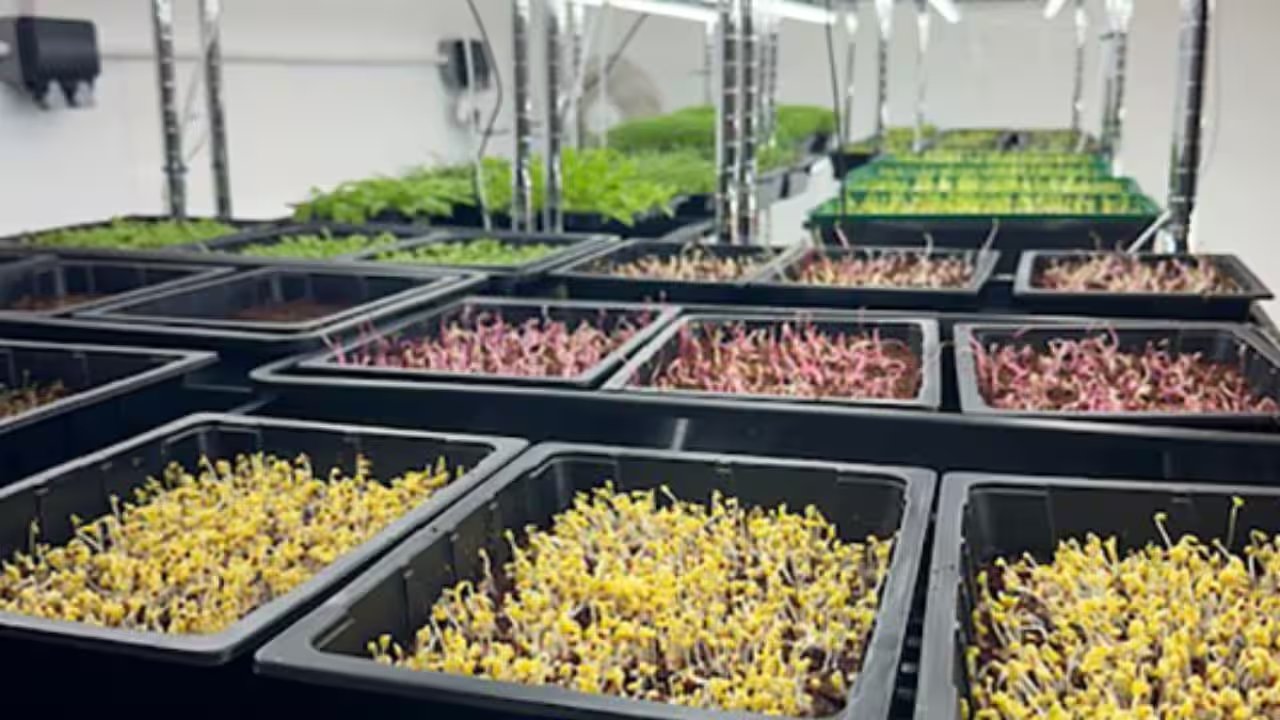
CEREDIGION — Toni and Alex Borella launched an indoor vertical farm on less than £2,000, turning it profitable in 90 days.
The couple founded Green Up Farm in Ceredigion in 2021, betting on hydroponics after tracking the commercial explosion of microgreens across the United States. That initial outlay covered only the essentials: metal utility shelves, seed batches, and basic propagation trays. No external venture funds backed the project. Within twelve weeks, the operation covered its overhead and pushed into the black.
The venture began taking shape after the couple quit London in 2019, trading twenty years of city living for coastal Pembrokeshire, a region Toni remembered from childhood visits. When they decided to cultivate micro herbs commercially, they bypassed costly real estate, instead building out a compact vertical hydroponic footprint that maximized square footage indoors.
Commercial breakthrough arrived through a single restaurant kitchen in Cardigan.
Alex was working at Crwst, a local hospitality business, when Toni brought culinary samples directly to the kitchen brigade. She asked the chefs what they needed. Their answer transformed the farm’s business model instantly: they wanted the crops alive.
Standard cut microgreens deteriorate rapidly in commercial chillers, shedding moisture, texture, and flavor within days. Green Up Farm scrapped cut harvests entirely. By delivering living root systems directly to kitchens, the Borellas eliminated early spoilage and locked in premium wholesale pricing. Most competitors refused to ship live trays due to logistical friction. Green Up Farm made it their core commercial moat.
Today, the farm supplies mid- and high-end establishments across West Wales. Its regular delivery roster includes The Nags Head in Abercych, alongside Cardigan institutions Yr Hen Printworks and Boys and Girls. Beyond commercial kitchens, the business supplies direct-to-consumer harvest boxes tailored for compact residential kitchens.
Produce which was not sold live had a limited shelf life and could lose quality.
Toni Borella, Co — Owner, Green Up Farm
The facility cultivates more than 30 distinct varieties of microgreens and micro herbs. Demand moves fast. One week commercial kitchens order coriander; the next, viral social media trends spark sudden runs on bronze fennel. Pea shoots, nasturtium, and coriander form the core baseline volume, while the founders trial new flavor profiles before rolling them out to commercial menus.
| Operational Parameter | Business Specification |
|---|---|
| Founding Year | 2021 |
| Initial Capital Expenditure | Under £2,000 (shelving, seeds, trays) |
| Time to Profitability | 3 months |
| Production Method | Indoor vertical hydroponics |
| Catalog Breadth | 30+ microgreen and micro-herb varieties |
| Anchor Commercial Clients | Crwst, The Nags Head, Yr Hen Printworks, Boys and Girls |
Market Context: High-end hospitality operators increasingly demand ultra-local supply chains that reduce refrigerated transit times. By cultivating live herbs within regional delivery radii, micro-hydroponic operators insulate themselves against seasonal wholesale price shocks while commanding higher margins per square foot than traditional open-field horticulture.
Waste management at the Ceredigion site operates on a closed loop. The business generates solely cardboard commercial waste, bypassing conventional municipal bins. All post-harvest organic matter travels directly to a neighborhood community garden as soil amendment.
The farm also runs a deposit-and-return system for its delivery containers. Customers surrender used packaging upon receiving fresh deliveries; the farm cleans, sanitizes, and recirculates the vessels.
To scale that infrastructure without increasing its ecological footprint, Green Up Farm partnered with Swansea University’s circular-economy team under the ARCS initiative. University researchers are currently auditing the farm’s material flows and evaluating the introduction of recycled PET (r-PET) trays.
The next phase will focus on testing the mechanical durability and lifecycle emissions of those r-PET prototypes against existing packaging before the farm rolls them out to regional hospitality clients.
| Research Partner |
| Swansea University (ARCS team) |