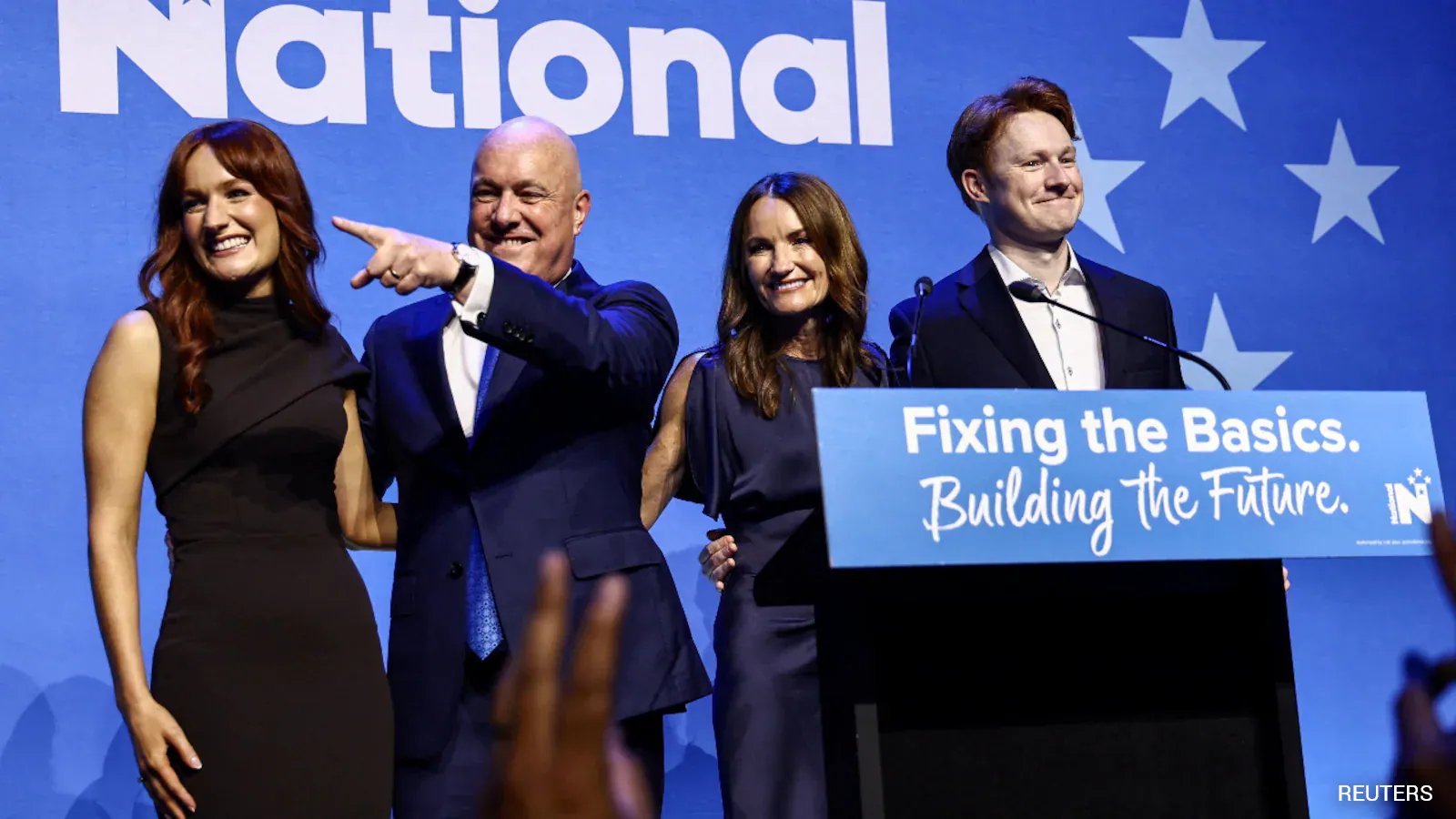
Prime Minister Christopher Luxon's governing coalition emerged from Saturday's general election with a precarious 67-seat grip on New Zealand's 131-seat parliament, leaving power dangling on the count of hundreds of thousands of uncounted ballots. The Electoral Commission certified the provisional lead, but the margin remains paper-thin. A three-seat slip would strip the bloc of its majority.
National captured 42 seats, the right-wing ACT Party took 13, and nationalist New Zealand First locked in 12. Together, the trio squeaked past the 66-seat threshold required to govern. Yet the arithmetic is far from settled. The vote was brutal.
| Parliamentary Party | Provisional Seats (131 Total) | Coalition Role |
|---|---|---|
| National Party | 42 | Senior Governing Partner |
| ACT Party | 13 | Coalition Partner |
| New Zealand First | 12 | Coalition Partner |
| Opposition & Unaligned Parties | 64 | Opposition / Crossbench |
About 14% of the total vote—399,365 ballots—remains sealed in ballot boxes. These special votes include overseas ballots and electors voting outside their home constituencies, a cohort that has traditionally leaned left. If historical trends hold, these ballots will shave seats from the governing bloc and hand gains to the Labour Party, the Green Party, and Te Pati Maori. Labour remains the largest opposition force in parliament.
Any erosion of the current majority could elevate the centrist Opportunity Party into a kingmaker role. Entering parliament for the first time on a platform of evidence-based policy, the party has expressed willingness to negotiate terms. Luxon previously ruled out partnering with the newcomer. Tight math may force a rethink.
Both Luxon and Labour leader Chris Hipkins refused to open coalition bargaining until the Electoral Commission delivers the final tally on November 27. Hipkins stated his goal is to establish a functional government before Christmas. Under New Zealand law, lawmakers must convene parliament on or before January 14.
Until the final count lands, the National-led coalition functions strictly as a caretaker administration. The caretaker status freezes major executive initiatives, barring ministers from making significant economic or constitutional commitments without consulting the incoming leadership. The country now enters a four-week political standstill while electoral officials tally the decisive remaining ballots.