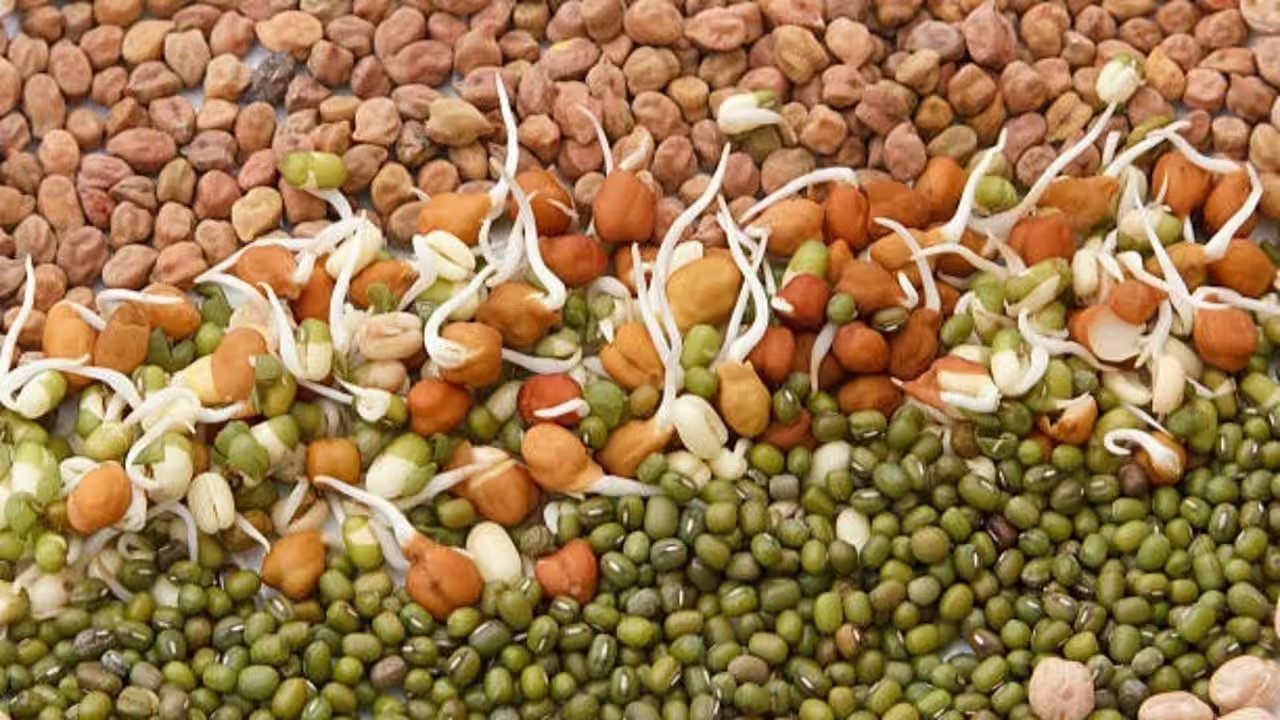
Winter air stalls seed germination overnight. Drop whole green moong or brown chana into cold tap water in December, and you often end up with hard, sullen legumes that turn slimy or take five full days to throw a single tail.
The seeds are fine. The cold is the culprit.
Moong and chana demand steady warmth, measured moisture, and clean airflow to break dormancy. With a few deliberate adjustments to water temperature and resting locations, your kitchen counter will produce crisp, protein-rich shoots all through the cold months.
Quality determines your strike rate. Sort through whole, plump moong and chana, discarding broken skins, split halves, and debris. Never sprout moong and chana together in the same bowl. Chana has a thick coat, demands far more soaking time, and germinates at a much slower rate than delicate moong.
Cold tap water slows seed rehydration to a crawl. Instead, submerge the seeds in lukewarm water—pleasantly warm to the wrist, never scalding.
Soak whole moong for 8 hours. Give chana a full 10 to 12 hours, ideally overnight. When fully hydrated, the seeds will swell to roughly double their original dry volume. If the centers still feel rigid and unyielding after the timer buzzes, let them sit in warm water for another hour before tipping them into a strainer.
| Legume Type | Lukewarm Soak Time | Expected Winter Germination Window | Target Sprout Length |
|---|---|---|---|
| Whole Green Moong | 8 Hours | 24 to 36 Hours | 0.25 to 0.50 Inches |
| Whole Brown Chana | 10 to 12 Hours | 48 to 72 Hours | 0.25 to 0.50 Inches |
Drain the legumes completely. Residual pooling water is the fastest route to rot, breeding sour odours and white foam within hours.
Tip the drained seeds into a clean, damp cotton or muslin cloth. Tie the bundle loosely so air circulates around the seeds, then set the parcel inside a colander or perforated container. Cover the top with a plate or a dry cloth to trap internal heat. Never lock unsprouted seeds into airtight plastic containers; they need oxygen to respire.
Now find the warmest pocket in your house:
The top of the refrigerator: The compressor coils push a steady, gentle heat upward 24 hours a day.
The insulated casserole: Place the tied cloth inside a pre-warmed roti casserole and latch the lid shut.
The switched-off oven: Rest the colander inside an unheated oven with only the interior incandescent light switched on.
A high kitchen shelf: Hot air rises, making shelves near your cooking range noticeably warmer than low counters.
Keep seeds far away from cold drafts and sunny windowsills. A glass pane feels warm at noon, but freezing night temperatures shock the seeds and halt sprout growth instantly.
Winter sprouting is not a set-and-forget task. Rinse the bundles twice daily—once in the morning and once at sundown—using fresh lukewarm water. Drain every spare drop through the weave before setting the bundle back into its warm nook. This step flushes away surface bacteria and maintains the humidity seeds need to push out tails.
Under these conditions, green moong pushes out firm tails within 24 to 36 hours. Stubborn chana takes between 48 to 72 hours.
They are ready to harvest when pale white tails stretch between a quarter-inch and a half-inch long. Give them a final rinse, let them dry on a kitchen towel for ten minutes, and pack them into a clean, airtight glass container. Kept in the refrigerator, they stay crisp for two to three days.
Trust your senses. If a batch turns grey, produces cloudy slime, or smells sour and fermented, throw it out immediately. For children, seniors, and pregnant women, always steam or sauté fresh sprouts with a pinch of salt and turmeric for three minutes before serving to ensure total food safety.