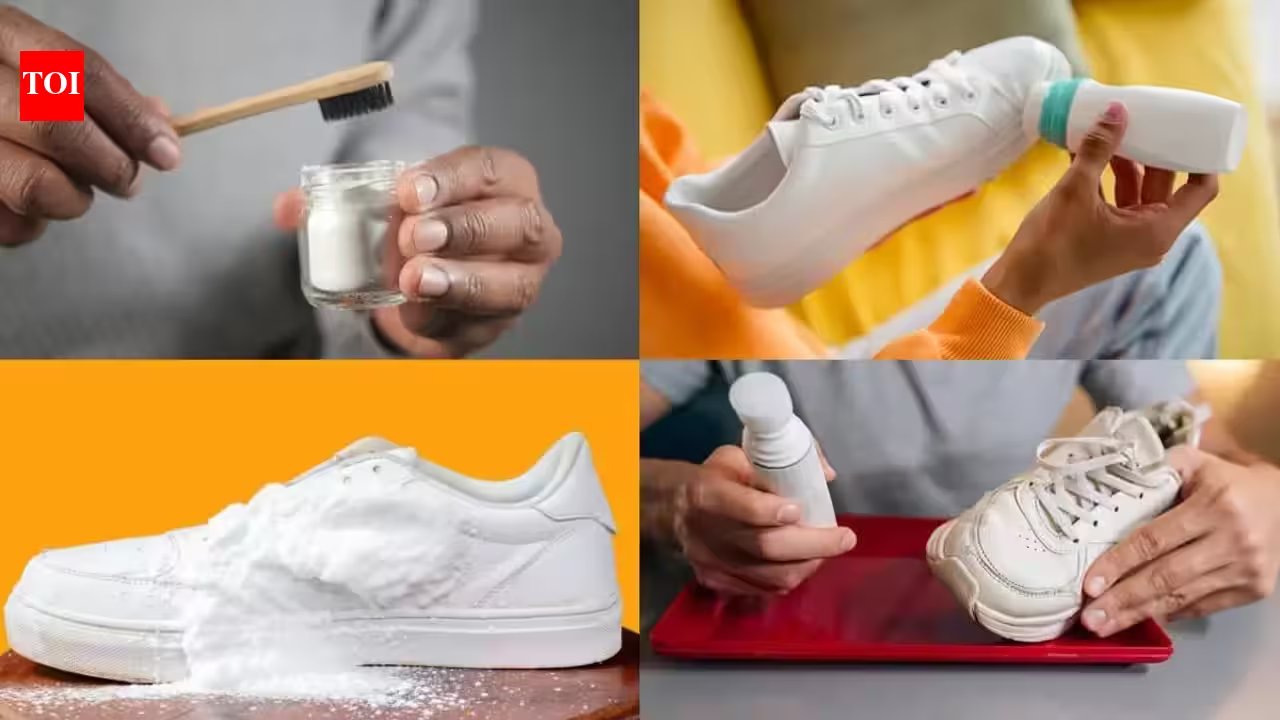
Sprinkle one to three tablespoons of kitchen baking soda into your sneakers tonight, and the lingering funk disappears by morning. The chemistry is remarkably direct. Sweaty insoles trap heat, moisture, and residue—the exact breeding ground skin bacteria devour to produce foul, acidic odours. Cheap pantry sodium bicarbonate halts that process in its tracks. It draws out moisture, neutralises organic acids, and resets the footwear interior without masking scents or coating fabrics in synthetic perfume oils.
Yet timing matters. Baking soda functions strictly as a dry deodoriser, not a germicide or deep detergent. It pulls humidity from dry shoes, but dumping it into sweat-soaked, soggy canvas creates a cakey sludge that ruins internal linings. If you just finished a grueling workout, let the shoes air-dry completely before treating them.
Take your dry sneakers and measure one to three tablespoons of baking soda per shoe, scaling up for larger running kicks or stubborn stench. Tilt and shake the shoe back and forth. You want the white powder settling across the insole, down through the heel cup, and deep into the toe box. Let it sit untouched for at least eight hours—or a full 24 hours if the pair survived a marathon session.
In the morning, turn the sneakers upside down over a waste bin and tap the outsoles firmly. Use a handheld vacuum nozzle to lift out any residual dust left clinging to the tongue lining. That simple step prevents white chalk marks on dark socks when you lace up next.
| Application Parameter | Standard Treatment | Severe Odour Treatment | Leather Footwear |
|---|---|---|---|
| Powder Volume | 1 to 2 tablespoons per shoe | Up to 3 tablespoons per shoe | 2 tablespoons (in sachet only) |
| Dwell Time | 8 hours (overnight) | 24 continuous hours | 8 to 12 hours |
| Frequency | Once weekly (sweaty pairs) | Daily (sockless wearers) | Repeat every 1 to 2 weeks |
| Application Method | Direct powder spread | Direct powder spread | Sachet (coffee filter / sock) |
Some shoes demand gentler handling. Direct white powder easily stains light fabrics, clings to knit mesh, and bleeds natural oils out of expensive leather over prolonged contact. Make a mess-free sachet instead. Take an old thin sock, a small swatch of cotton cloth, or an unbleached coffee filter, scoop two tablespoons of baking soda inside, and seal the neck tight with a sturdy rubber band. Drop one pouch into each shoe before going to bed.
The sachet absorbs sour smells cleanly without spilling a single grain on the footbed. You can reuse the same pouch for several consecutive days, replenishing the powder every couple of weeks. If you prefer a crisp scent, dab two drops of natural essential oil onto the fabric exterior before sliding it into the heel.
Rotation remains your first line of defense. Give your primary workout sneakers 24 to 48 hours of rest between outings so ambient air naturally strips out dampness. If you routinely wear slip-ons without socks, deploy baking soda pouches daily to match the higher sweat load. If months of grime overpower the powder, remove the insoles entirely, wash the shoe exterior in lukewarm water as allowed by the care label, and set everything to air-dry in open shade away from direct heat.
Know when pantry fixes reach their limit. Baking soda deodorises dead textiles; it cannot cure foot infections, plantar issues, or skin rashes. If persistent shoe odour arrives alongside scaling skin, redness, or burning sores, skip the kitchen cabinet and consult a certified podiatrist or physician immediately.