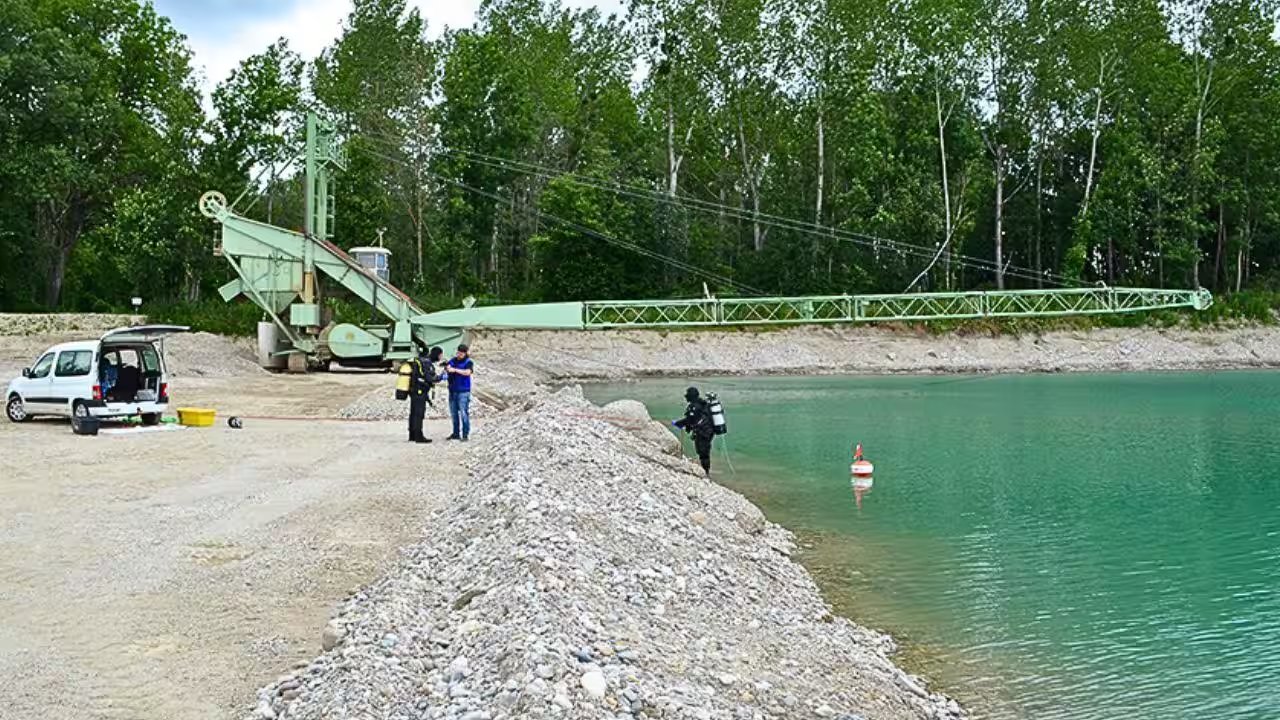
During gravel extraction at Deinham, workers at a site in Upper Austria uncovered 540 iron fragments, including 500 double‑pointed bars, from the silt beneath the Danube's former bed.
Radiocarbon analysis of three bars produced two probability peaks, one in the second half of the fourth century BC and another stretching from the late third to the second century BC.
The bars average 285 mm in length and 2,070 g in weight, ranging from 959 g to 3,824 g, and are classified as a new BLD6 variant of forged semi‑products rather than cast ingots.
Although the gravel work destroyed the original context, the uniform composition suggests the cargo was not a ritual deposit; the most plausible scenario is river transport in a Late Iron Age logboat that could carry over a tonne of goods.
With an estimated total weight of 1,035 kg, the Deinham assemblage is the largest known Iron Age iron cargo in Europe, implying that one tonne of ore could have yielded about 8,000 nails or 500 swords, reshaping perceptions of trade networks along the Danube.
The assemblage was donated to Oberösterreichische Landes-Kultur GmbH in Linz and is now in permanent storage, while the study, published by Cambridge University Press, urges further Danube surveys to locate the vessel that once carried the cargo.