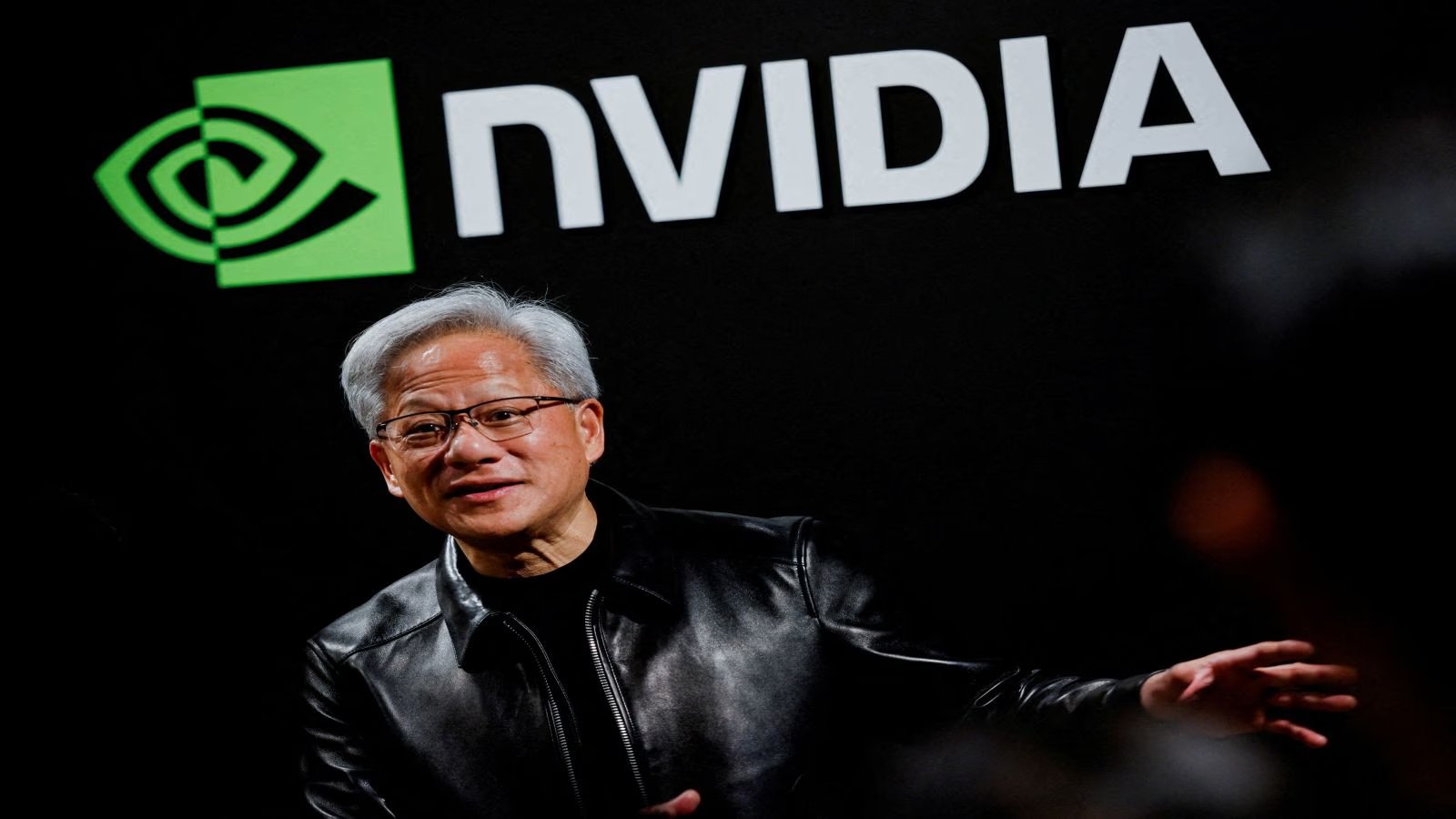
Wall Street delivered a swift, merciless verdict.
Nvidia shed approximately $430 billion in market value across two trading sessions, sliding 9.5% on Nasdaq as a widening geopolitical scandal engulfed 63-year-old co-founder and chief executive Jensen Huang. The selloff erased months of hard-won momentum for the bellwether stock, which had traded essentially flat year-to-date while investors questioned returns on corporate artificial intelligence spending. Allegations that Huang's romantic relationship with an alleged Chinese intelligence operative helped funnel at least $7.5 billion worth of restricted graphics processors to mainland buyers shattered institutional confidence overnight.
The damage arrived fast. Foreign and domestic funds offloaded blocks of shares at the opening bell, pricing in acute governance vulnerabilities at a technology giant that supplies over 80% of the world's advanced computing infrastructure. Huang, who controls an estimated 3.6% equity stake without dual-class voting protection, runs an unusually flat management apparatus where dozens of senior vice presidents report straight to his desk. That structure now exposes the company to singular leadership risk.
| Financial & Operational Metric | Recorded Figure / Status |
|---|---|
| Two-Session Market Value Loss | ~$430 Billion |
| Share Price Decline Since Revelations | 9.5% |
| Estimated Diverted Semiconductor Value | $7.5 Billion |
| High-End Processors Diverted to China | ~240,000 units (H100, H200, A100) |
| Jensen Huang Equity Ownership | ~3.6% (no majority voting control) |
| Independent Lead Investigator Retained | Joon Kim (Wachtell Lipton / Former Acting US Attorney SDNY) |
Political backlash in Washington erupted within hours of the disclosures. Republican Senator Kevin Cramer of the Senate Banking Committee demanded that Nvidia's board strip Huang of his executive duties immediately.
The potential for extortion is so tremendous that something as sensitive as Nvidia chips, I just think he's got to go," Cramer declared.
Democrats mounted an equally aggressive assault. Senate Democratic Leader Chuck Schumer confronted the executive branch over security protocols, insisting Congress must extract an unfiltered accounting of communications between the administration and the semiconductor titan. Schumer demanded instant, airtight statutory curbs on semiconductor exports destined for Beijing.
"He's supposed to protect America, not China, not his friends," Schumer stated, directly challenging presidential handling of suspected commercial espionage in the domestic technology sector.
Executive branch awareness of the relationship stretches back months. Intelligence officials flagged the matter repeatedly, including a briefing delivered by Secretary of State Marco Rubio to President Donald Trump aboard Air Force One en route to China in May. Trump confirmed he questioned Huang directly about whether the businesswoman operated as an asset for Beijing, accepting Huang's assertion that he had "absolutely no idea." A classified intelligence dossier detailing the arrangement was also routed to Commerce Secretary Howard Lutnick.
At the core of the market panic sits a sophisticated distribution conduit operated by Chinese national Alice Huang, also identified in corporate filings as Huang Le. Operating alongside her husband and sister, Alice Huang assembled a multi-jurisdictional web of intermediary entities across Singapore and mainland China designed specifically to bypass American trade embargoes.
When official trade channels for Nvidia's cutting-edge accelerators stalled under federal export controls, Alice Huang tapped her direct pipeline to Nvidia leadership to unlock stalled deliveries. Corporate registries connect her as the controlling shareholder of Singapore-based cloud-computing firm Megaspeed International, an enterprise linked directly to Century Litong—a mainland Chinese outfit that secured preferential Nvidia cloud partner classification.
That priority access allowed the network to siphon roughly 240,000 prohibited processors—including flagship H100, H200, and baseline A100 accelerators—straight onto mainland soil. The diverted computing power landed directly in the data centres of Chinese tech conglomerates Alibaba and Tencent, alongside several sensitive state-backed artificial intelligence research institutions. China's Foreign Ministry dismissed the espionage allegations as completely groundless.
Market Context: The sudden vulnerability of Nvidia's hardware monopoly introduces unprecedented regulatory risk for semiconductor equities. If Washington tightens export compliance or establishes direct oversight over Nvidia's customer validation processes, revenue projections from the Asia-Pacific corridor face severe downward revisions across fiscal 2025 and 2026.
Nvidia's independent board members moved into emergency defense mode, retaining veteran corporate litigator Joon Kim, a partner at Wachtell Lipton and former acting US Attorney for the Southern District of New York. Kim, a seasoned white-collar enforcement specialist, will head an exhaustive internal inquiry examining whether corporate distribution networks or supply allocations were corrupted.
Nvidia stated that its board has found no preliminary evidence that American national security or proprietary architectural trade secrets were breached. Huang has committed to full cooperation with Kim's investigation. Federal counterintelligence agents at the Federal Bureau of Investigation have simultaneously launched an independent probe to establish whether foreign intelligence services systematically targeted the 63-year-old billionaire executive.
Yet the operational routine at Nvidia's Santa Clara headquarters remains uncomfortably suspended between contrition and damage control. Huang offered an apology for personal infidelity during a closed-door executive session on Monday before attempting to pivot back to commercial operations. For institutional investors holding hundreds of billions in capital across the AI supply chain, personal apologies will not suffice. The immediate trajectory of Nvidia equity now rests squarely on the findings of Kim's independent legal audit and pending regulatory action from the Commerce Department.