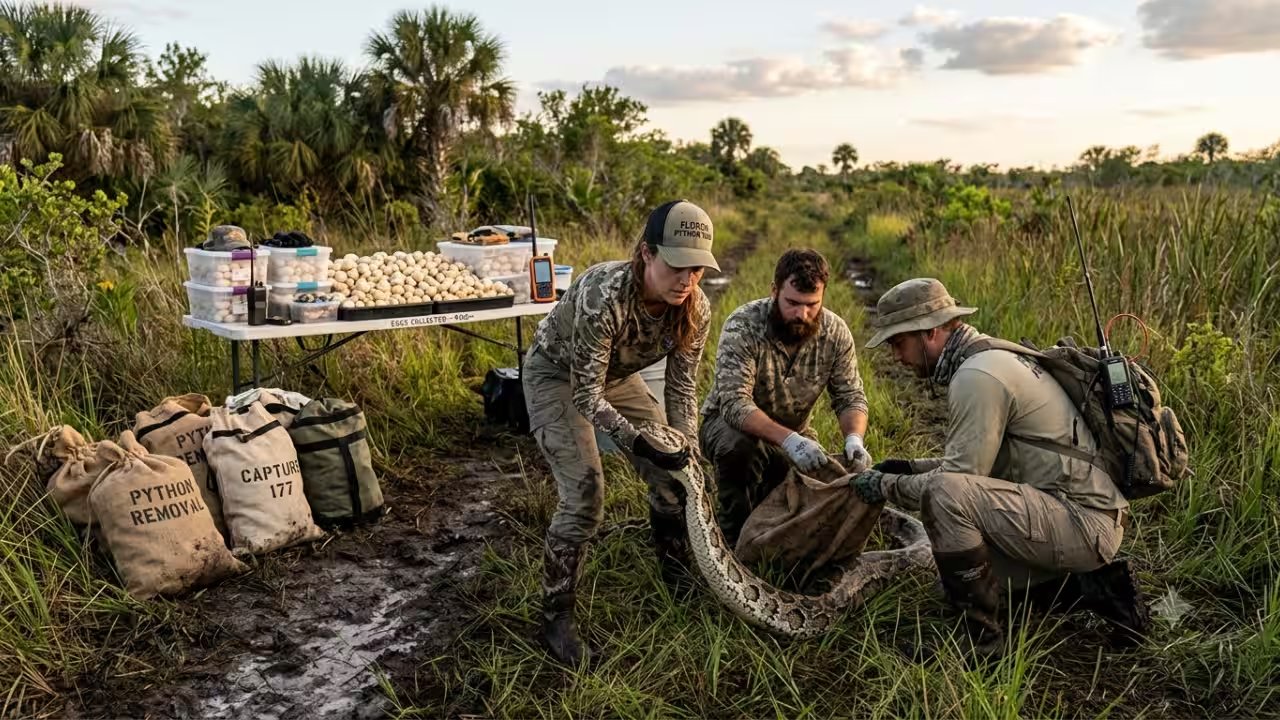
The program, running since 2013, targeted 200 square miles of Collier County, using 40 radio‑tagged male pythons as scouts to locate breeding females. In the six‑month span, 177 snakes were captured, weighing a combined 8,080 pounds, and 4,100 eggs were removed.
The tagged males, like the 17‑foot Snaquan, trail mating pairs and reveal nesting sites that otherwise lie hidden in swampy terrain. Researchers monitor their telemetry signals daily, allowing rapid deployment of teams to remote fields.
Burmese pythons have decimated native fauna; a quarter of the captured females contained remains of white‑tailed deer, and studies link them to declines in alligators and manatees. The Conservancy’s work feeds into 25 peer‑reviewed papers on python behavior and habitat use.
For local farmers, the threat feels immediate. Maria Lopez, who owns a 50‑acre cornfield, reported spotting a 12‑foot python near her irrigation ditch last month, and she now relies on the program to keep her crops safe.
With the season’s data complete, the Conservancy plans to submit a policy brief to the Florida Fish and Wildlife Conservation Commission, urging stricter enforcement of non‑native species laws, and to present its findings at the International Herpetology Conference in June.