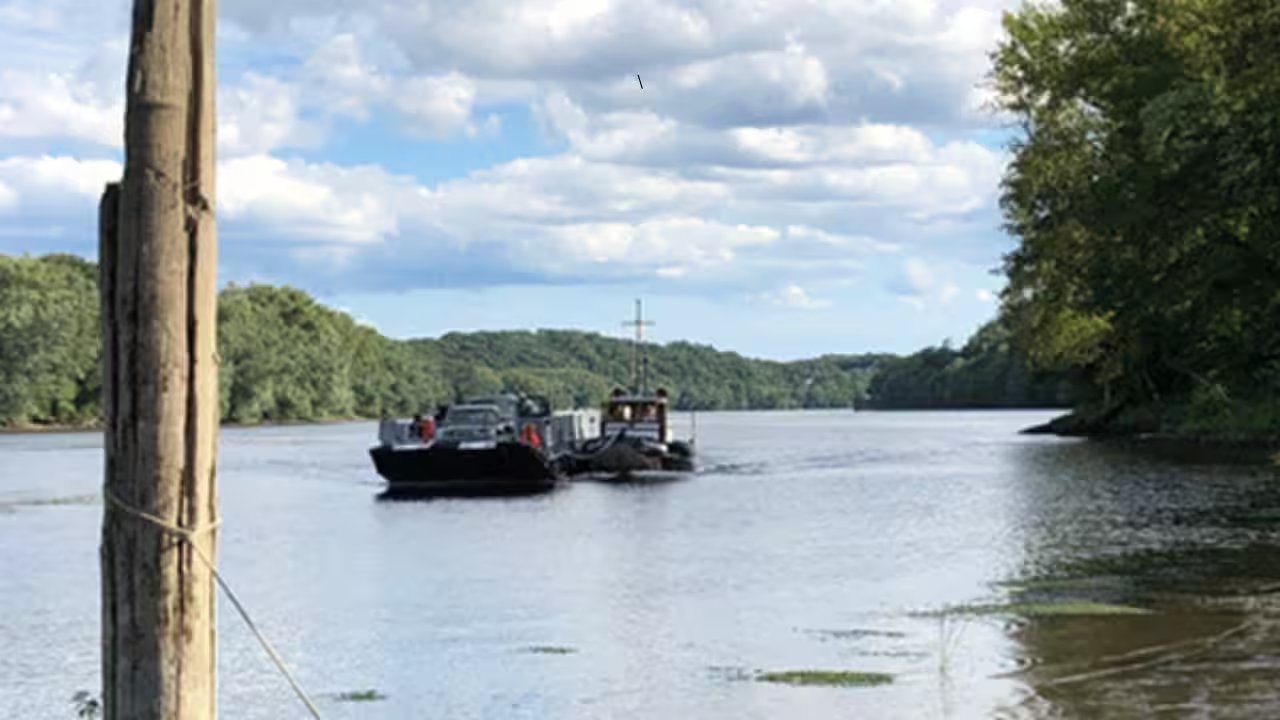
The rocky scarp of the Connecticut River splits Rocky Hill and Glastonbury, and since 1655 a ferry has bridged the gap. The open flatboat Hollister III, towed by the diesel‑powered Cumberland, can haul up to three cars, a truck, or a single passenger vehicle at a time.
CTDOT’s own history notes the service’s evolution: a raft pushed by poles, a horse‑treadmill barge, a steam‑driven vessel, and today a diesel towboat. The shift to steam in 1876 marked the first real modernization, and the current arrangement keeps the crossing running from April through November.
The ferry operates on demand, with no scheduled departures; vehicles queue as they arrive, and fares are $5 on weekdays, $6 on weekends, and $2 for pedestrians and cyclists. Local farmer Manoj Singh said the ferry cuts his commute by eight miles, allowing him to bring produce to market faster.
Cyclists rely on the crossing because the Putnam Bridge on Route 2 blocks a direct path from Hartford to Middletown. CTDOT says the ferry is the only viable link for riders between the two towns, eliminating a 13‑mile gap that would otherwise force long detours.
High water near the landings delayed the opening of the season, prompting CTDOT to announce a May 1 start date. The ferry will be in service until November 30, after which it will close for the winter.