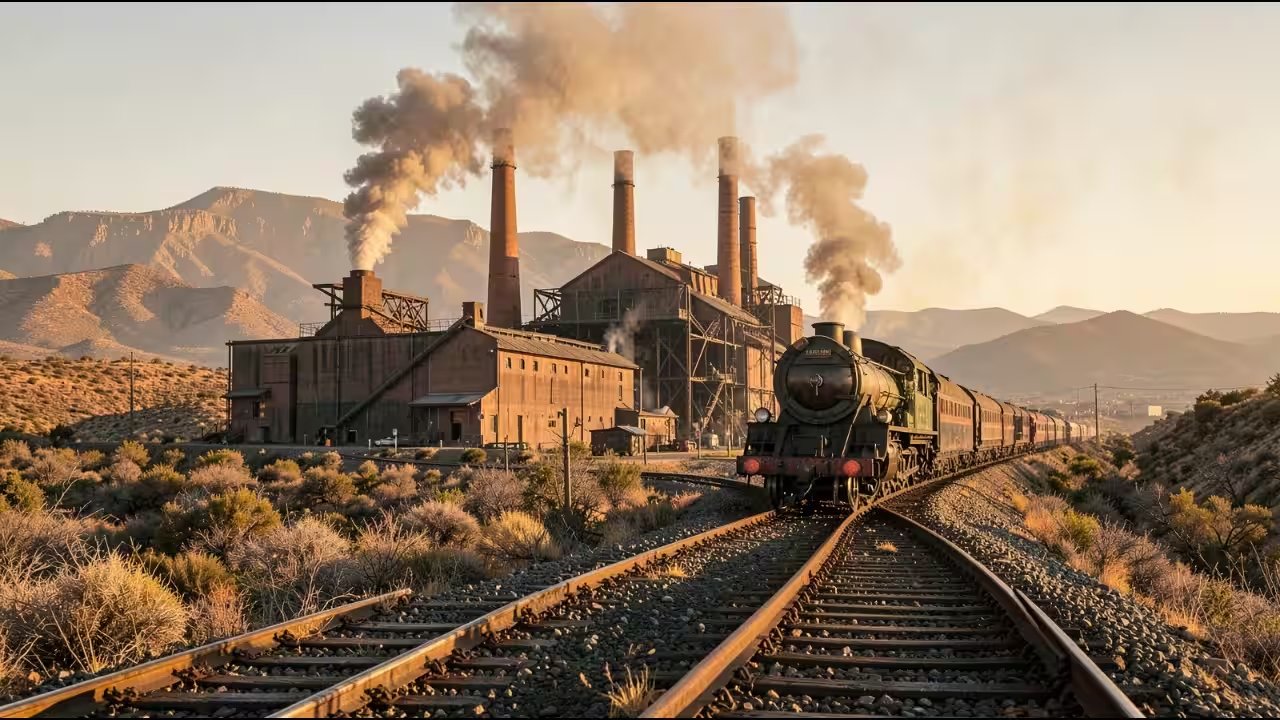
Kuridala’s fate was sealed in December 1918. A cyclone struck the Hampden Smelter and its powerhouse, halting production for nine months. This physical damage compounded a financial crisis that was already brewing. When British wartime price controls on copper ended that year, the smelter company faced immediate liquidity issues. The Commonwealth Bank pulled funds held against copper awaiting export. The company stopped all operations shortly after.
The town had been a bustling hub just two years prior. By 1913, Kuridala housed about 1,500 residents, supported by a hospital, ice works, printery, and school with 280 daily pupils. The settlement, originally surveyed as Hampden in 1910 and briefly Friezland, renamed itself in October 1916 to avoid confusion with other Queensland towns. The name change likely also reflected anti-German sentiment during World War I, according to the Queensland Heritage Register. The railway, which reached the area in 1910, was the artery keeping the copper flowing.
The industry’s death was swift. The smelter processed 69,598 long tons of ore in its final year, 1920. As mining contracted, infrastructure migrated to Mount Isa. The hospital, picture theatre, and courthouse left Kuridala. Population records show the decline sharply: Queensland Places maps a drop to 774 residents by 1921, while the Heritage Register notes 800 by 1924. The operating company offered its assets for sale in 1926, which Mount Elliott purchased. The entity ceased to exist in 1928.
Today, the surviving remains of the Hampden Smelter stand as the primary evidence of this industrial era. The site is listed on the Queensland Heritage Register for its potential to reveal the technology and organizational structure of early 20th-century copper smelting. It serves as a physical record of a community that rose with the ore and vanished when the price dropped.