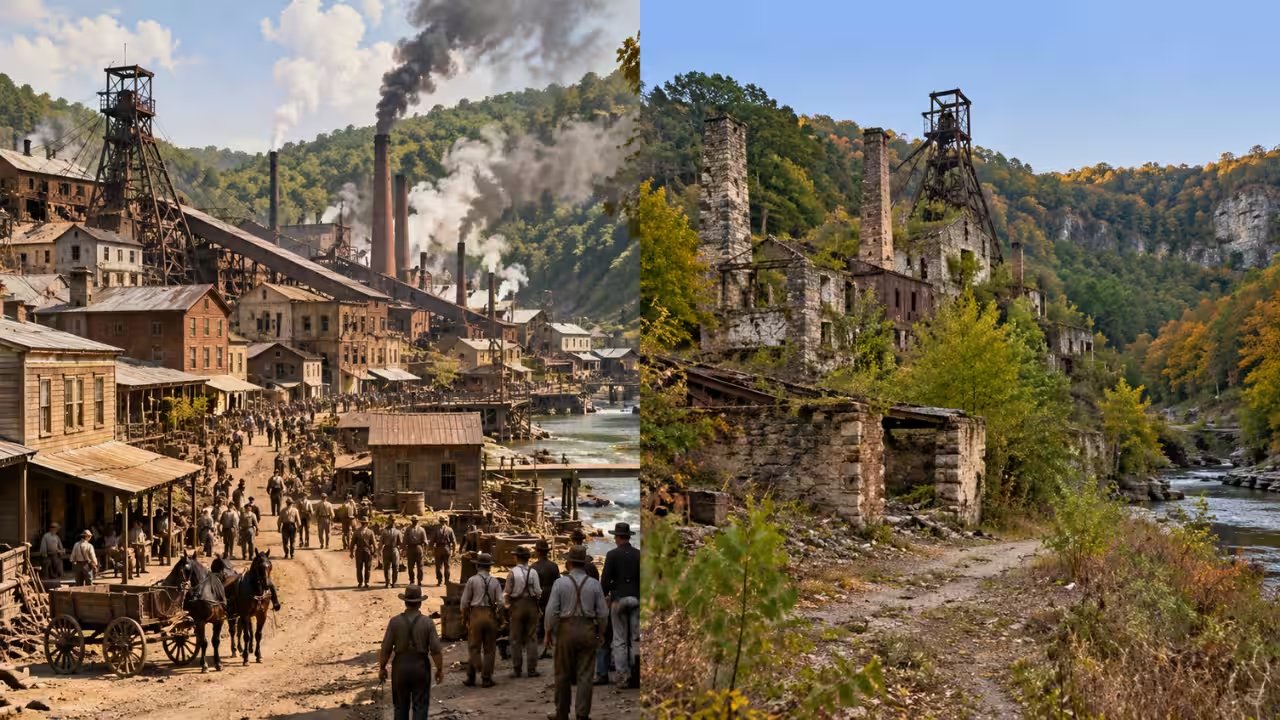
The National Park Service reports that Rush, Arkansas, which peaked at 3,000 residents during the war‑era zinc boom, dwindled to 344 by 1920 after wartime zinc demand collapsed.
Between 1911 and 1918, mining companies poured capital into Rush Mountain, building mills that processed ore for brass used in munitions. According to the NPS, the town grew to include offices, hotels, a courthouse, and a post office.
To move ore, miners erected elevated tramways to haul material to mills, then relied on horse‑and‑mule teams to carry it to the nearest railheads in Summit or Old Buffalo City, since the Buffalo River was too shallow for barges.
Local oral histories recount that families left in haste, abandoning homes and businesses as the mines closed. One resident, a mule driver, told the Arkansas Historical Society that the town felt like a ghost town overnight.
Today, the Rush Historic District preserves a handful of intact structures, including the Taylor‑Medley General Store and the remains of the Morning Star Mill. The National Register of Historic Places listed the district in 1987.
The town's decline marked the end of an era, and the ruins now serve as a reminder of the boom.