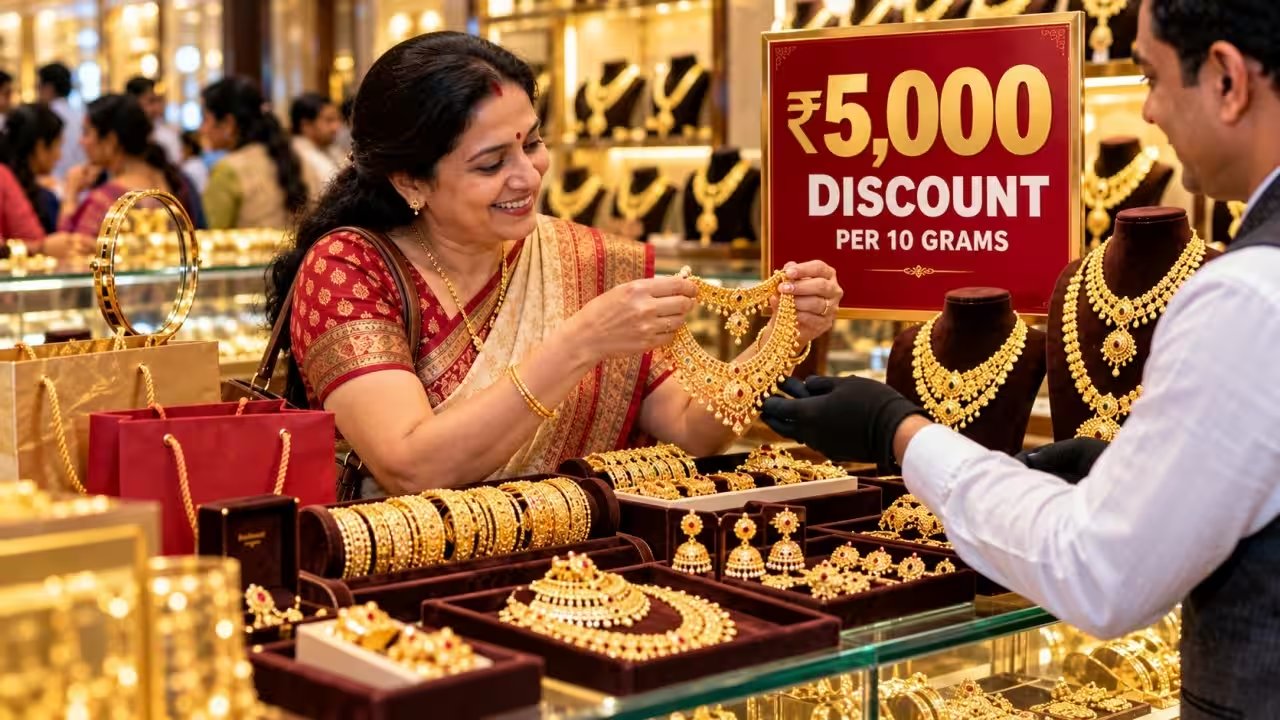
A 55-year-old homemaker in Delhi bought her daughter's wedding jewelry without a receipt, saving Rs 5,000 on every 10 grams. She didn't hesitate. "It was an offer I couldn't refuse," she told Bloomberg. "Gold prices are way too high and we trust the jeweler."
This isn't an isolated incident. It's a growing trend. With import duties jumping from 6% to 15% and another 3% GST added, formal gold prices remain nearly 28% higher than a year ago. Dealers are now offering bulk cash deals at discounts of up to 6% below market rates to avoid tax liabilities. They share those savings directly with buyers.
The economics are simple. Hiren Chandaria, MD of Middle East and Asia operations at Monetary Metals, noted that the higher duty creates a massive incentive for gold to enter outside official channels. Traders are procuring gold at discounts of up to $200 an ounce compared to domestic prices. In contrast, officially imported gold saw discounts averaging just $50 an ounce in September, according to consultancy Metals Focus. The gap is too wide to ignore.
Prime Minister Narendra Modi has already appealed twice in five months for Indians to cut back on purchases to preserve foreign-exchange reserves. Gold imports did fall sharply in August, dropping to less than half the level from a year earlier. But the informal market is reviving just as the wedding and festival season kicks off in mid-October. The trade deficit hit a record $32 billion in July, driven largely by gold costs soaring 32% year-on-year.
The government's duty hike backfired. Instead of killing demand, it pushed it underground. As the festive season ramps up, expect more of these off-the-record transactions. The formal market will struggle to compete with savings that translate into tens of thousands of rupees for a typical wedding trousseau.