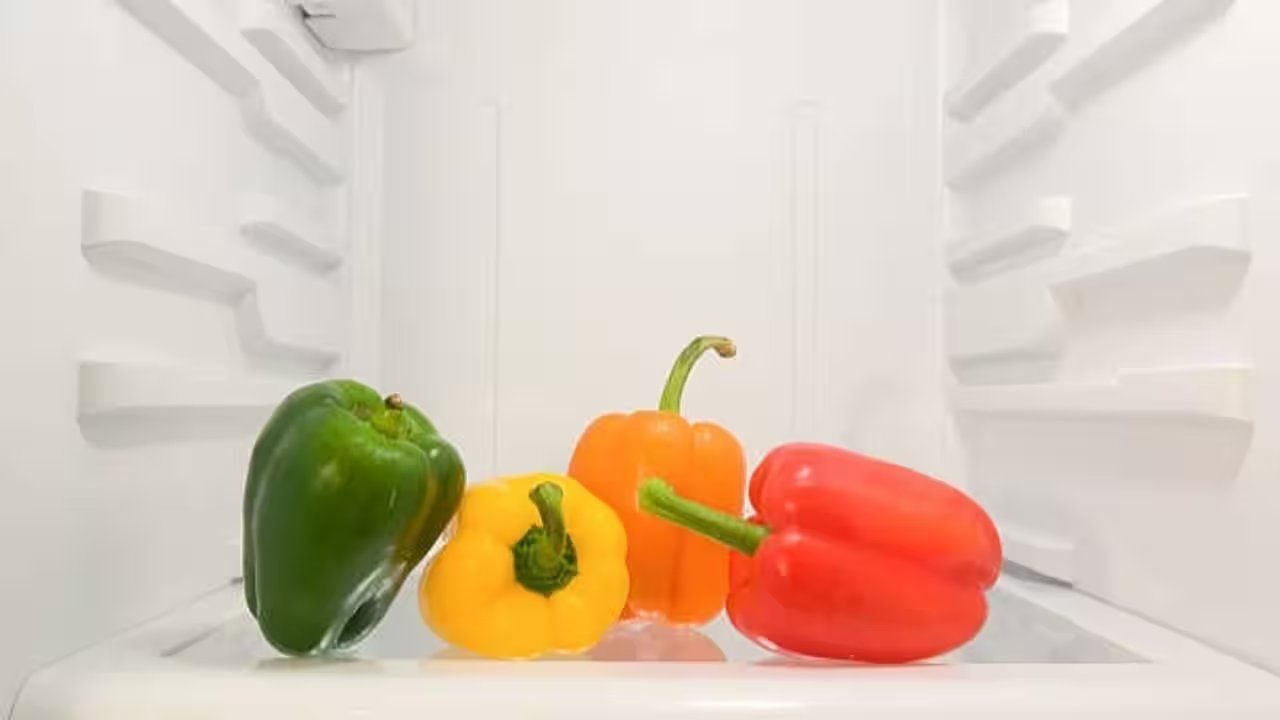
The crisper drawer, with its slightly higher humidity, is the best spot for whole bell peppers. Keep them whole, uncut, and you’ll see them stay crisp for about 10 to 14 days—sometimes a bit longer if they were fresh when you bought them.
Notice the first wrinkle around the stem end. A small, papery patch of skin means the pepper has started to lose moisture. It’s still safe to eat, but it’s a good idea to use it soon in a stir‑fry or roasted dish so the color doesn’t fade.
If the pepper feels soft or gives in to a gentle squeeze, you’re past the wrinkle stage. Soft spots often signal the start of rot, so skip any pepper that feels mushy or has a noticeably soft patch.
A fresh bell pepper should have a clean, faintly sweet smell. If you cut one open and catch a sour or fermented odor, that’s a clear sign it’s gone. Even without obvious mold, a sour scent is a red flag that bacterial breakdown is underway.
Inside, the cavity should be dry with pale, creamy seeds. Watery flesh or darkened seeds mean moisture has built up and the pepper is on its way to spoiling. When in doubt, open a suspect pepper: if the inside looks damp or the seeds are dark brown, toss it.
Next time you’re at the market, pick firm, unwrinkled peppers, drop them in the crisper, and keep an eye out for these simple cues. If you spot any of the red flags, ditch that pepper before it ruins your dish or your wallet.