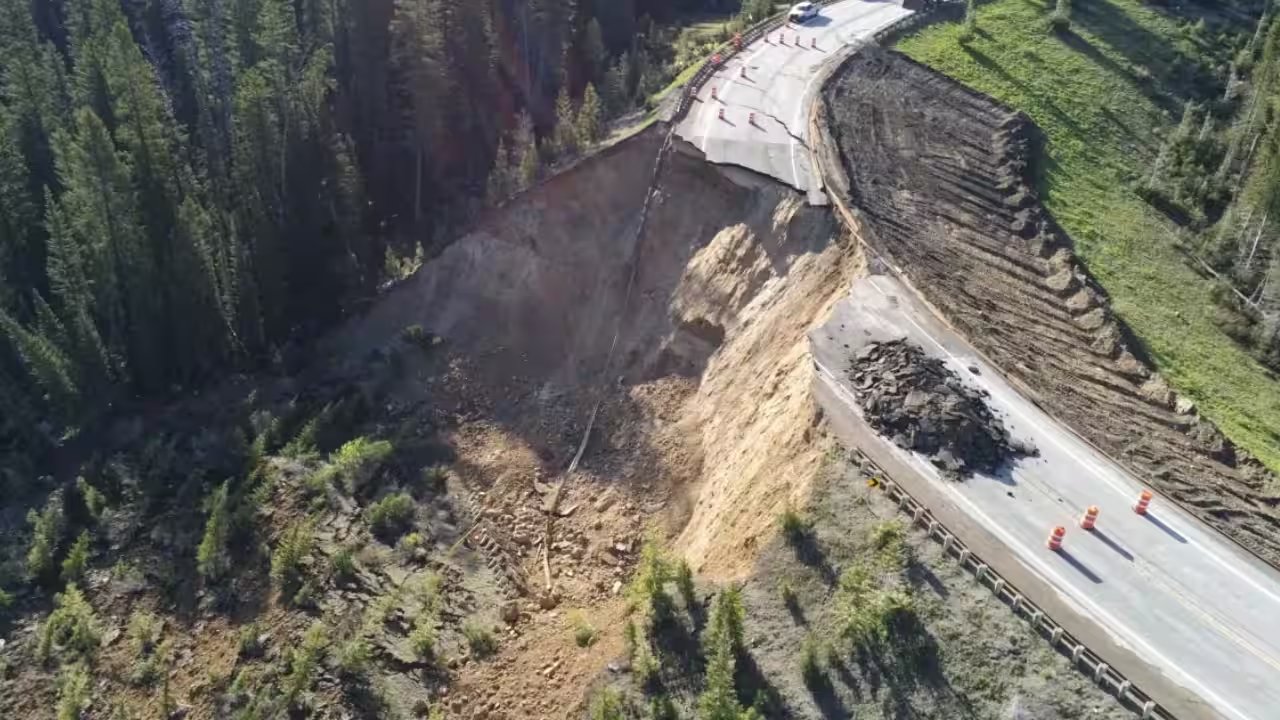
Privilege Underwriters Reciprocal Exchange lost its bid to dismiss a lawsuit over a catastrophic slope failure in Travis County. On October 30, the Texas Third Court of Appeal in Austin overturned a prior summary judgment, forcing the insurer back into the courtroom to present evidence. The legal battle centers on two neighboring properties where the rear sections collapsed down an 80-foot slope toward a local creek, leaving the homes perched dangerously close to the cliff edge.
The dispute began when Michael MacDougall and the estate of the late George S. Heyer Jr. filed claims for structural repairs and land stabilization. PURE rejected the payouts, citing a standard policy exclusion for earth movement and landslides. The insurer argued that natural environmental conditions solely caused the collapse, rendering the damage uninsurable. MacDougall and the Heyer estate countered that human factors played a role and sued for breach of contract and delayed payment under the Texas Insurance Code.
The appeals court applied strict construction rules, interpreting exclusion clauses against the insurer. Judges found PURE’s policy did not explicitly exclude landslides triggered by a combination of natural and man-made forces. Unlike other standard policies, PURE’s language lacked the broad wording to cover mixed-cause events. Consequently, the court deemed the lower court’s ruling in favor of the homeowners premature.
Geotechnical engineers Terrance Zich and Andrew Davidoff provided conflicting assessments during earlier proceedings. PURE relied on their reports to claim natural erosion was the primary driver. The three-judge panel, however, noted the lack of consensus on whether construction work, drainage changes, or land management activities contributed to the slide. This factual ambiguity prevents a definitive legal conclusion at this stage.
The Third Court of Appeal reversed the 250th District Court’s judgment and the associated statutory interest award. The case now returns to the lower court for a full trial on liability. Judges will scrutinize the specific site conditions to establish whether human activity helped trigger the 80-foot collapse. The outcome will determine if PURE must pay for the extensive repairs to the two endangered structures.