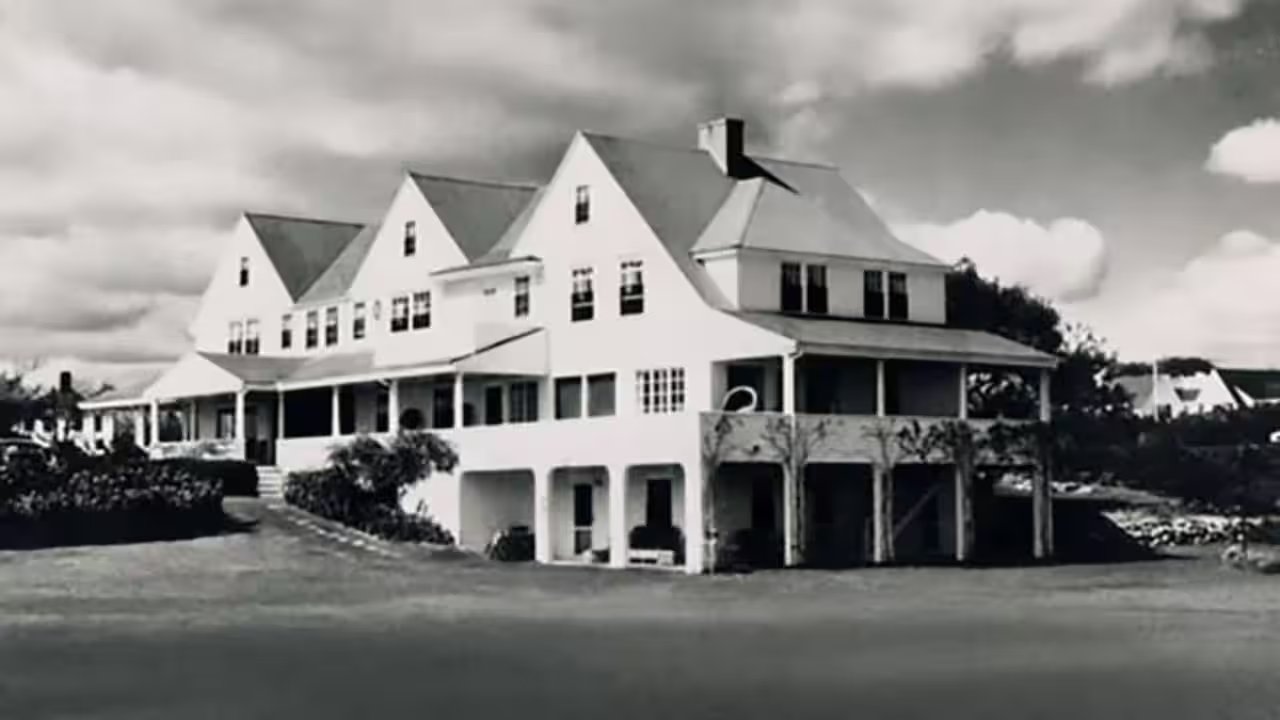
Joseph P. Kennedy Sr. did not plan to start a dynasty. He just wanted a summer home. In 1926, the future ambassador and political fixer rented a modest beach house in Hyannis Port, after being snubbed by the exclusive Cohasset Golf Club for being Irish Catholic. Two years later, he bought the place outright for $25,000. It was a small bet that would pay off in political capital.
That single cottage expanded into the Kennedy Compound, a six-acre stretch of Hyannis Port beachfront housing three ocean-side homes. John F. Kennedy bought the house next to his father’s; Robert F. Kennedy bought the one next to that. By the 1950s, the property had outgrown its humble origins. It became the unofficial Summer White House. When JFK ran for president in 1960, he used the compound as his campaign headquarters, watching the election returns there before celebrating his victory over Richard Nixon.
The house witnessed the highs and the lows. On November 22, 1963, Rose Kennedy was at home when her son Robert called with the news that JFK had been shot. The phone call ended the era of the Camelot presidency, but it did not end the family’s retreat to Cape Cod. The compound became a sanctuary for a family repeatedly struck by tragedy. Joseph Sr. died there in 1969. Rose died there in 1995. Ted Kennedy died there in 2009.
It was also the scene of a quieter, more personal drama. In 1994, John F. Kennedy Jr. brought Carolyn Bessette to meet the clan. The encounter, detailed in J. Randy Taraborrelli’s 'The Kennedy Heirs,' was tense. Ethel Kennedy, then Robert’s wife, quizzed the young woman on the federal assault weapons ban. When Bessette admitted she didn’t know the answer, Ethel reportedly told her to read up on it. Bessette was flying back to the compound for a family wedding in July 1999 when her plane crashed off Martha’s Vineyard, killing her, JFK Jr., and her sister.
A century later, the property remains private but potent. The Kennedy family still gathers in Hyannis Port for Fourth of July celebrations. The $25,000 cottage is no longer just a beach house; it is a physical archive of American history, holding the memories of a family that shaped the nation for a hundred years.