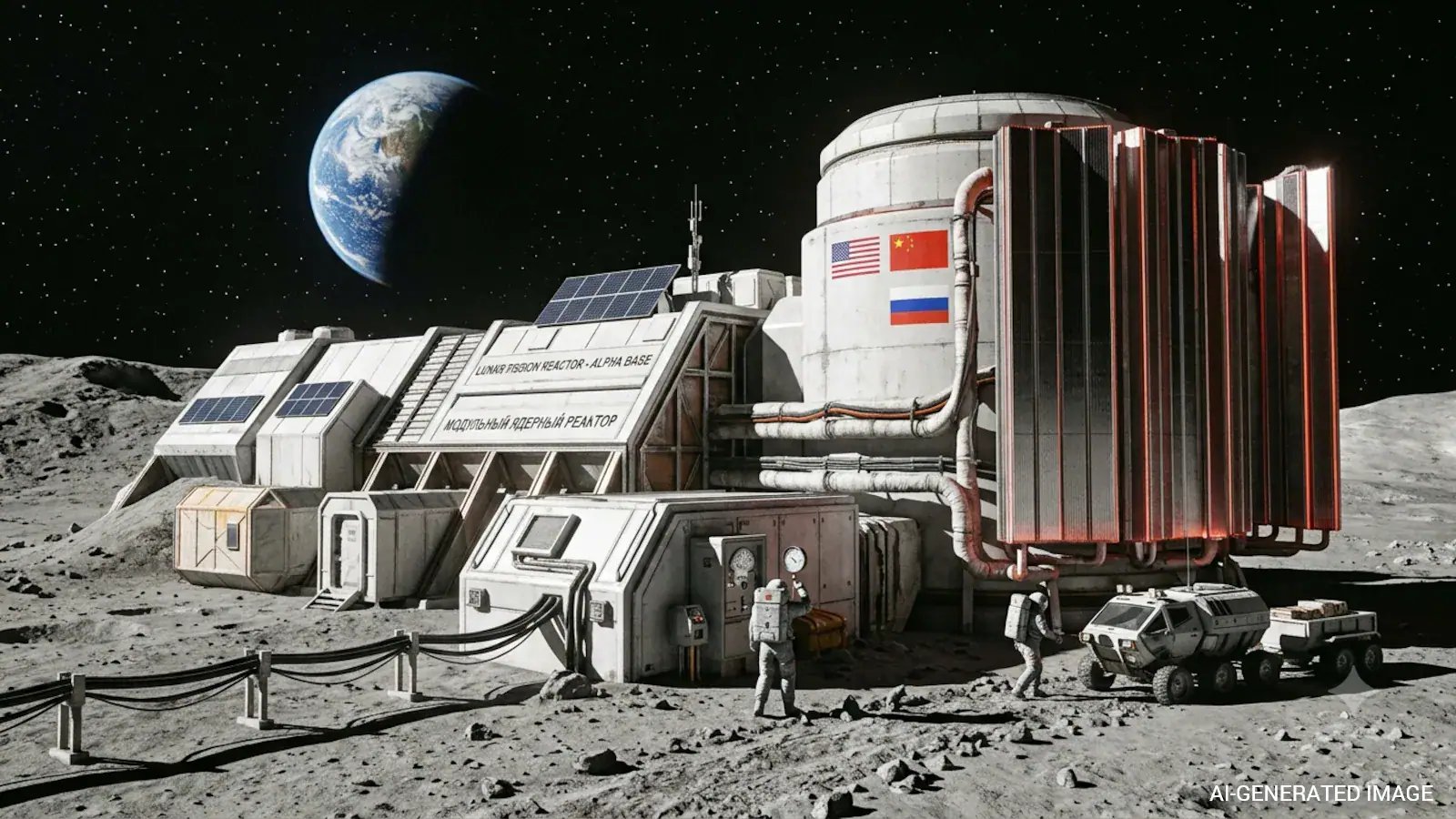
NASA’s deputy director issued a formal request this week for contractors to design a 20‑kW reactor that can survive a lunar journey and operate without maintenance at the Moon’s south pole, with a launch window set for December 2030. The design targets five years of autonomous operation, addressing the two‑week darkness that defeats solar panels.
Russia has announced plans for a 10‑kW Selena reactor, slated for deployment by 2036, as part of a discreet partnership with China. The Russian project, revealed in a joint statement by Roscosmos and China National Space Administration officials, aims to supply power to lunar stations under Chinese oversight.
Safety experts caution that hastening reactor deployment could lead to launch‑phase accidents, potentially dispersing radioactive material. The New York Times noted that both the U.S. and Russia intend to ship their reactors in an inactive state, yet containment challenges on the Moon’s bare surface remain unresolved.
Legal scholars point to the 1967 Outer Space Treaty, which bars territorial claims but allows resource extraction, as a backdrop for the debate. They warn that creating restricted zones around reactors could conflict with the treaty’s free‑access principle, potentially limiting where American astronauts and rovers can operate.
With the launch date set, the next milestone will be the first orbital test of the reactor, scheduled for late 2025, after which the U.S. and Russia will begin negotiations on international safety standards for lunar nuclear power.