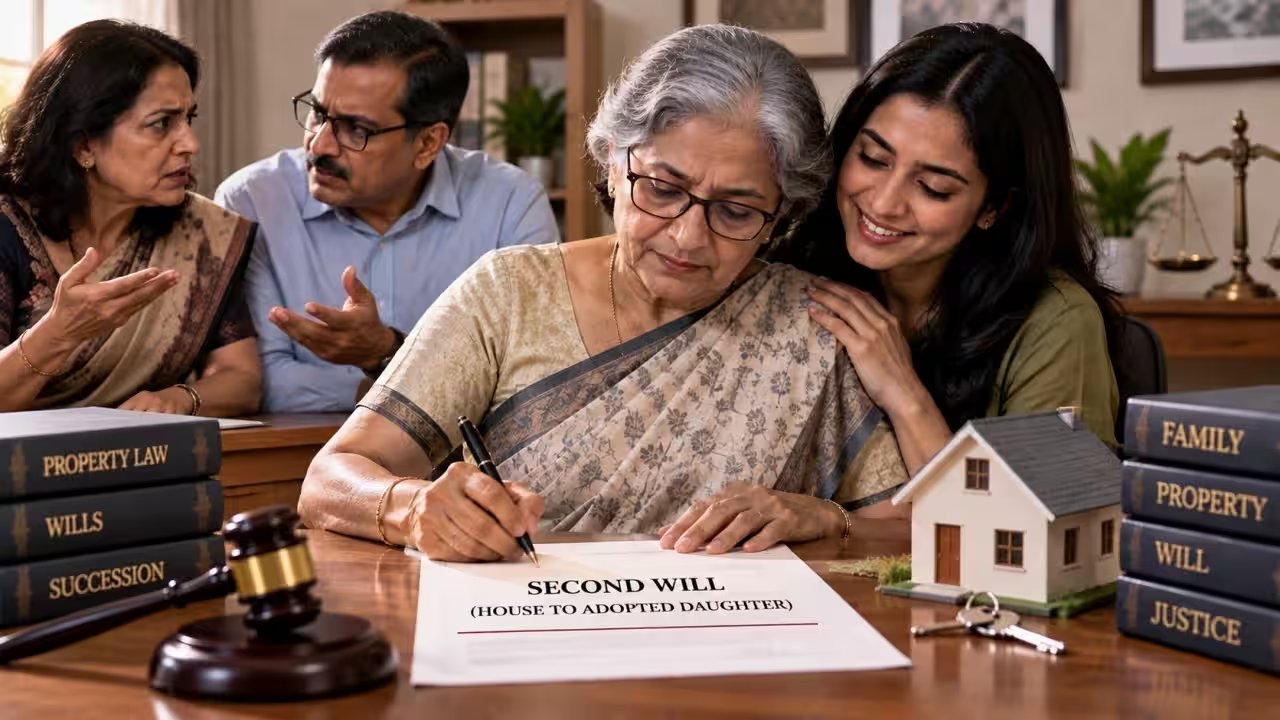
The court’s ruling followed Kaur’s 2013 will, which left the Ludhiana property to her adopted daughter after she revoked an earlier testament that favored her younger sister.
Kaur, a childless widow, had initially drafted a will in February 2008 that would have transferred the house to her younger sister, but she revoked it after her brother’s death in December 2009 and adopted the younger sister’s daughter as her own.
In January 2010, while Kaur was away on a trip, she locked her house and it was subsequently occupied by her sister and brother‑in‑law; she was denied access for five months and then filed a suit.
Jyoti Sinha, partner at Khaitan & Co, explained that the High Court treated the case as testamentary succession and accepted the validity of the second will after a witness confirmed it.
The court cited the Supreme Court’s 2006 ruling in Mathew Oommen vs Suseela Mathew, which permits a single person to act as both scribe and attesting witness, a point that was central to the decision.
The younger sister has challenged the judgment by filing a special leave petition before the Supreme Court, and the case is slated for hearing next month, potentially altering the fate of the 79‑sq‑yard house.