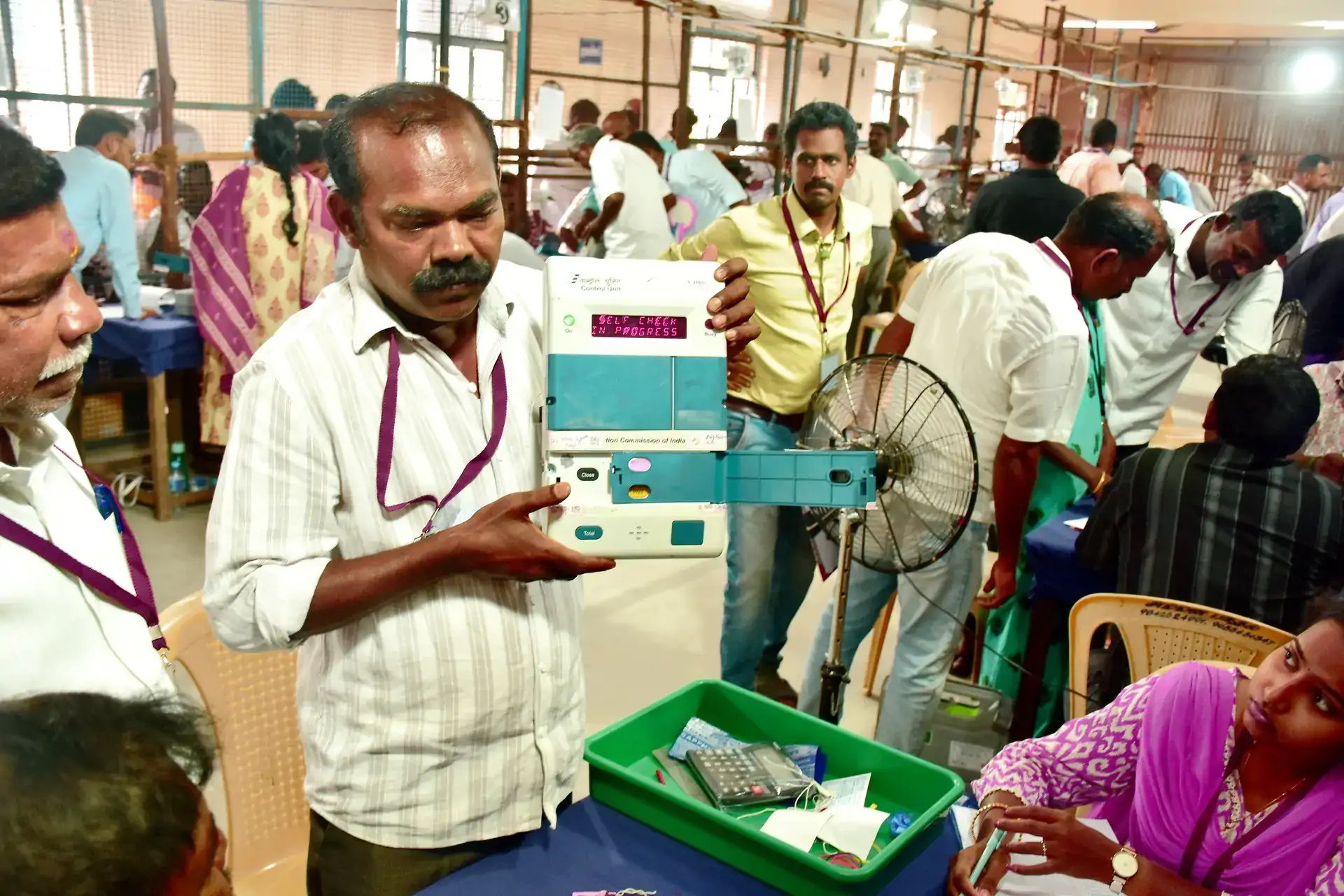
Counting began Tuesday across Karnataka’s four graduate and teacher constituencies, with 43 candidates competing for seats.
The state’s four seats—South‑East Graduates’, West Graduates’, North‑East Teachers’, and Bengaluru Teachers’—saw voter turnouts ranging from 73.58% to 86.97%, underscoring a robust engagement from the educated electorate. The BJP currently holds three of the four seats, but the JD(S) is poised to wrest the Bengaluru Teachers’ seat, pitting incumbent Puttanna against A.P. Ranganath. Both leaders belong to the Vokkaliga community, and Puttanna’s switch from JD(S) to Congress before the last assembly polls adds a personal twist to the contest.
Meanwhile, in Bihar, counting for eight Legislative Council seats kicked off at 8 a.m. under heightened security. The 90 candidates contest four graduate and four teacher seats, with turnout at 82.85% for teachers and 53.42% for graduates. BJP fields four seats, JD(U) the other four, and Prashant Kishor’s Jan Suraaj Party is contesting all eight. The terms of the sitting members expire on November 16.
In Maharashtra, five seats—three graduate and two teacher—were counted on the same day, with the ruling Maha Yuti coalition of BJP, Shiv Sena and NCP facing the Maha Vikas Aghadi of Congress, NCP (SP) and Shiv Sena (UBT). Key contests include Pune Teachers’, where BJP’s Kaustubh Gawde battles Congress’s Jayant Asgaonkar, while Shiv Sena backs independent Sachin Sanap, and Amravati Teachers’, where Shiv Sena’s Kiran Sarnaik confronts Congress’s Aditi Pohare. A rebellion among 182 candidates has hit both sides.
In Uttar Pradesh, elections spanned seven cities, with Chief Electoral Officer Navdeep Rinwa mandating round‑the‑clock power, security and videography, citing the single‑transferable vote system’s time‑consuming nature and urging trained staff to be on standby.