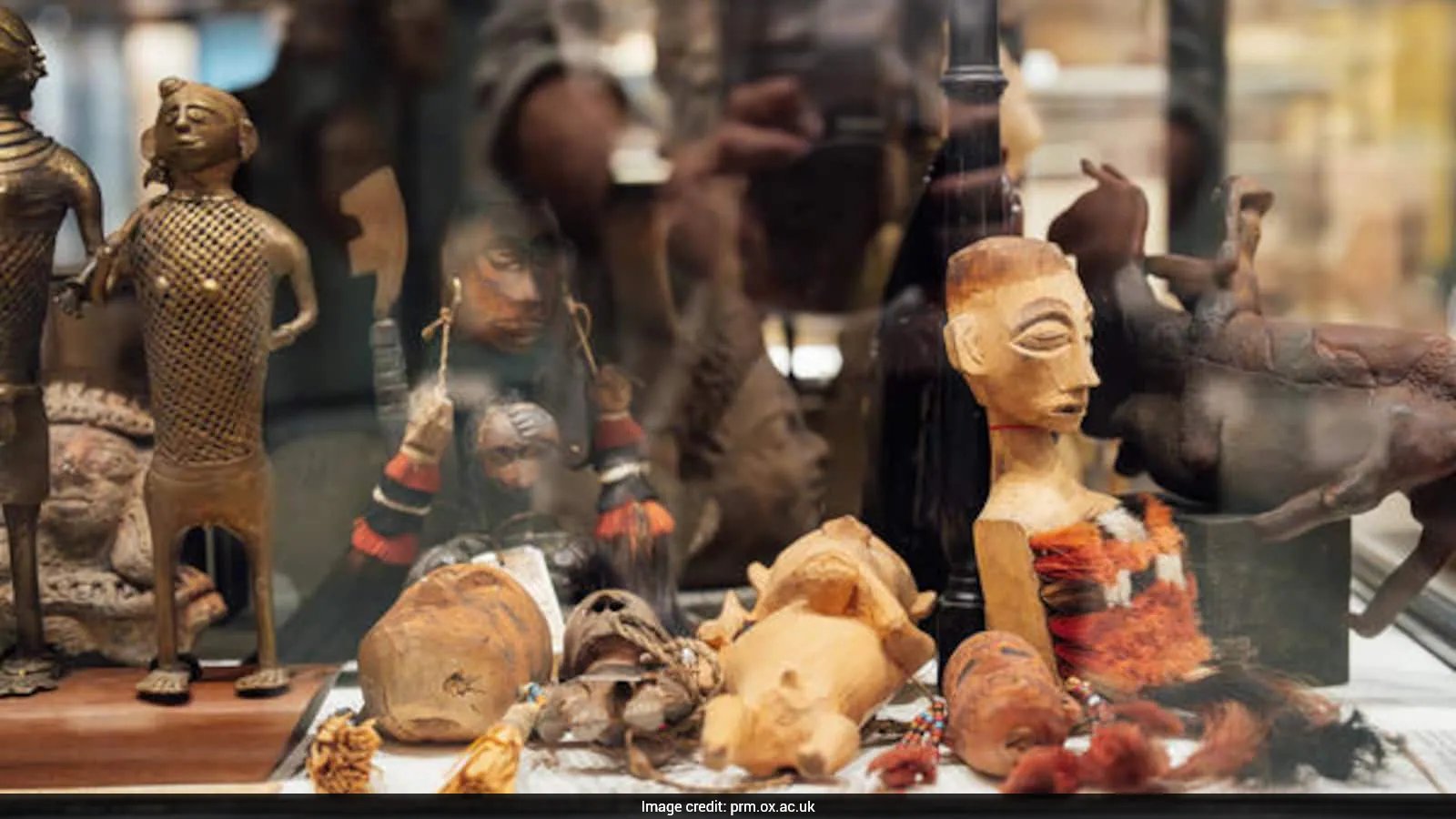
OXFORD — Oxford University's Pitt Rivers Museum on Monday returned the ancestral remains of 39 Naga people taken under British colonial rule, closing a six-year repatriation campaign spearheaded by indigenous leaders from northeast India.
A delegation of nearly 30 tribal representatives travelled from Nagaland to Oxford to receive the remains—primarily skulls—and sign the transfer pact. The crates are already en route to London's Heathrow Airport for transit to India. Pitt Rivers Museum Director Laura Van Broekhoven called the formal handover a historic correction, acknowledging that the artifacts were severed from their homeland under administrative violence.
Yet the scale of colonial loot remaining in British archives dwarfs this handover. Pitt Rivers houses the world's largest Naga ethnographic collection—more than 6,000 cultural items—and maintains roughly 2,700 human remains from various indigenous groups in storage, having pulled them from public display only in 2020.
British colonial administrators amassed the Naga remains between 1910 and 1940. While British records often masked the acquisitions as anthropological fieldwork, museum records confirm that colonial troops seized the relics during punitive military expeditions into the Naga hills.
"The manner in which these human remains were taken away from our land leaves much for us to speculate," said Thejao Vihienuo, a 73-year-old Naga tribal elder who travelled to Britain for the proceedings. "I suspect that nobody would have given the skull of his father or his grandfather as a gift to another person."
During the visit, delegates confronted the family members of one colonial anthropologist who had harvested the remains decades ago. The collection also holds profound political gravity within the community: Lotha-Naga anthropologist Dolly Kikon verified that at least one of the repatriated skulls belonged to a village chief, whose head had historically anchored community rites before colonial agents confiscated it.
Naga tribal bodies pushed through years of institutional inertia and bureaucratic clearances in London and New Delhi to force the repatriation. The dispute centered not merely on possession, but on unresolved funerary rites.
"We shall put them to respectful rest," Vihienuo said.
Tribal leaders plan to receive the 39 ancestral remains in Nagaland and bury them together beneath a joint memorial in a designated park, completing a century-delayed funeral as indigenous groups globally pressure Western curators to release thousands of remaining colonial artifacts.