Arm Holdings ADRs tumbled 5.28% on the NASDAQ on Wednesday. The reaction was swift. Investors wanted a blowout. Instead, they received a reality check. While second-quarter revenue leaped 27% to $1.44 billion, the British chip architect guided third-quarter sales to roughly $1.54 billion—barely clearing the $1.53 billion consensus when bullish market desks had penciled in prints nearing $1.7 billion.
Shares slipped an additional 1% in extended trade as executive leadership opened their earnings call. The pullback exposes the razor-thin margin for error priced into semiconductor high-flyers tied to the artificial intelligence trade. Arm had gained 67.8% year-to-date and 19.33% over the trailing 12 months, riding wave after wave of capital expenditure commitments by hyperscale data centres. But when growth merely meets expectations rather than smashing them, trading desks dump stock.
| Financial Metric | Reported / Guided | Wall Street Estimate | YoY Change |
|---|---|---|---|
| Q2 Revenue | $1.44 Billion | $1.38 Billion | +27% |
| Q2 Adjusted EPS | $0.52 | $0.47 | Beat |
| Q2 Licensing Sales | $773 Million | — | +50% |
| Q2 Royalty Sales | $670 Million | — | +8% |
| Q3 Revenue Guidance | $1.54B (±$50M) | $1.53 Billion | Inline |
| Q3 Adjusted EPS Guidance | $0.56 (±$0.04) | — | — |
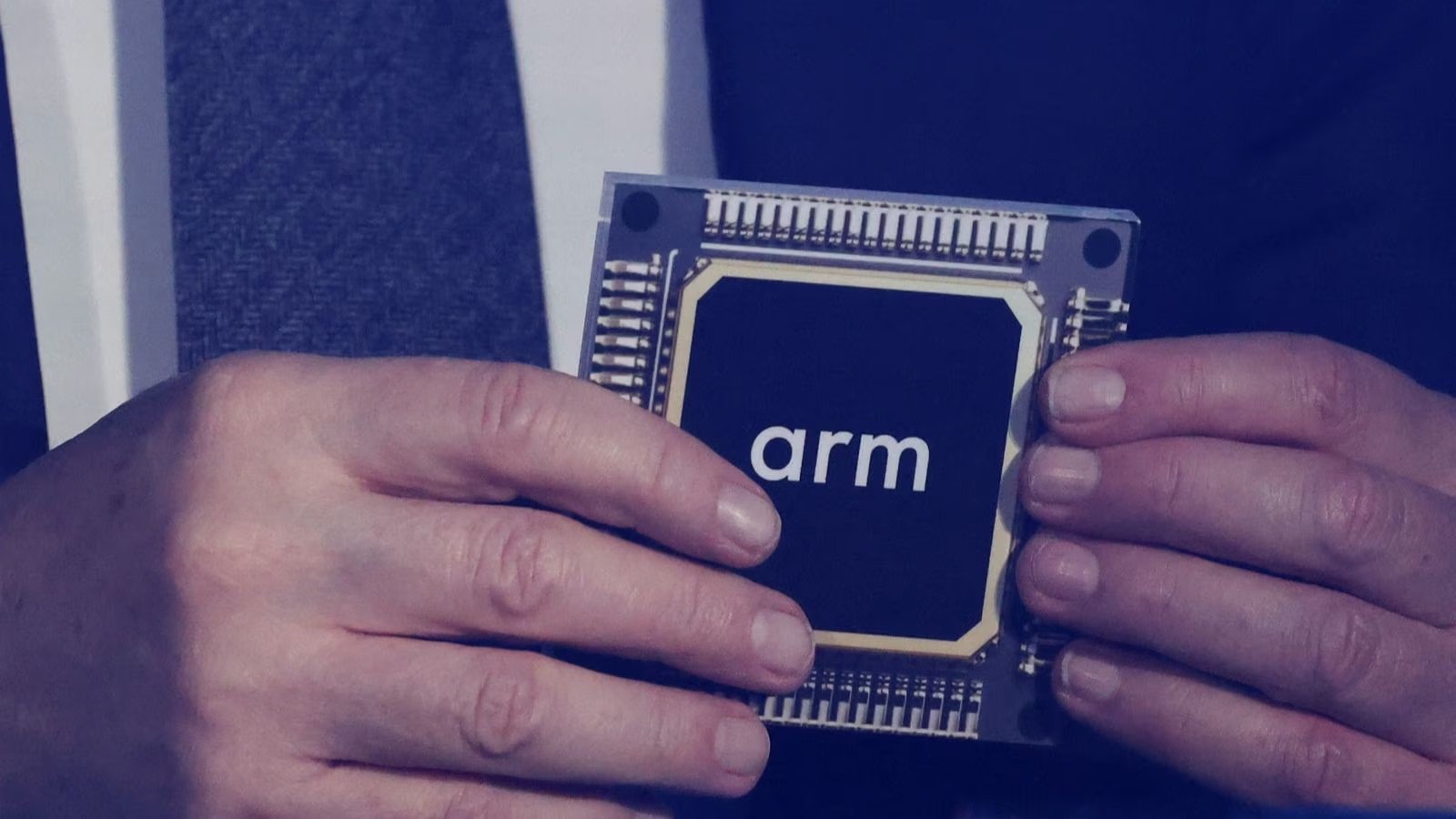
Chef Executive Officer Rene Haas is steering the Cambridge-based firm away from pure architectural licensing toward direct silicon production. Arm unveiled its dedicated central processing unit built specifically to run AI data centres, pegging revenue from the silicon push at up to $2 billion across fiscal 2027 and 2028. Haas confirmed that the group tied up agreements with Taiwan Semiconductor Manufacturing Co. and key suppliers to lock in raw component capacity for the planned production ramp.
Yet execution timelines stretch far into the future, while current cash flows reveal acute segment divergence. Second-quarter licensing revenue surged 50% to $773 million, demonstrating aggressive design adoption. In contrast, royalty revenue crept up just 8% to $670 million. For the quarter through December, Arm projects adjusted earnings of 56 cents a share, plus or minus 4 cents, on revenue between $1.49 billion and $1.59 billion.
Physical hardware supply bottlenecks continue to plague the core handset portfolio. Memory chip shortages squeezed smartphone assembly lines and pushed retail handset prices higher, subduing shipment velocity in Arm's primary cash-generation engine. Customer-rival Qualcomm mirrored those exact cost pressures on Wednesday, issuing a downbeat profit trajectory that triggered an immediate selloff in its own stock.
Legal friction adds another overhang. A Delaware federal jury recently found Arm breached aspects of its licensing contract with Qualcomm—yet jurors handed down nominal damages of just $2. The courtroom spat did little to derail operational licensing, but it left trading desks on edge. Arm must now prove its custom server chips can convert enterprise AI hype into concrete, compounding quarterly royalties before market patience wears thin.