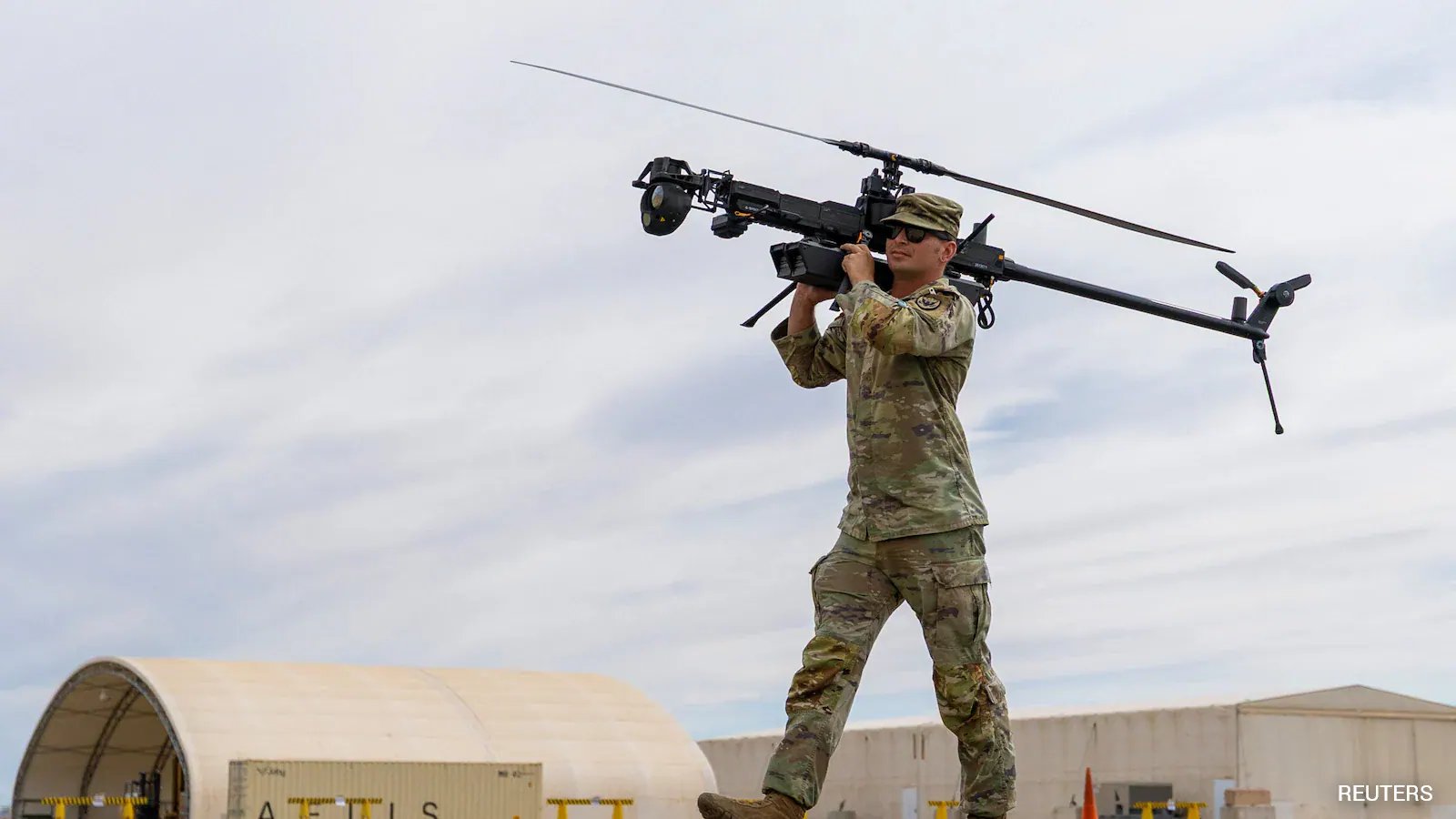
Powerus traces its roots to Lviv, Ukraine, where founder Brett Velicovich, a former Army intelligence officer, began brokering low‑cost interceptor drones for Russian‑occupied forces in 2022. The venture started with a modest $5.7 million in assets, primarily sourced from a Florida golf‑course holding company that had been languishing on the Nasdaq.
In July 2025, the Trump sons—Donald Jr. and Eric—tapped a $26 million fund to acquire the golf‑course company, which immediately boosted Powerus’s public market presence. The deal was announced on the same day the company declared a $90 million contract with the Pentagon for drone interceptors.
The Air Force quickly followed, ordering nearly the entire $90 million package—roughly $83 million worth of hardware—by August. Powerus beat out competitors, including defense‑tech giant Anduril, for a $22 million contract to shield U.S. oil infrastructure in the Middle East. CEO Andrew Fox said the win was "achieved in the proper way," underscoring the company’s compliance with federal bidding rules.
Beyond U.S. borders, Powerus has secured deals with India, Pakistan, Lithuania, and Iraq, and the company has pledged to accelerate production to meet the demand of these partners. A senior executive claimed the firm can assemble a drone in 90 seconds, a claim that has attracted attention from both industry insiders and skeptical analysts.
While the company pushes into mass production, it has begun soliciting contractors to scale manufacturing, some of whom have signed nondisparagement agreements limiting public commentary. The next milestone on the horizon is Powerus’s first quarterly earnings report, scheduled for release next month, which analysts say will reveal whether the company can sustain its rapid growth trajectory.
The story also touches on a human layer: a Ukrainian drone operator who credits Powerus’s interceptors with saving his unit during the 2022 invasion, illustrating how the company’s rapid ascent is intertwined with real‑world battlefield outcomes.