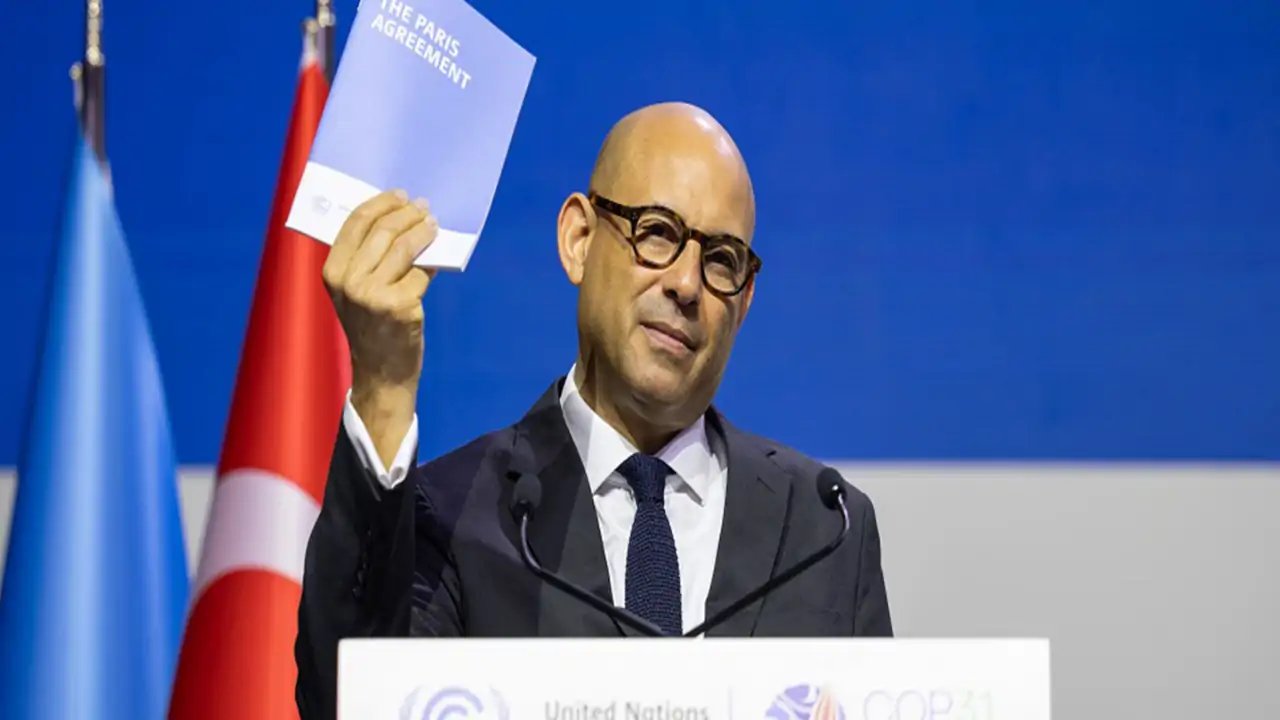
ANTALYA, Türkiye — United Nations climate chief Simon Stiell threw his weight behind Prime Minister Narendra Modi's economic doctrine on Tuesday, declaring that India's aggressive decade-long pivot to renewable power insulated the country from crushing swings in global oil markets.
PM Modi got it right.
Speaking as delegates gathered for the COP31 climate summit in Antalya, Türkiye, Stiell described PM Modi's recent assertions as "very salient," warning that an erratic fossil fuel market continues to bleed import-dependent nations dry. Stiell, who steers international climate negotiations at the summit running from November 9 to 20, 2026, argued that reliance on crude has locked world economies into a costly cycle of imported inflation. Clean power broke that chokehold.
Working hand in hand with electrification, clean energy protects economies from the ruinous rollercoaster of fossil fuel dependency. PM Modi's recent comments about how investments in clean energy helped protect India's economic growth despite the oil price shock crisis are very salient.
Simon Stiell, UN Climate Chief
PM Modi laid out that defense on November 2 while addressing the Bharat Renewable Energy Summit & Expo 2026. India, the Prime Minister insisted, deliberately spent the past ten years building alternative energy infrastructure to insulate domestic factories and households from overseas turbulence.
The math was unforgiving. Had New Delhi dragged its feet, soaring import bills would have triggered far harsher domestic fallout.
"If India had not invested in clean energy and created new systems for this over the past decade, then our crisis could have been much more severe than the rest of the world," PM Modi said at the summit.
Stiell pointed directly to New Delhi's infrastructure playbook — specifically the Green Energy Corridor project designed to stabilize transmission grids and integrate vast battery storage capacities. The UN chief called the corridor a "major step forward that will deliver big dividends for India's people and economy," framing grid expansion as the frontline defense against volatile commodities.
| :--- | :--- | :--- | :--- | :--- | :--- |
|---|---|---|---|---|---|
| Host City & Dates | Antalya, Türkiye (Nov 9–20, 2026) | Global UN Negotiators | |||
| Flagship Proposal | 35-by-35 Electrification Pledge | Turkish COP31 Presidency | |||
| Core Infrastructure Initiative | Green Energy Corridor & Storage | India Grid Integration | |||
| Key Policy Driver | Renewable Electrification |
Beyond bilateral praise, Stiell linked India's domestic grid strategy directly to the headline agenda inside the Antalya negotiation halls. The COP31 Turkish Presidency pushed forward a sweeping "35-by-35" electrification pledge, pressing member states to scale electric power across heavy industry, transport, and consumer heating.
Power without resilient grids accomplishes little. Electrification backed by green power generation slash household utility outlays, wipe out tailpipe smog, and ease healthcare strains.
Cabinet ministers and climate envoys in Antalya now face ten days of deadlocked finance negotiations to determine how emerging economies fund equivalent transmission grids, with final declarations scheduled ahead of the summit's November 20, 2026 gavel.
| Fossil Import Shield |