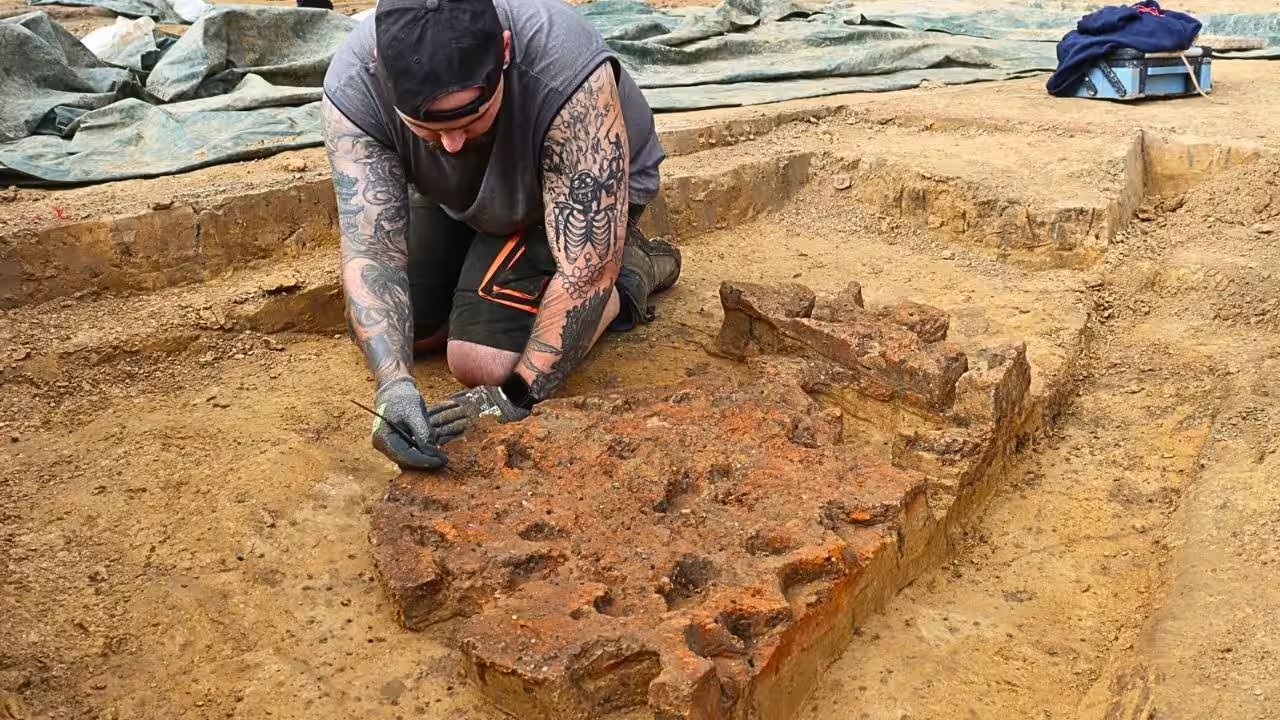
Excavation teams from the Landschaftsverband Westfalen-Lippe (LWL) and the Dortmund City Archaeology Department unearthed the first pottery kiln at the western Dortmund settlement in mid-August. The discovery, part of a site dating from the 1st to 5th centuries AD, also revealed exceptionally well-preserved metalworking workshops. Dr Eva Cichy, excavation director at the Olpe branch of LWL Archaeology for Westphalia, confirmed this is the first such workshop complex found in the western Germanic settlement area.
The find matters because it offers rare physical proof of how Germanic tribes processed Roman metal. Jan Rosbeck of the Dortmund City Archaeology Department explained that tribes melted Roman scrap metal in crucibles set within round to oval clay-walled kilns. Workers pumped air from the sides using bellows to regulate temperature. This specific method of recycling had not been documented through archaeological remains before.
Prof. Dr. Michael Baales of LWL Archaeology for Westphalia noted that while historians knew Germanic tribes recycled Roman objects acquired through trade or plunder, the physical evidence was missing. Tobias Zacharias of the Dortmund City Archaeology Department stressed that the discovery elevates the site’s significance beyond the region. The work fills a gap in understanding Germanic metalworking during the Roman Imperial Period.
The excavation is nearly complete, but questions remain. The team has not yet identified the type of pottery produced in the kiln. Archaeologists plan to completely recover the most intact furnace. They intend to display this unique archaeological remain in the future. The site includes pits, furnaces, and hearths that detail various craft activities from the era.