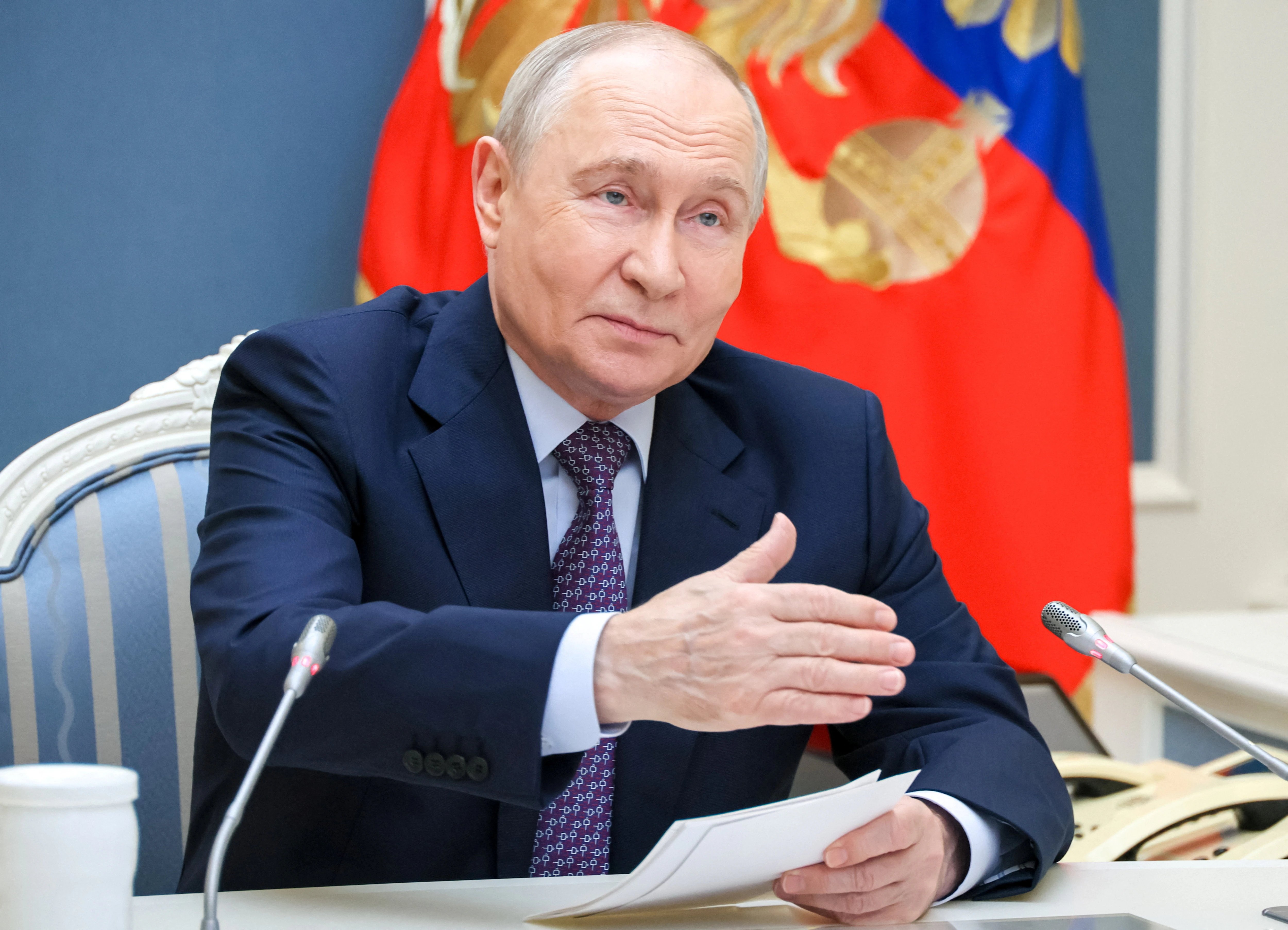
Vladimir Putin pledged cooperation on Friday after Pope Leo phoned him to arrange a humanitarian corridor for the besieged Ukrainian town of Oleshky, the Kremlin stated. The pontiff, speaking from Rome, explicitly requested measures to allow food and medical supplies into the town, which Russian forces seized in February 2022. Residents inside have reported a deepening food crisis as the war drags on, prompting the Vatican to intervene directly with the Russian leader.
The Kremlin's response was measured. A statement released by the presidential office confirmed that the Vatican's intention to "ensure the safety of the town's population and organise vital supplies has been supported." Yet, the official text avoided the word "ceasefire," a deliberate omission that analysts say signals Moscow's reluctance to grant the military pause required for sustained aid operations. Russia continues to blame Ukraine for obstructing supplies, while Kyiv accuses Moscow of using the town as a human shield and blocking deliveries.
The Oleshky situation has deteriorated into a stark humanitarian snapshot. Danielle Bell, head of the UN Human Rights Monitoring Mission in Ukraine, noted that the town's pre-war population of 24,000 has plummeted to roughly 1,700 residents, including 47 children. These civilians remain trapped between Russian military control and Ukrainian forces aiming to retake the area in Kherson region. The isolation has left the remaining population critically vulnerable to supply shortages.
The diplomatic outreach carries personal weight for the 71-year-old pontiff, who is currently recovering at Rome's Gemelli hospital following lung cancer surgery. The Vatican announced Leo is showing steady improvement and is capable of working, a fact Putin acknowledged by wishing him a speedy recovery. This marks the second time the two leaders have spoken, following a previous call in June 2025. Vatican Secretary of State Cardinal Pietro Parolin emphasized that the initiative was entirely the Pope's, driven by a desire to "plead the cause of this besieged city."
Attention now turns to whether Moscow will translate this verbal agreement into logistical action. The next 48 hours will likely see diplomatic exchanges between the Vatican, the Kremlin, and Kyiv to define the terms of the "cooperation." Without a clear, verifiable mechanism for aid entry, the agreement risks remaining a symbolic gesture rather than a lifeline for the 1,700 people still living in Oleshky.