MORONI — Twelve-year-old Bahia Bakari drifted alone in pitch darkness across 16-foot swells, clinging to a jagged shard of aircraft fuselage in the Indian Ocean.
She could barely swim.
Yemenia Airways Flight IY626 had plunged into the sea in the early hours of June 30, 2009, during its final approach to Prince Said Ibrahim International Airport in Moroni, the capital of the Comoros. Of the 153 passengers and crew members on board the Airbus A310-324, only Bakari made it out alive. The disaster killed 152 people, including her mother, Aziza Aboudou.
Investigators at France’s Bureau of Enquiry and Analysis for Civil Aviation Safety (BEA) determined that air traffic controllers abruptly lost contact with the cockpit roughly 18 kilometres from the runway during heavy winds and difficult night-time weather.
The impact shattered the jet.
Bakari and her mother had departed Paris and transited through Marseille and Sana’a before boarding the final leg to Moroni to see extended family. Her father, Kassim Bakari, remained in France with their other children.
Moments before the descent turned catastrophic, the twin-engine widebody began to violently shudder. Flight attendants instructed travellers to fasten their seatbelts. Then came the crash.
Bakari was thrown clear into churning water, separated from her mother in an instant. Surrounding her in the blackness, voices of desperate women cried out across the sea, pleading for help against the roar of the surf. She tried to paddle toward them. The exhaustion took over, the ocean swallowed the voices, and silence fell.
I asked her what happened and she said: 'We saw the plane fall in the water. I found myself in the water. I was hearing people speak but I couldn't see anyone. I was in the dark. I couldn't see anything. Daddy, I couldn't swim very well. I grabbed on to something but I don't know what.'
Kassim Bakari, Father
For nearly 13 hours, the child held on to the wreckage as powerful currents battered her fractured collarbone and bruised body.
Dawn brought an international maritime search mission, but rough waters and blinding spray stalled surface operations. Searchers aboard the commercial vessel Sima Com 2 combed through floating debris until spotters saw a small hand waving from a drifting panel.
Crewmen lobbed a flotation ring toward the wreckage. Exhaustion had drained Bakari of strength, leaving her unable to grasp the lifeline.
Sailor Libouna Maturaffe Soulemane leaped straight into the heavy surf. Fighting the crests, Soulemane secured Bakari with a flotation device and pulled her back to the ship’s hull, where the crew hauled both aboard to safety.
Paramedics wrapped the hypothermic survivor in thick thermal blankets and administered hot fluids. Despite severe physical trauma, facial swelling, and extreme shock, she remained conscious throughout the transfer to Comorian medical teams.
| Flight & Incident Parameter | Official Record Details |
|---|---|
| Flight Number | Yemenia Airways Flight IY626 |
| Aircraft Model | Airbus A310-324 |
| Flight Route | Paris – Marseille – Sana’a – Moroni |
| Total Occupants | 153 (142 passengers, 11 crew) |
| Fatalities | 152 |
| Sole Survivor | Bahia Bakari (Age 12) |
| Duration Afloat |
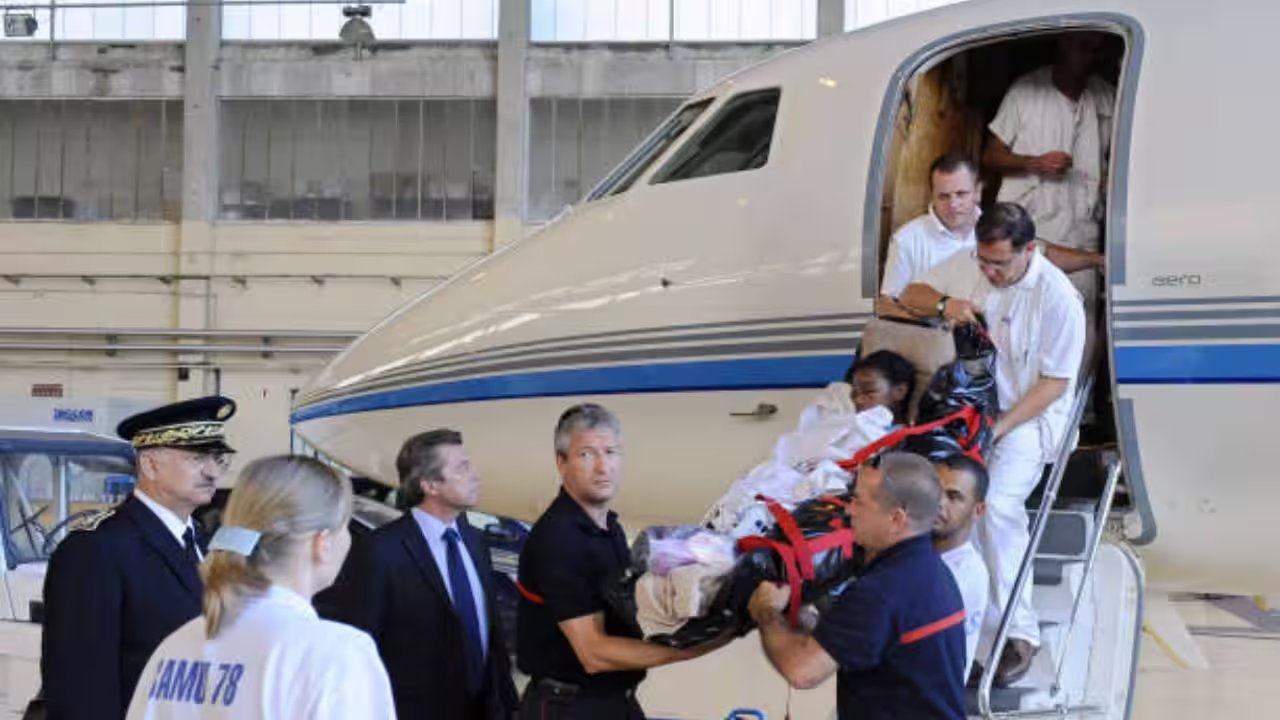
French officials arranged an emergency medical evacuation flight, returning Bakari to Le Bourget airport near Paris on July 2, 2009, to reunite with her father and siblings.
Yet the full reality of the crash remained hidden from the 12-year-old for days. Having heard voices in the ocean hours after the crash, she held onto the conviction that search vessels would retrieve her mother. It took a hospital psychologist in France to deliver the crushing verdict: no other passenger had survived.
| Approximately 13 hours |
| Rescue Vessel | Sima Com 2 |
| Lead Rescuer | Libouna Maturaffe Soulemane |