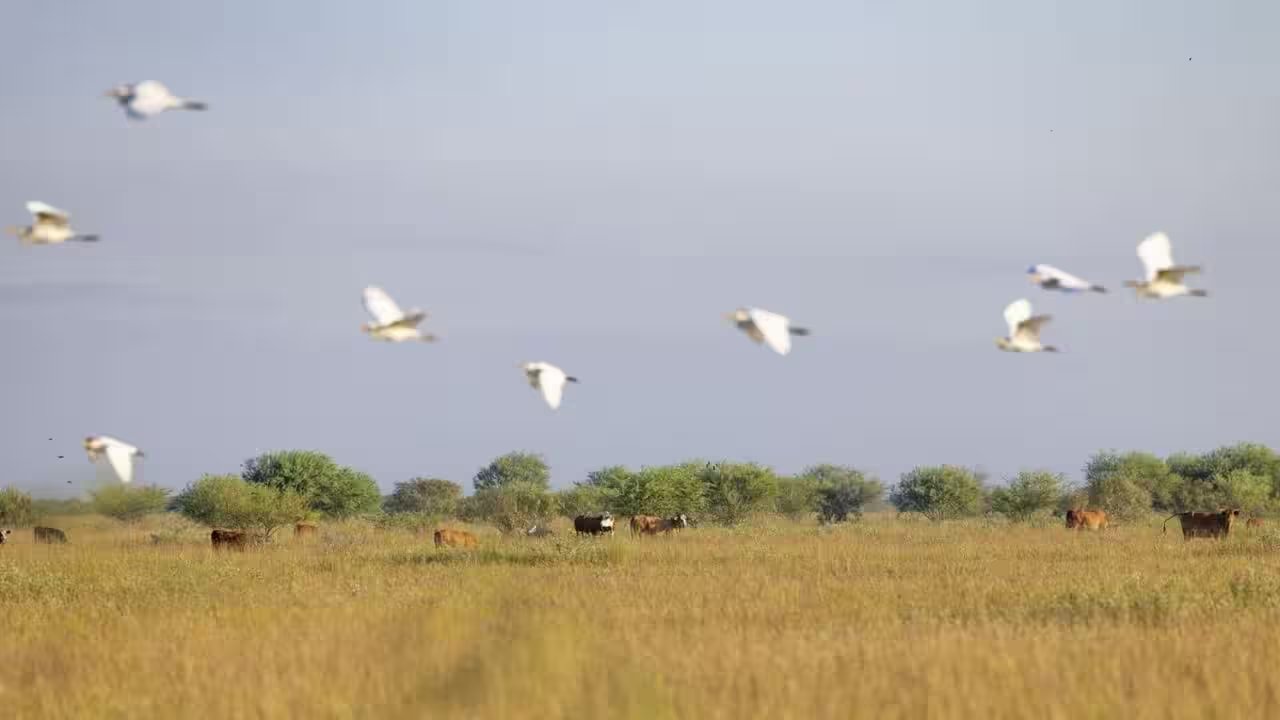
The Nature Conservancy (TNC) has permanently locked down 6,409 acres of the historic T.M. O'Connor Ranch in Goliad County, Texas, through an $8.863 million conservation easement. This isn't just another land deal; it’s the first conservation easement ever approved by the federal RESTORE Council, a body that channels civil penalties from the 2010 Deepwater Horizon oil spill into ecological restoration projects. The move secures one of the largest remaining intact stretches of coastal prairie in the state, ensuring the grasslands, marshes, and unique habitats stay exactly as they are for the next century.
The O'Connor family’s hold on this land stretches back to 1834, a nearly 200-year lineage that once encompassed roughly 600,000 acres. Today, the newly protected slice forms a critical part of the Refugio-Goliad Prairie, a landscape that supports over 300 species. Among them are the Attwater's prairie chicken, the black rail, and the Sprague's pipit, all of which face increasing pressure from habitat loss. The area also shelters the Refugio rain lily, a plant found nowhere else in the world but Refugio and Goliad counties.
The funding structure is a hybrid of public and private capital. The Texas Commission on Environmental Quality (TCEQ) provided $7.6 million in grants, acting as the state’s representative to the RESTORE Council. TNC covered the remaining balance, bolstered by contributions from the Knobloch Family Foundation, Frank Klein, and H-E-B. Steven Schar, TCEQ’s deputy executive director and Gov. Greg Abbott’s designee to the RESTORE Council, called the agreement a major milestone for the Gulf Coast.
Crucially, the easement does not turn the ranch into a public park or a no-touch preserve. The O'Connor family retains full ownership and the right to continue cattle operations. The deal simply bans future development and habitat fragmentation, creating a buffer that helps mitigate flooding and hurricane impacts while storing carbon in the deep root systems of the prairie. This model proves that active ranching and aggressive conservation can coexist on the same soil.
To ensure the long-term health of the land, TNC is collaborating with Texas A&M University’s Department of Rangeland, Wildlife and Fisheries Management. The university’s Center for Grazinglands and Ranch Management will provide ongoing research and monitoring to guide the family’s stewardship. With less than 5% of Texas’ original 6 million acres of coastal prairie remaining, this permanent layer of protection offers a rare glimpse into what the state’s landscape looked like before it vanished.