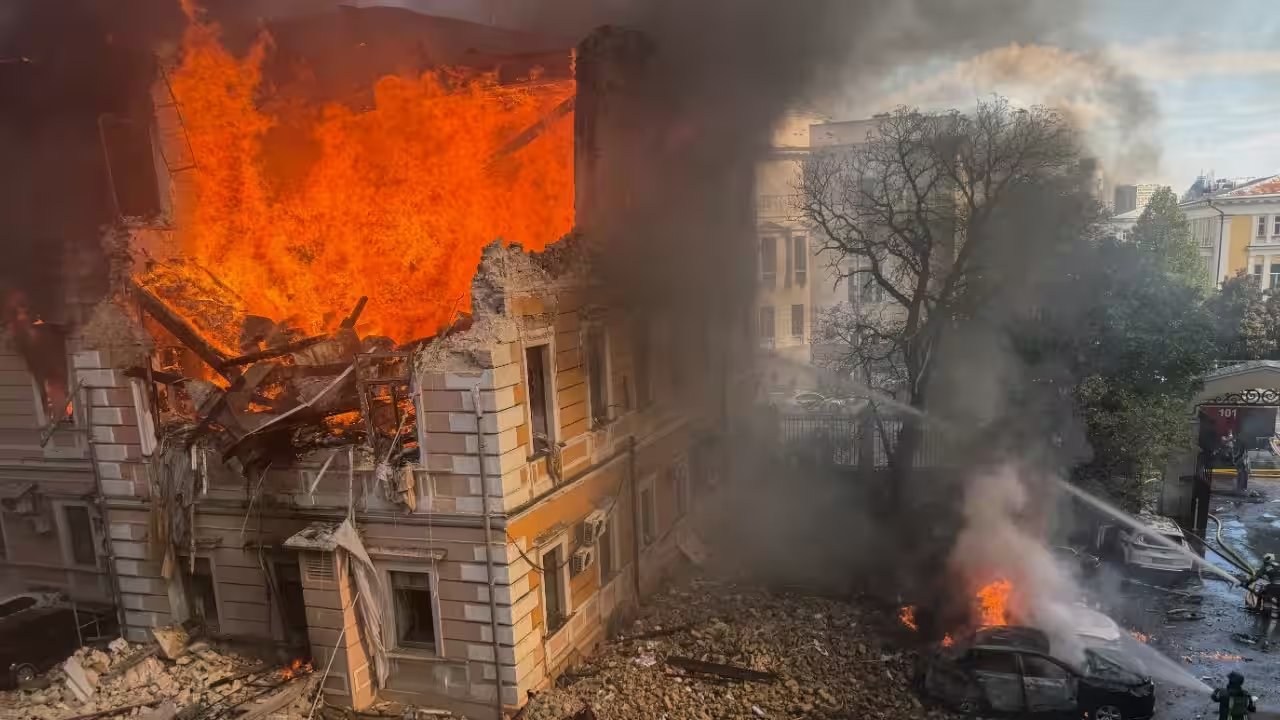
The Russian Foreign Ministry issued a stark warning on Saturday for foreign nationals and diplomatic staff to evacuate Kyiv. The statement, released under pressure from escalating military operations, declared that the Russian Armed Forces are "continuing to systematically carry out targeted strikes on military facilities" in response to what Moscow labels "terrorist acts" by Ukrainian forces against civilian infrastructure. The ministry placed full responsibility for any adverse consequences on those who ignore the directive to leave Ukrainian territory.
President Volodymyr Zelensky responded hours later with a counter-strategy. He announced Ukraine will double its attacks on Russian oil refineries but explicitly ruled out targeting civilians. Zelensky revealed that Ukrainian intelligence has intercepted documents outlining a "new doctrine" by Vladimir Putin, which broadens the scope of military attacks to include civilian targets ahead of the winter months. This shift marks a significant escalation from previous tactical engagements.
The city of Kyiv, home to three million residents, is feeling the immediate weight of this intensification. Saturday’s air attacks struck a bridge across the Dnipro river, further disrupting logistics and daily life as temperatures drop. Putin, speaking earlier this week, framed the escalation as a necessary price for Ukraine’s own offensive operations on Russian soil.
Diplomatic backchannels remain active, with Ukraine evaluating four distinct ceasefire proposals from India, Turkiye, Egypt, and the US. Ukrainian Foreign Minister Andrii Sybiha identified India’s offer as the "broadest" among the group. "We are ready for an energy and Black Sea ceasefire, but only in this combination," Sybiha told reporters in Kyiv on Friday, according to the European Pravda newspaper. This assessment came a day after Putin praised Prime Minister Narendra Modi for having "very good ideas" toward a mutually acceptable settlement.
The next 48 hours will determine whether the diplomatic track holds. Zelensky’s team is currently in closed-door sessions with Indian and Turkish counterparts to finalize the terms of the proposed energy truce. If the ceasefire covers only infrastructure and maritime corridors, it could provide a fragile window for humanitarian aid delivery before the winter freeze sets in.