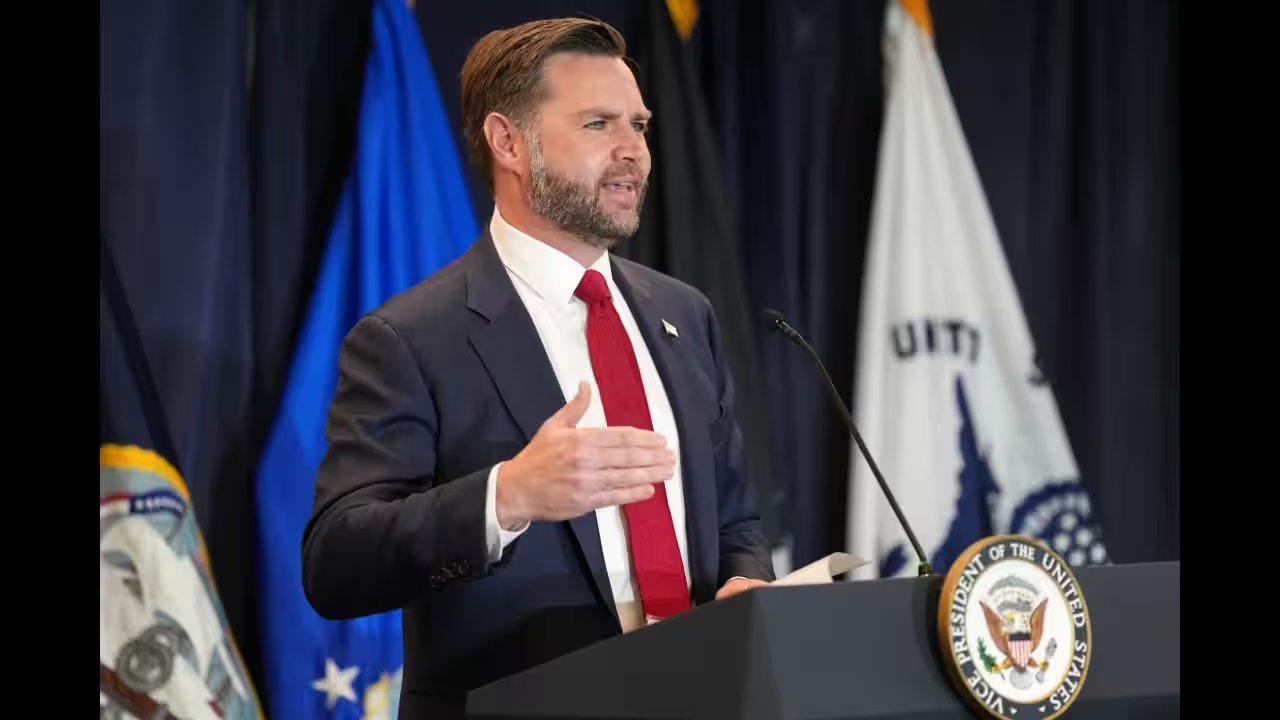
Vice President JD Vance pushed back against reports of West Wing turmoil on Monday, November 9, using college football to parody speculation over administration infighting following a bruising midterm defeat.
Speaking at a public forum, Vance opened his address by leaning directly into the whispers trailing the administration after voters stripped the party of its Senate majority. Audiences braced for an explosive political confession. Instead, Vance delivered a deliberate misdirection.
Before diving into his agenda, Vance pointedly addressed what he branded a "devastating loss last week." He noted that critics had begun unfairly targeting the head of the team despite a signature victory two years earlier, adding that staff infighting, looming reshuffles, and doubts over whether "the No. 2 has what it takes to ultimately lead" had spilled into public view. He paused. The tension snapped.
Cranking the misdirection, Vance clarified that he was referring strictly to the Ohio State Buckeyes. He threw his public backing behind backup quarterback Luke Fahey, insisting the Buckeyes would mount an "amazing turnaround" on the gridiron. The collegiate punchline referred to back-to-back Ohio State collapses—a 30-18 loss to the University of Southern California and a 41-28 drubbing by Oregon, in which the Ducks erased an early 14-0 Buckeye lead by rattling off 38 unanswered points.
Yet behind the gridiron humour sits an undeniable executive shakeup. The White House has entered an abrasive transition cycle as veteran operators give way to ideological hardliners. In the most consequential staff purge of the term, Stephen Miller has replaced longtime confidante Susie Wiles as White House chief of staff, prompting public friction and recriminations from ousted aides. Conservative commentator Laura Loomer warned that Vance's standing with the president had suffered following the election wipeout.
Policy fissures run deeper than personnel. Vance touched off a quiet dispute across the administration after publishing a post-election autopsy that attributed the midterm losses directly to the administration's war against Iran. Defending his thesis, Vance insisted that honesty about foreign policy costs had to precede any political recovery, even as President Donald Trump maintained publicly that military action remained necessary to halt Iranian nuclear ambitions.
"The reason we lost is the war. The president himself said so last night," Vance wrote in his post-mortem assessment. "If you'd like to argue it was worth it, that losing the Senate for the next 6 years was worth it, then do so. Argue it was a worthwhile cost to pay."
The White House now faces an altered legislative terrain with its Senate majority gone for the next six years, forcing Miller and Vance to navigate immediate congressional budget battles and escalating confirmation standoffs on Capitol Hill.