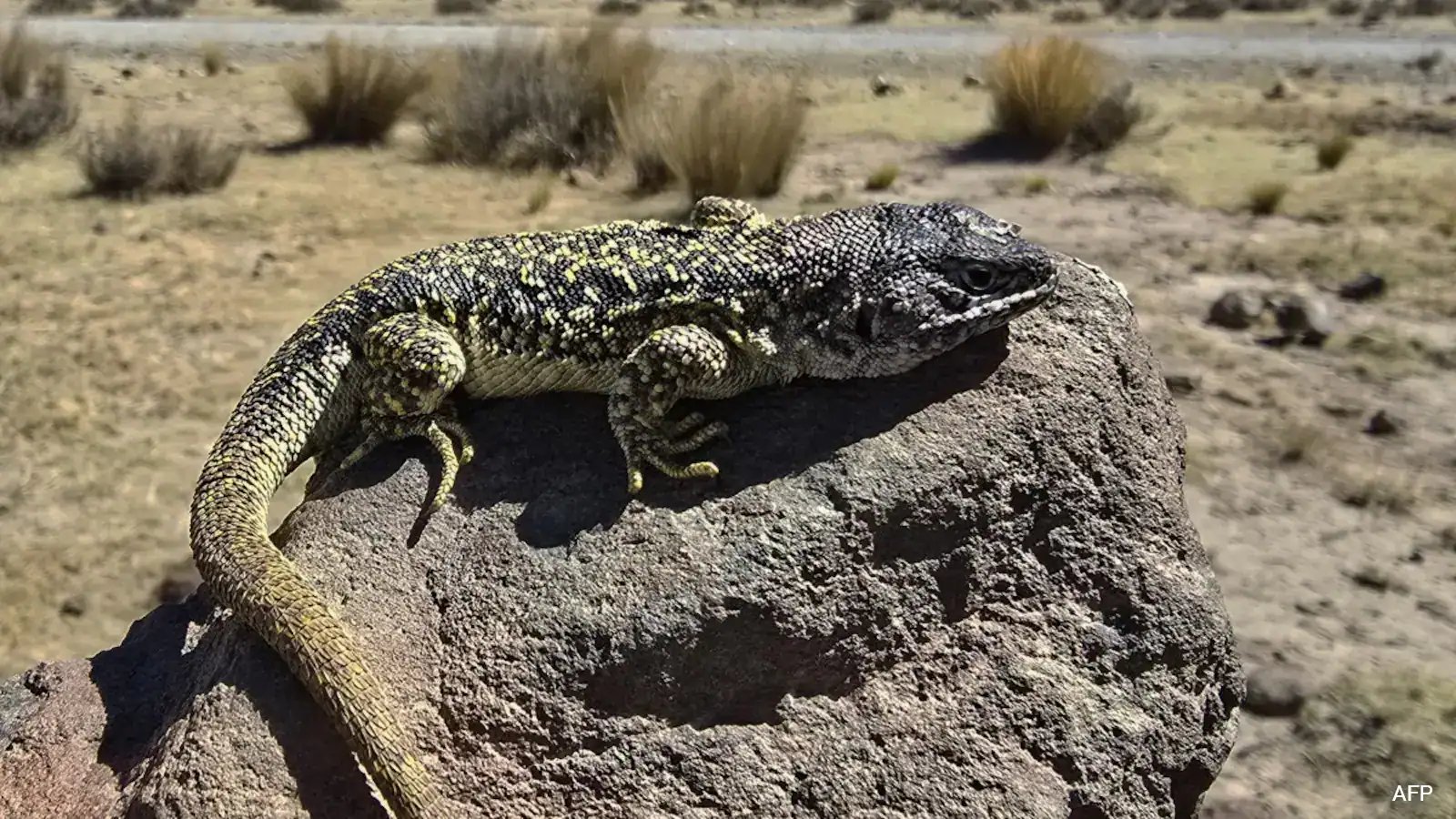
At an elevation surpassing 4,800 meters in southern Peru’s Arequipa region, researchers from San Marcos University identified a previously unknown lizard species, Liolaemus archipensis. The tiny reptile measures between six and eight centimetres, with females sporting square‑shaped dorsal spots and males displaying oblique markings and white scales that aid camouflage among rocky outcrops.
NewPARA Ling Huamani‑Valderrama, the lead biologist, explained that the species feeds on a mix of plants and small arthropods—spiders, beetles, true bugs and insect larvae. He noted the lizard’s distinct sexual dimorphism as a key factor in its high‑altitude survival.
NewPARA Peru is home to 296 lizard species according to Huamani‑Valderrama, making this discovery a significant addition to the country’s already rich herpetofauna. The find underscores the Andes as a hotspot for unique, altitude‑adapted fauna.
NewPARA The formal description was published in the Swiss journal Diversity, and the species has already been submitted to the Peruvian Ministry of Environment for recognition and potential protection measures. Conservationists warn that such high‑altitude habitats face increasing pressure from climate change and mining activities.
NewPARA Local communities in Arequipa, who rely on the region’s rugged landscapes for grazing and tourism, expressed excitement at the new species, hoping it will boost eco‑tourism and raise awareness of the area’s fragile ecosystems.