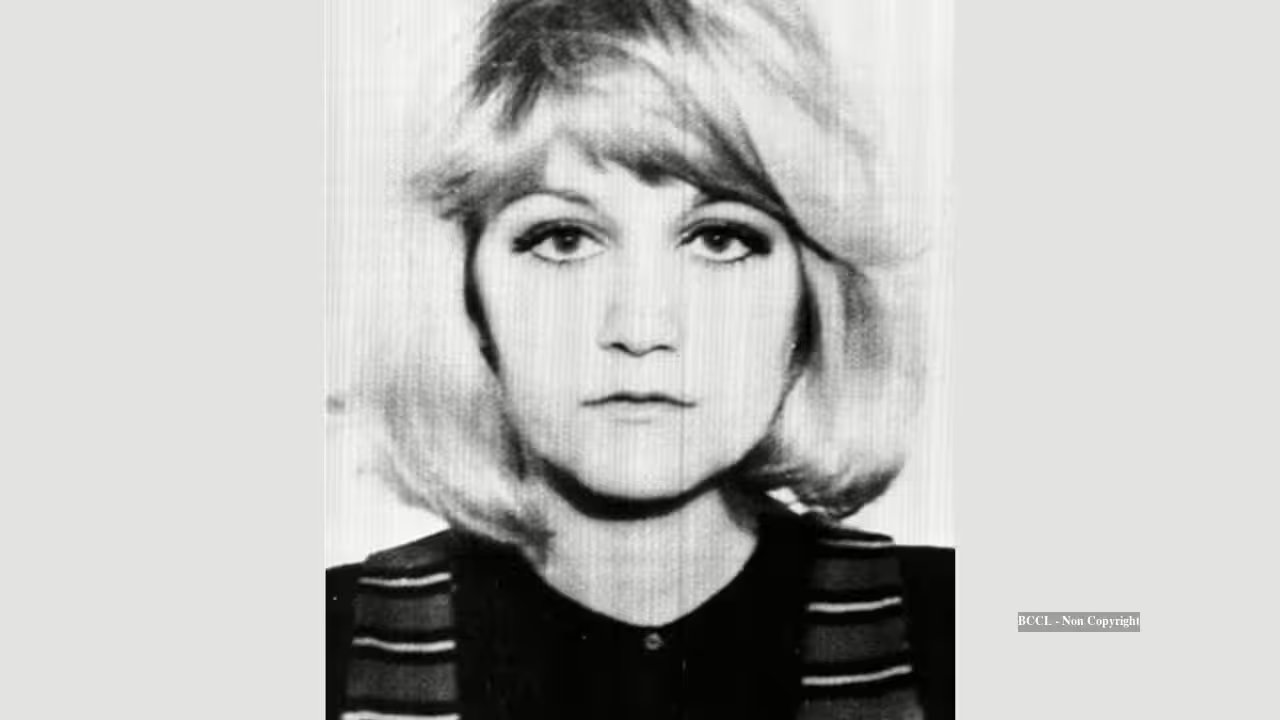
A hidden bomb detonated at cruising altitude aboard a Yugoslav Airlines Douglas DC-9 on 26 January 1972, severing the fuselage and sending 28 people hurtling toward the frozen landscape of northern Czechoslovakia. Twenty-seven died instantly. One woman did not.
Twenty-three-year-old flight attendant Vesna Vulovic fell 10,160 metres—exactly 33,333 feet—into the forested hills near the village of Srbska Kamenice without a parachute. She hit the earth and lived. More than five decades later, the catastrophic descent remains the highest fall survived by any human being in recorded history.
The routine scheduled service began in Stockholm and was bound for Belgrade. It touched down for a scheduled layover in Copenhagen, where investigators later determined an explosive device was slipped into the cargo hold.
Shortly after climbing out of Danish airspace and leveling off over Czechoslovakia, the bomb detonated. The blast ripped the twin-engine jet apart in seconds. Metal, luggage, and passengers scattered across miles of remote, mountainous timberland. The disaster wiped out every crew member and traveler on the manifest—save for Vulovic, who was trapped in the severed tail cone.
| Disaster Parameter | Official Record Details |
|---|---|
| Aircraft Type | Douglas DC-9 (Jugoslavenski Aerotransport) |
| Flight Route | Stockholm to Belgrade (via Copenhagen) |
| Incident Date | 26 January 1972 |
| Crash Location | Srbska Kamenice, Czechoslovakia (now Czech Republic) |
| Fall Altitude | 10,160 metres (33,333 feet) |
| Casualties | 27 fatalities out of 28 occupants |
| Sole Survivor | Vesna Vulovic (Flight Attendant, age 23) |
| Primary Cushion Mechanism | Angled mountain slope, thick snow cover, dense pine canopy |
Pure physics dictated her survival. Official air crash investigators established that a heavy metal food beverage cart jammed during the structural breakup, pinning Vulovic securely inside the rear tail section. That metal cocoon protected her from being sucked into the sub-zero sky.
She did not hit flat ground. The tail assembly plummeted onto an angled mountain slope blanketed in deep snow and lined with dense pine trees. The tree canopy snapped the descent velocity, the incline deflected the terminal momentum, and the snowpack absorbed the residual impact shock. It was a razor-thin collision envelope between death and preservation.
Bruno Honke, a local woodsman walking through the dark forest as metal debris dropped around him, heard faint screaming among the broken branches. He located Vulovic pinned inside the wreckage, barely breathing, and summoned emergency medical teams to the mountain.
Her injuries were catastrophic. She sustained a fractured skull, two crushed vertebrae, a shattered pelvis, multiple fractured ribs, and breaks through both legs. Upon arrival at the regional hospital, she slipped into a profound coma that lasted weeks while surgeons fought to stabilize her shattered frame.
Paralysis struck her body from the waist down. Doctors initially warned her family that she would likely never walk again, let alone leave clinical care.
Yet she fought through.
Vulovic endured 16 months in hospital care, undergoing surgical realignment, spinal rehabilitation, and intensive physical therapy. Sensation gradually returned to her lower limbs. While she never stepped foot inside a commercial cabin as an active attendant again, she regained full mobility and returned to work for the airline in an administrative desk position.
I was broken, and the doctors put me back together again. Nobody ever expected me to live this long.
Vesna Vulovic, Sole Crash Survivor
In 1985, Guinness World Records formally certified her descent as the highest fall survived without a parachute at 10,160 metres. That benchmark stands unchallenged. Archival disputes surfaced in 2009 suggesting the DC-9 might have initiated an emergency descent prior to breakup, but aviation safety authorities dismissed the claims as purely circumstantial.