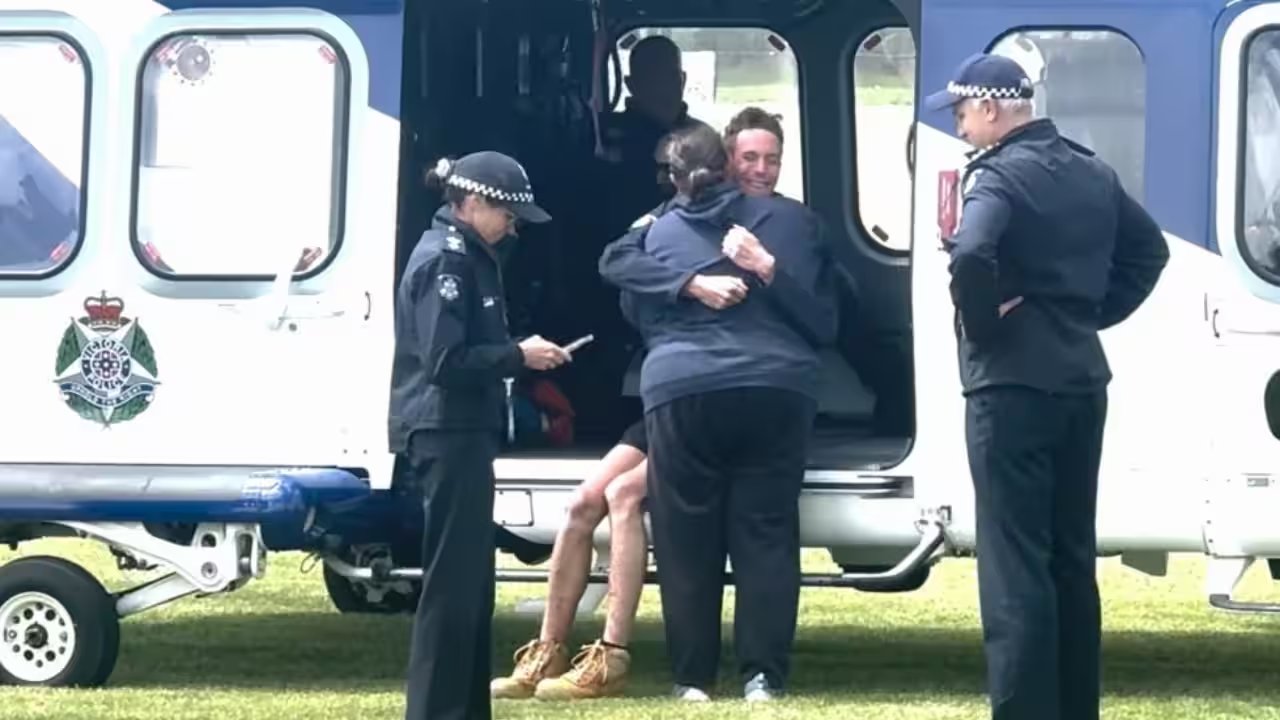
Victoria Police tactical crews pulled 17-year-old William alive from a rugged Victorian riverbed on Thursday morning, ending a frantic six-day search across freezing bushland 180 kilometres east of Melbourne.
He was exhausted. He was scratched and sunburned. But he was alive.
The teenager disappeared on November 6 after arriving for his first independent camping trip near Walhalla East with a teenage friend. When William walked back toward their drop-off point to collect extra camping gear, he took a wrong turn into dense undergrowth and never returned. He carried no mobile phone, no survival provisions, and no drinking water.
His family confirmed that William lives with Level 2 autism—a diagnosis requiring structured routines and substantial support, factors that sharply heightened fears as freezing night-time temperatures settled over the mountainous Gippsland terrain.
The separation happened within minutes. William's camping companion launched an immediate search around the perimeter of their campsite when he failed to return, but the track had vanished into thick scrub.
William walked for hours, disoriented. As night fell, he scrambled beneath low-hanging bushes to escape the cold. The following morning, his push through the wilderness went wrong. He lost his footing on loose gravel and tumbled down a steep riverbed embankment, leaving him with bruised legs and deep lacerations.
Trapped by the sheer rock walls of the ravine, he made a calculated choice: stay put.
He remained beside a trickling creek for the final 48 hours of his ordeal, resting on an exposed flat rock and waiting for search teams to sweep the valley.
Survival came down to pure endurance. William had only two towels and a single pillow to insulate his body against overnight frost.
He found a creek. He drank the fresh water. And for food, he carefully rationed a single family-sized packet of chicken-flavoured potato chips across his first two days in the brush before the bag ran empty.
He's grounded for life.
Elizabeth Barkley, Mother
By day four, the food was gone. He endured the final four days on water alone, fighting off exposure while listening to the distant drone of aircraft engines high above the forest canopy.
| Search & Rescue Operational Parameters | Field Details |
|---|---|
| Missing Youth | William, 17 (Diagnosed with Level 2 Autism) |
| Last Seen Location | Walhalla East campsite (180 km east of Melbourne) |
| Duration Missing | 6 days (November 6 – November 12) |
| Deployment Footprint | Air Wing, Search and Rescue, Mounted Branch, Dog Squad |
| Volunteer Mobilisation | 80+ personnel daily; hundreds deployed across six days |
| Discovery Marker | Fishing tackle box spotted 2 km from campsite |
The tactical operation grew into one of the largest regional searches deployed in Gippsland this year. Coordinated from a primary staging base in Cowwarr, the sweep assembled the Victoria Police Search and Rescue Squad, the Public Order Response Team, the Mounted Branch, the Dog Squad, and specialist divers tasked with combing murky waterways.
More than 80 civilian volunteers joined police on foot every morning, hacking through razor-sharp scrub that vehicles could not penetrate.
The breakthrough came from above. A Victoria Police Air Wing helicopter, banking across a ridge line two kilometres from the youth's original camp, spotted a bright fishing tackle box lodged in the rocks.
Pilot and spotters adjusted their approach. Lying on a flat stone bench in the dry riverbed below was William.
He was sleeping when the aircraft swept in. Woken by the rotor wash, the teenager sat up, waved both arms, and pumped his fist into the air. Tactical rescue officers winched down through the canopy, securing the shirtless teenager alongside his retrieved pillow, a small camp table, and a lunch box before hauling him aboard the helicopter.
Paramedics transferred William directly to the Cowwarr police staging ground, where his mother, Elizabeth Barkley, waited on the tarmac. Paramedics cleared him of life-threatening injuries, treating him for severe sunburn, dehydration, and leg lacerations before transferring him to regional medical care for overnight observation.
| Current Condition | Conscious, responsive, treated for lacerations and exposure |