If you plan to put your money down on a mid-size SUV, hold your fire. A wholesale overhaul is creeping closer on the horizon.
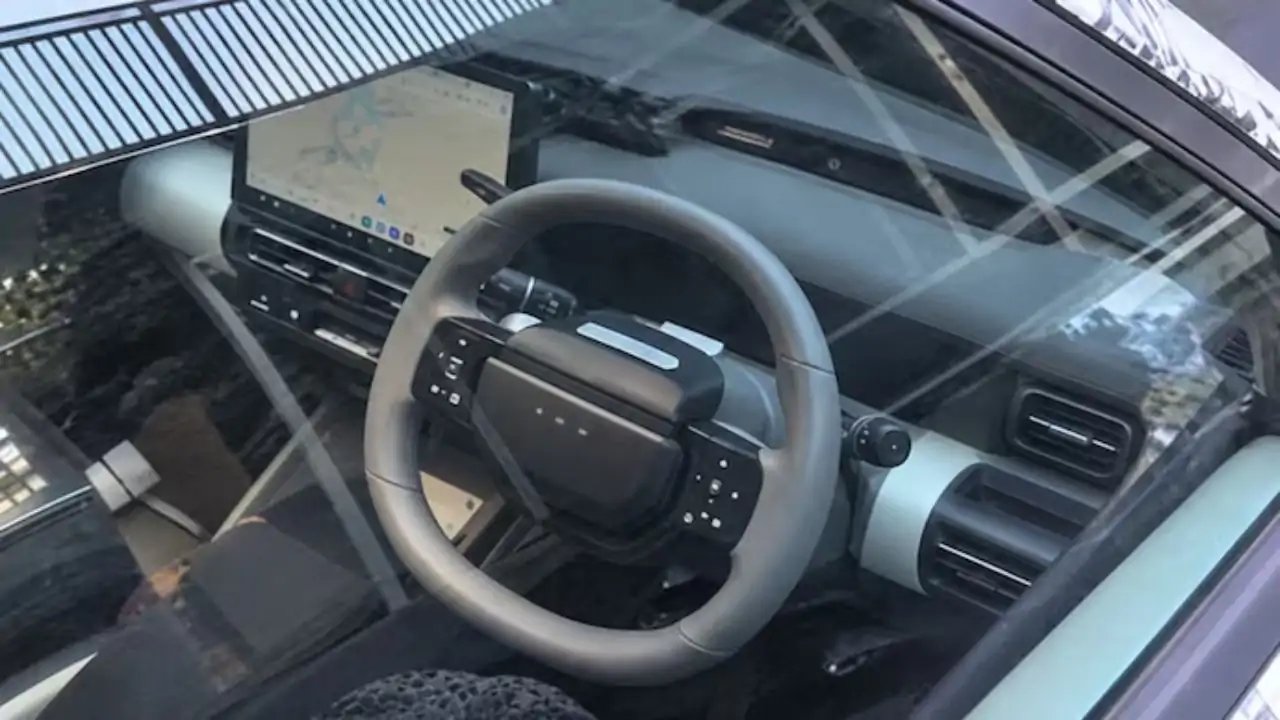
Test prototypes of the next-generation 2027 Hyundai Creta have shed their interior camouflage in Manali, offering the first clear look at an overhaul bound for Indian showrooms by mid-2027. The cabin layout mirrors early test mules spotted across South Korea in February. And the alterations run far deeper than superficial cosmetic trim. Beneath the sheet metal, the nameplate shifts to the larger K3 architecture shared with sibling Kia Seltos, yielding a broader footprint and noticeably more knee room across both seating rows.
Cabins define modern purchase decisions. The test vehicle confirms Hyundai is ditching its signature dual-screen glass slab seen on the current Seltos, Venue, and Verna.
Instead, drivers get a stand-alone large infotainment touchscreen paired with a slim digital instrument binnacle set deeply into the dashtop. That recessed arrangement mimics the focal plane of an active head-up display. The architecture points toward the India arrival of Hyundai's advanced Pleos Connect digital interface. Below the display rests a standalone physical rotary knob for rapid volume or climate adjustments—a welcome nod to usability over all-touch frustration.
A redesigned steering wheel takes center stage. It swaps traditional metallic badge lettering for Hyundai's four-dot Morse code 'H' logo, framing touch-sensitive switchgear and two knurled physical scroll rollers. Between the front chairs, a floating center bridge houses twin cupholders and flows straight into an extended armrest box. Horizontal trim flutes along the inner door skins echo styling cues from the global Bayon crossover. Rear-seat passengers also benefit directly: the front passenger backrest integrates dedicated 'boss mode' power switches, letting chauffeured occupants slide the front seat forward on demand. An off-white and black dual-tone palette completes the prototype cabin.
| Feature Area | Observed 2027 Generation Equipment | Current Creta Baseline |
|---|---|---|
| Underpinning Platform | K3 Architecture (Shared with Seltos) | Modified K2 Architecture |
| Driver Instrumentation | Recessed Slim Display (HUD-style) | Integrated 10.25-inch Digital Cluster |
| Steering Interface | Morse Code 'H' Hub, Touch Controls & Wheels | Traditional Badged Four-Spoke Wheel |
| Exterior Profiles | Flush Door Handles, Boxy Venue-Style Nose | Pull-Type Handles, Parametric Grille |
The spy shots back up earlier exterior glimpses from high-altitude testing runs. Up front sits a broad, upright grille modeled closely after the Venue, dominated by a prominent central radar block tuned for Advanced Driver Assistance Systems (ADAS). Split headlight assemblies return, slotting sleek horizontal LED daytime running lights above stacked projector units. Out back, designers have fitted three-segment vertical LED taillight clusters. The flanks reveal clean flush-fitting door handles, surround-view camera pods tucked under the wing mirror caps, and parking sensors lining both front and rear valances.
Powertrain stability remains the commercial playbook. The existing 1.5-litre naturally aspirated four-cylinder petrol, 1.5-litre turbo-petrol, and 1.5-litre four-cylinder turbo-diesel engines are set to carry over with their respective manual and automatic transmissions.
Yet the biggest technical leap arrives after the primary rollout. Hyundai is readying a dedicated strong-hybrid system mated to the 1.5-litre petrol mill. That powertrain will target high-mileage urban commuters hungry for genuine 20-plus km/l fuel economy without plugging into wall sockets.
Market Context: The current Creta commands a starting price of roughly ₹10.91 lakh (ex-showroom), cementing Hyundai's dominance in India's cutthroat mid-size crossover space. But competition is swelling fast. The next iteration must fend off familiar rivals—the Kia Seltos, Skoda Kushaq, and Volkswagen Taigun—alongside upcoming contenders like the Tata Sierra and Nissan Tekton. Once the hybrid arrives, it will lock horns squarely against the Maruti Suzuki Grand Vitara, Toyota Urban Cruiser Hyryder, Maruti Victoris, and the returning Renault Duster.
The timeline dictates your buying strategy. Mid-2027 remains the target arrival window for conventional petrol and diesel derivatives, while the fuel-sipping strong-hybrid will debut in a subsequent phase. Buyers needing a car today will find the outgoing Creta fully stocked across all three engine options, with dealer promotions expected to soften prices as production milestones approach.
| ADAS Integration |
| Central Radar in Lower Air Dam |
| Windshield & Bumper Sensor Cluster |
| Future Propulsion | 1.5L Petrol, Turbo, Diesel + Strong Hybrid | 1.5L Petrol, 1.5L Turbo, 1.5L Diesel |