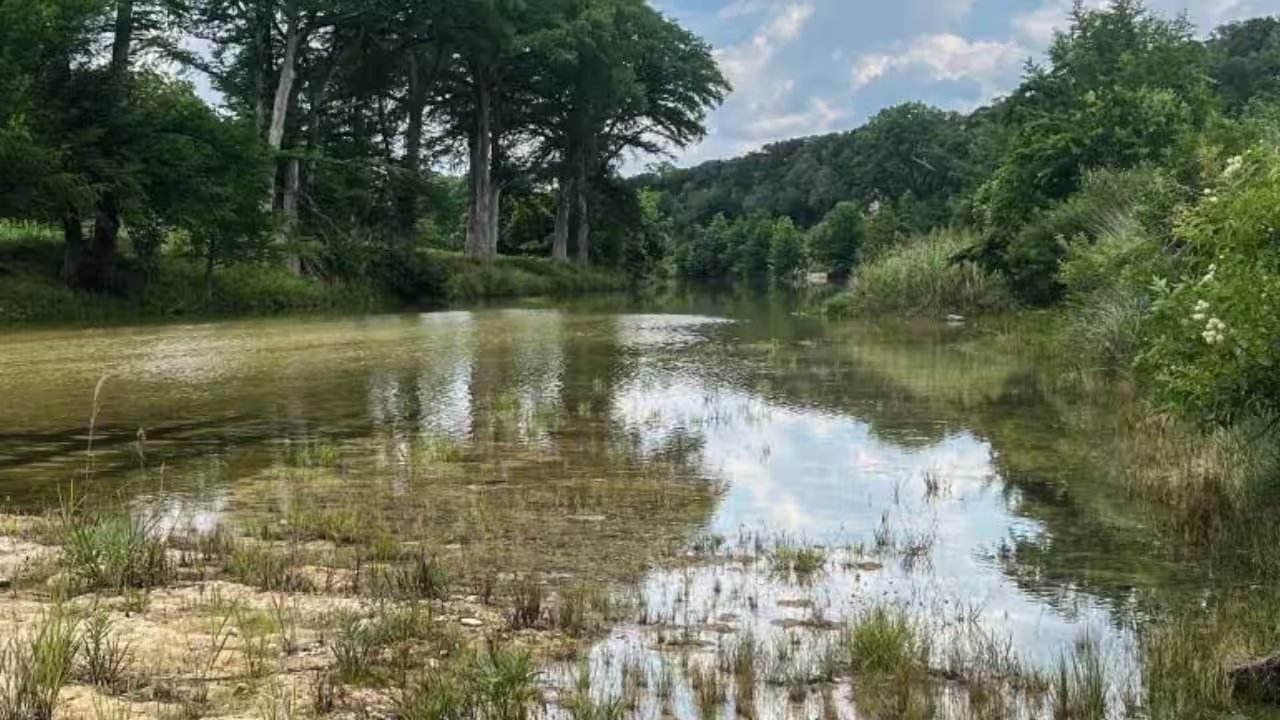
The Winn family has permanently locked down 165 acres of Four Winns Ranch near Wimberley, Texas, securing a vital stretch of the Blanco River watershed. The agreement, finalized in partnership with the Hill Country Conservancy and the USDA’s Natural Resources Conservation Service (NRCS), ensures the land remains protected from development indefinitely. This move shields a landscape that has been in the family’s orbit since 1937, when renowned Texas artist James Buchanan Buck Winn Jr. purchased the original 1,164-acre property.
The stakes here extend well beyond preserving a scenic view. The ranch sits along a key recharge corridor for the Edwards and Middle Trinity aquifers. The NRCS notes that the Blanco River contributes up to 6% of the average recharge reaching Barton Springs in Austin. During droughts, that surface water becomes the lifeline. Without this protection, the region risks losing the natural filtration and flow that keep Central Texas’s springs alive.
Buck Winn wasn’t just a landowner; he was a cultural titan of the state. A sculptor, architect, and pilot, he painted the 280-foot History of Ranching mural at San Antonio’s Pearl Brewery. His legacy is woven into the local identity, with murals still visible at the Wimberley Community Center and Texas State University. The land itself carries deeper scars and stories—stone fences dating to 1850 line the northern bank of Pierce Creek, remnants of German settlers who homesteaded the area long before Winn’s arrival.
Ecologically, the property is a refuge for species on the brink. A recent survey identified nine bird species listed by Texas as Species of Greatest Conservation Need, including the federally protected Golden-cheeked Warbler. These habitats are increasingly rare in the Hill Country, where land fragmentation and grazing pressure threaten biodiversity. The easement doesn’t shut the doors, though. The agreement allows for continued agricultural operations and ecotourism, meaning the ranch remains a working landscape rather than a static museum piece.
The broader implication is clear: in a region where water is currency, protecting the recharge zone is protecting the future. The Hill Country Conservancy will manage the easement, monitoring compliance with the agricultural and ecological covenants. For now, the 165 acres remain a buffer against the encroaching development that threatens Central Texas’s water security.