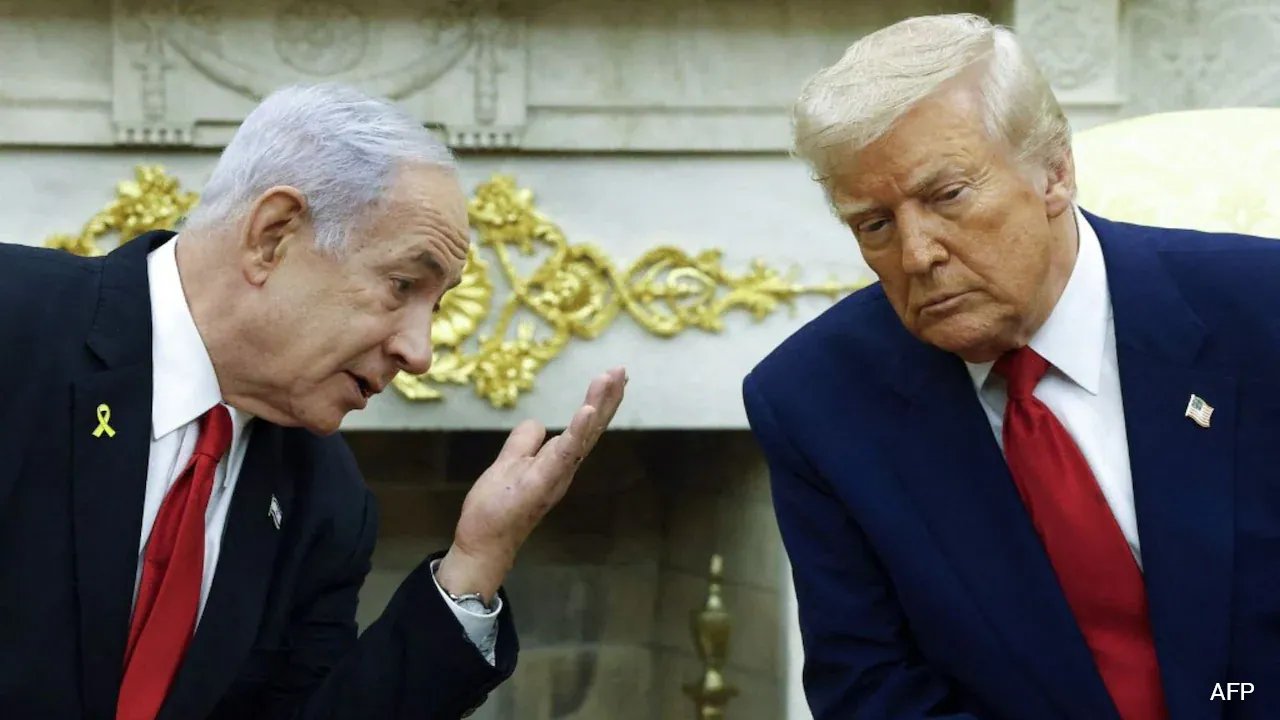
US President Donald Trump and Israeli Prime Minister Benjamin Netanyahu collided in an acrimonious weekend telephone exchange over the war against Iran, as Washington pushed back against persistent Israeli lobbying to resume direct military strikes.
Washington resisted. The conversation rapidly deteriorated into a volatile shouting match. Officials in Jerusalem moved swiftly to downplay the friction, with the Prime Minister's Office dismissing accounts of a heated altercation as "fake news, complete nonsense." A senior Israeli official confirmed the leaders spoke, insisting the exchange was "very much not a difficult conversation."
Yet the strategic fracture between both capitals is widening. Trump wants economic containment. Netanyahu wants war.
Netanyahu articulated his doctrine on Tuesday during an address at the swearing-in of the 26th Knesset, warning lawmakers that Tehran is aggressively rebuilding its nuclear apparatus. Containment, he argued, has reached a dead end.
The only way to permanently eliminate this existential threat is to overthrow the regime of the ayatollahs.
Benjamin Netanyahu, Prime Minister of Israel
Netanyahu warned that Israel would soon face crushing international pressure to accept a nuclear-armed Iran and surrender recent battlefield gains across Gaza, Lebanon, Syria, and the West Bank. To prevent that outcome, the prime minister has dialed the White House daily, urging Trump to unleash American firepower and renew direct strikes on Iranian targets.
Factions within the White House and regional partners have mobilized to halt the escalation. Arab and Muslim leaders across the Middle East have voiced deep alarm over Netanyahu's daily appeals to resume the conflict, urging Washington to prioritize negotiations over kinetic strikes. Trump has held firm against the pressure. Asked in a national broadcast interview on Sunday whether he intended to restart military operations against Iran, Trump stated bluntly that he did not think "there's any reason to."
The friction follows a history of profane phone exchanges between the two leaders over regional warfare, including a blistering confrontation where Trump openly called Netanyahu reckless.
| Strategic Parameter | Washington Position (Trump) | Tel Aviv Position (Netanyahu) |
|---|---|---|
| Core Policy | Economic sanctions and negotiated leverage | Resumption of joint military strikes |
| Strategic End-State | Iranian concessions without direct combat | Overthrow of Tehran's clerical regime |
| Engagement Cadence | Holding military strikes; resisting escalation | Daily prime ministerial phone calls to secure strikes |
| Regional Alignment | Coordinated de-escalation with Arab partners | Consolidation of multi-front military control |