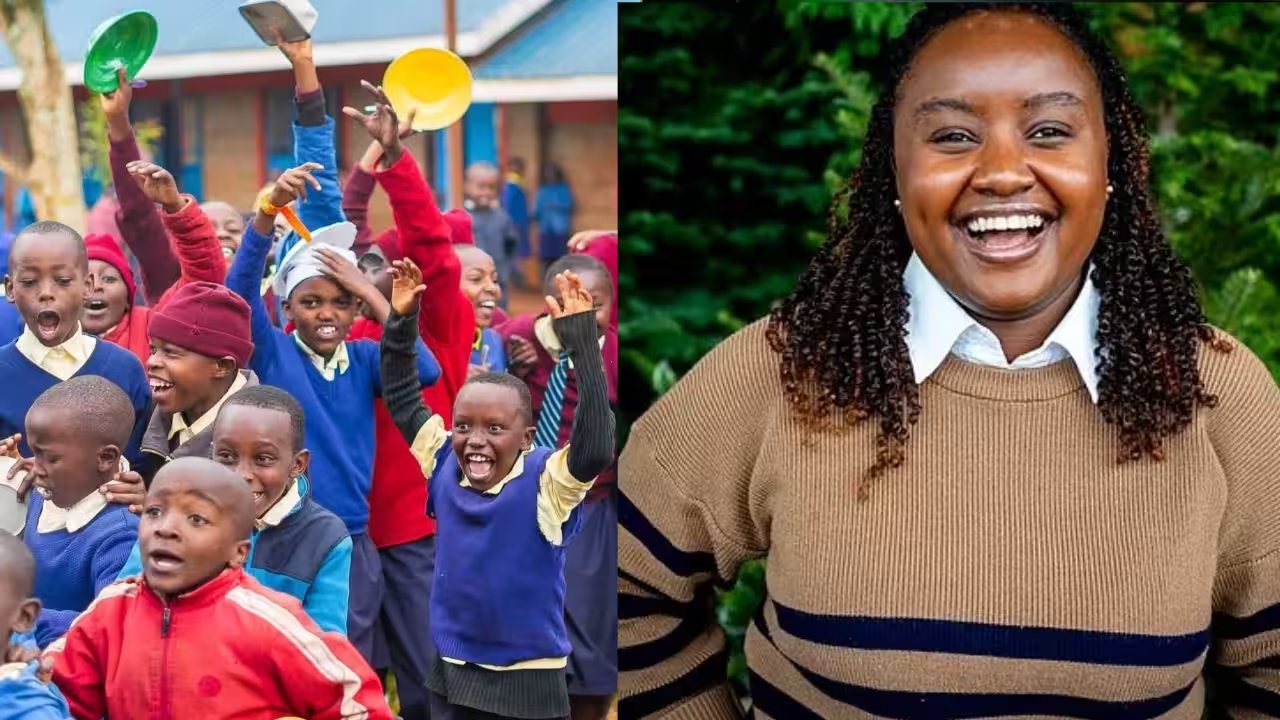
Food4Education has expanded its school-feeding operations to deliver more than 700,000 meals each day across 2,700 public schools in Kenya, turning a grass-roots feeding drive into a 6,000-employee logistics apparatus.
Njiru started with just 25 children. While studying nutrition in Australia, she tracked how chronic childhood undernourishment throttled classroom attendance in Kenya. She gathered seed money from fellow university students in 2010, returned home, and built a modest makeshift kitchen in Ruiru in 2012. Hunger stalled learning. Njiru tackled the shortfall directly.
Relying solely on sporadic charity threatened long-term operations, prompting Njiru to re-engineer the delivery model. In 2016, Food4Education built its first industrial central kitchen, capable of preparing 10,000 meals in a single batch. Partnerships with municipal authorities and school boards quickly followed.
Three years later, the organisation rolled out Tap2Eat. The proprietary system issues digital, near-field communication wristbands to enrolled students. Children tap the wearable bands at lunch counters to claim their trays, while parents transfer subsidised micro-payments directly via mobile platforms to cover basic costs. Donors and state programmes fund the remaining balance. The real-time telemetry tracks meal counts instantly, eliminating waste and rooting out distribution leakages.
Besides streamlining kitchen logistics, the group rerouted supply chains. Food4Education buys roughly 80% of its raw produce directly from domestic small-scale farmers, providing hundreds of agricultural growers with guaranteed, bulk purchase contracts season after season.
Her operations won international backing this year when European officials awarded Njiru the 2026 German Africa Prize, honouring the enterprise's work in curbing severe food insecurity and boosting classroom retention.
Njiru is now preparing to push the centralised kitchen model into neighbouring East African markets. Food4Education has scheduled new distribution hubs to hit a target of one million fed children every school day by 2027.