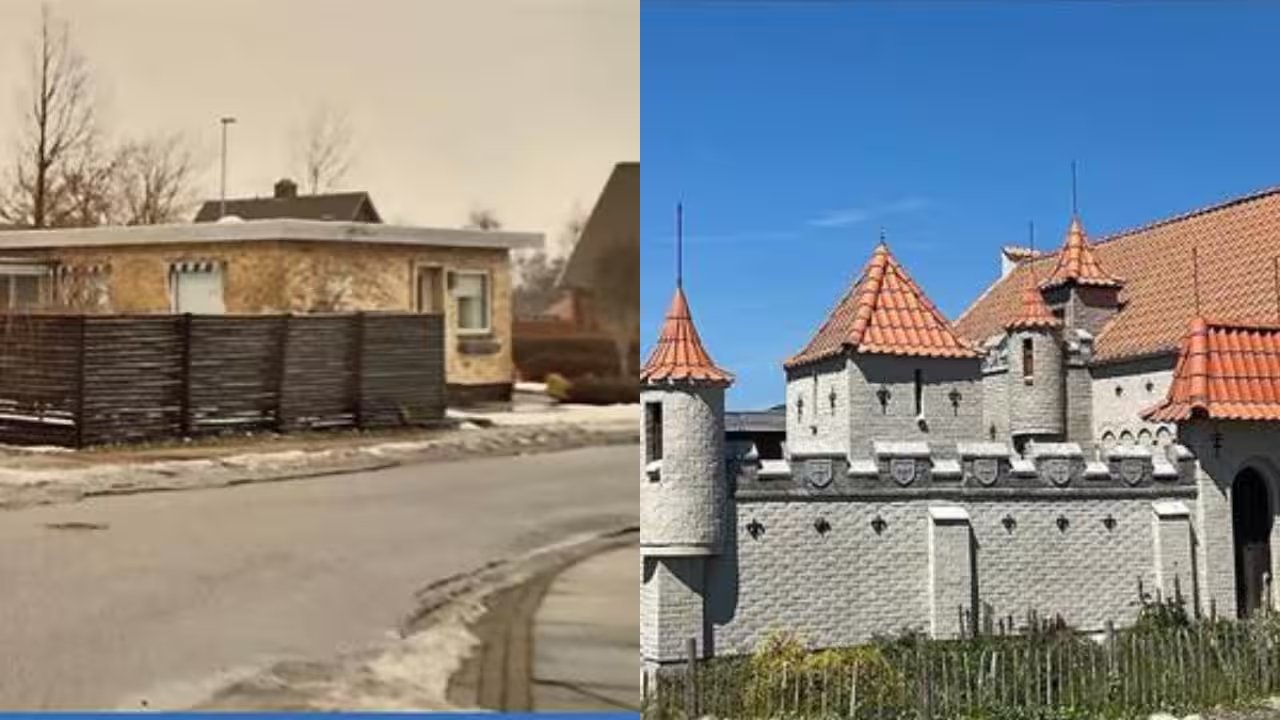
Peter Hvid moved into a 1959‑built detached house in Gistrup in 2005 and, after securing planning permission a year later, began erecting a wall around the garden that would become the first of many towers. The project began as a childhood fascination with knights and castles, and the once‑ordinary boundary wall soon grew into a sprawling, self‑built citadel.
The moat that once measured a single metre wide and ten metres long has expanded to a four‑metre trench that now encircles most of the property. Hvid performed roughly 90 per cent of the masonry, carpentry and decorative work, hiring professionals only for plumbing and electrical installations.
Inside, the original 220‑square‑metre home was trimmed to about 180 square metres, with sections of the upper floor removed to create soaring six‑metre ceilings. The interior houses a grand hall, a statement staircase, heavy wooden doors with iron fittings, a large candelabra, richly detailed wood paneling, and a six‑and‑a‑half‑metre dining table that Hvid built himself.
Despite its medieval façade, the castle retains all modern conveniences: central heating, electricity, and a contemporary bathroom. Salvaged iron nails, repurposed timber, and heraldic motifs give the space a historic illusion while maintaining 21st‑century functionality.
The castle has become a local landmark, hosting an annual open‑castle event that attracted around 600 visitors in its most recent edition. Each year, Hvid also organizes a Halloween gathering for children, featuring 16 actors and local businesses that supply sweets and treats.
Construction remains a work in progress; Hvid continually envisions new additions, such as a royal guard complete with uniforms and helmets, and has repeatedly claimed the latest tower will be the final one. His partner Maria considers the estate her future summer palace, and the project continues to evolve without a set completion date.