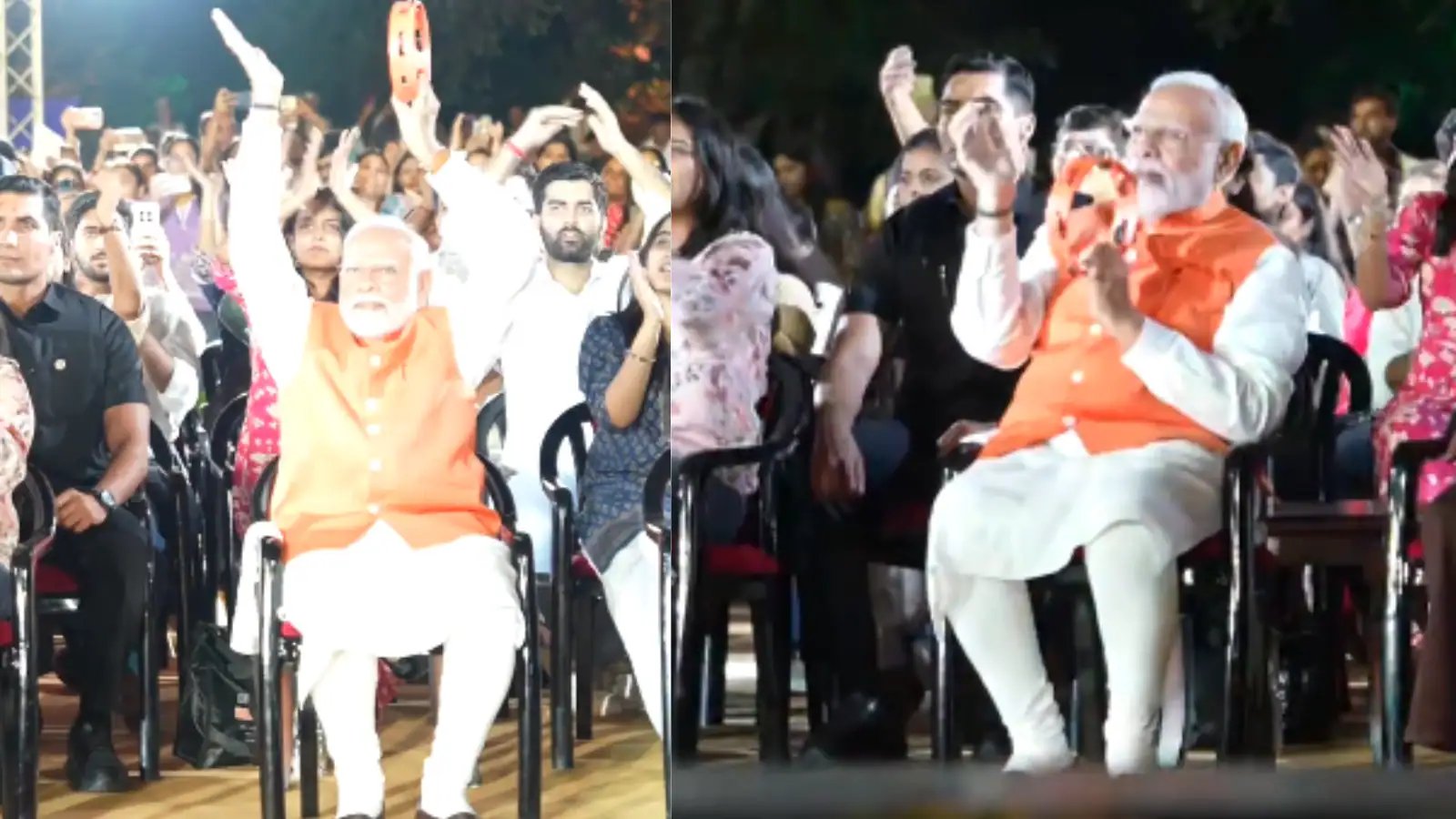
The Prime Minister sat in the front row, tambourine in hand, as a crowd of predominantly young attendees clapped and danced to high-energy renditions of devotional songs. It was a stark departure from the somber, traditional gatherings usually associated with Upadhyay’s commemoration. The event took place in a park directly opposite the BJP headquarters, a location chosen to visually reinforce the party’s ideological roots.
Bhajan clubbing is no longer a niche sub-genre. It has become a mainstream cultural phenomenon, particularly among Gen Z, who are redefining spiritual engagement through electronic beats and acoustic fusion. The atmosphere mirrored a rock concert, minus the alcohol, with lyrics set to rhythms that pulsed through the crowd. Attendees were not passive listeners; they were active participants, singing along with intense physicality.
Modi’s presence was not merely observational. He played the instrument and clapped along to a bhajan dedicated to Lord Ram, a direct nod to the party’s core narrative. The visual of the nation’s top leader immersed in a youth-driven cultural trend signals a significant shift in outreach strategy. It suggests an effort to make ideological symbols feel contemporary and accessible to a generation that consumes culture through digital and experiential formats.
The event underscores how political parties are increasingly leveraging cultural trends to bridge generational gaps. By aligning with a movement that celebrates tradition through modern mediums, the leadership aims to resonate with younger demographics without diluting core messages. The next step in this cultural-political convergence will likely be seen in upcoming election rallies, where similar high-energy formats may replace traditional speeches.