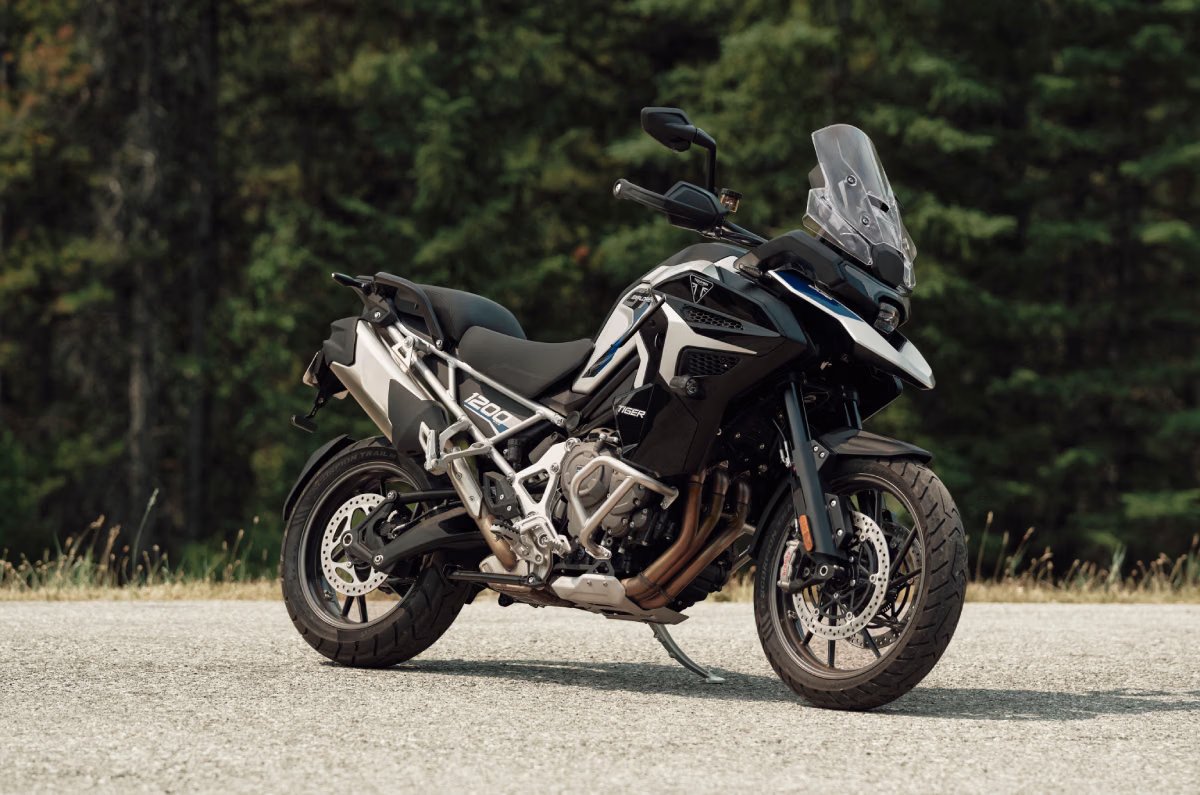
Triumph has finally pulled back the curtain on the 2027 Tiger 1200, and it's not just a facelift. The 1160 cc T-Plane triple now pushes out 158 PS at 9,250 rpm, a bump of 8 PS over the outgoing model. More importantly, the torque curve has been flattened. You get 130 Nm at 6,750 rpm, which means the bike feels alive way down in the revs. The first, second, and third gear ratios have been revised to keep you in this sweet spot, while the crawl speed has been reduced by 6 km/h. This is a bike that wants to go, not just survive.
The chassis updates are where the real money is spent. Both the GT Pro and Rally Explorer variants ride on SHOWA EERA HEIGHTFLEX semi-active suspension. This system reads the road and adjusts damping on the fly, offering Firm, Medium, and Soft settings. It’s the first time this specific tech has been fully integrated by any manufacturer. Combined with a new hydraulic secondary bump stop and retained Brembo Stylema brakes, the bike promises to handle both tarmac and rough trails with less fatigue. The ride height also drops by 30mm automatically when you stop, making it easier for shorter riders to get a foot down.
Technology is the headline act here. The new 7-inch Bosch touchscreen supports wired and wireless Apple CarPlay and Android Auto. But the real star is the radar suite. Front and rear radar sensors power a list of features that sound like they belong in a luxury sedan: Adaptive Cruise Control with Overtake Assist, Forward Collision Warning, and Blind Spot Assist. It’s a lot of tech for a motorcycle, but Triumph’s goal is to make it intuitive. Steve Sargent, the Chief Product Officer, noted that customers want top-tier tech that doesn’t get in the way.
In India, the bike will arrive in March 2027 in two flavors. The GT Pro is the tarmac-focused option with cast wheels, a 20-litre tank, and a wet weight of 250 kg. The Rally Explorer is the do-anything machine, featuring spoked wheels, a 30-litre tank, and a 268 kg weight. It also gets an Off-road Pro riding mode, engine protection bars, and a Tyre Pressure Monitoring System. Both models come with heated seats and grips, a 16,000 km service interval, and the new Evo luggage system from GIVI. Pricing will be announced closer to the booking date, but expect it to sit comfortably in the premium adventure segment.
The design changes are subtle but effective. The bodywork, including the fuel tank and windscreen, has been reshaped for better aerodynamics and rider comfort. The new adaptive LED projector headlight uses extra LED elements to light up the inside of a bend as you lean. It’s a small detail, but it shows how much thought has gone into making the bike more accessible and refined. With the launch just around the corner, the Tiger 1200 is set to be a serious contender in the high-end adventure market.