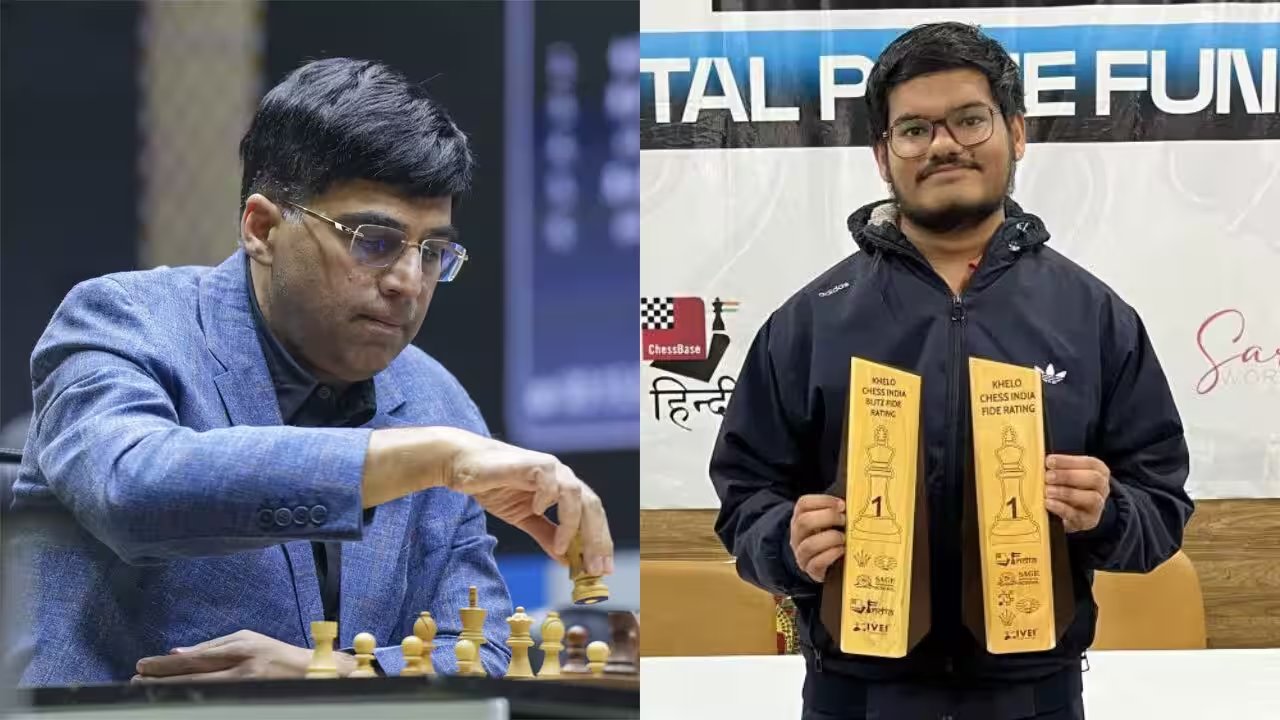
Anuj Shrivatri locked down the decisive victory at the ASEAN Plus tournament in the Philippines on Sunday, becoming India's 100th chess Grandmaster. It took 36 years to compile this century after Viswanathan Anand first breached the barrier in Coimbatore in 1988. The milestone reads like a national triumph. But strip away the social media applause, and Indian chess faces a sobering reality on the board.
Becoming a Grandmaster was once a golden ticket to the global circuit. Today, it is merely an entry pass to an overcrowded room. When Anand earned his title in 1988, fewer than 200 active players worldwide stood above Elo 2500. Now, roughly 550 active GMs clear that benchmark globally, while another 750 have slumped beneath it. India mirrors that exact inflation. Out of the 100 Indian players who have secured the title, only 51 hold a rating of 2500 or higher. The rest have slipped backward, stranded in an unforgiving middle ground.
The rating spread among India's centurions lays bare the brutal gap between the elite and the rest. At the summit stands Rameshbabu Praggnanandhaa with a commanding Elo 2763. At the bottom sits Saptarshi Roy Choudhary at Elo 2222. Nine Indian Grandmasters aged 15 to 25 currently hover below the baseline GM threshold of 2500. Prithu Gupta, who achieved the title as a teenager, has tumbled to Elo 2398—ranking 142nd in India and outside the top 3,000 players on the planet.
Survival as a touring professional demands an Elo north of 2650. That is where round-robin invitations, appearance fees, and actual prize money reside. If a player fails to crack Elo 2550 by age 17, the leap rarely happens. Junior hopefuls burn through personal savings, abandon school, and chase norms through frantic European circuits. Some even withdraw from pairings mid-tournament or sprint from city to city overnight just to protect their rating from dropping.
The domestic structure provides almost no financial cushion once the initial fanfare subsides.
"Generally, the players have to pay huge amounts as coaching fees and most of the GMs today are unemployed or unsponsored," said former seven-time national champion and veteran coach Pravin Thipsay. "There are many others who spend these types of funds but never ever cross the rating of Elo 1900. Private sponsors and funding for coaching is very small in number compared to the aspirants trying to get titles in India."
Thipsay pushed back against the All India Chess Federation for leaving titled players to fend for themselves. Unlike federations in Russia or China that systematically employ masters as state trainers and academy coaches, the Indian system has built no mechanism to provide titled players with steady income or coaching assignments. A century of Grandmasters proves that Indian talent is relentless, but for Shrivatri and the next crop of aspirants, the brutal fight to survive on the board has only just begun.