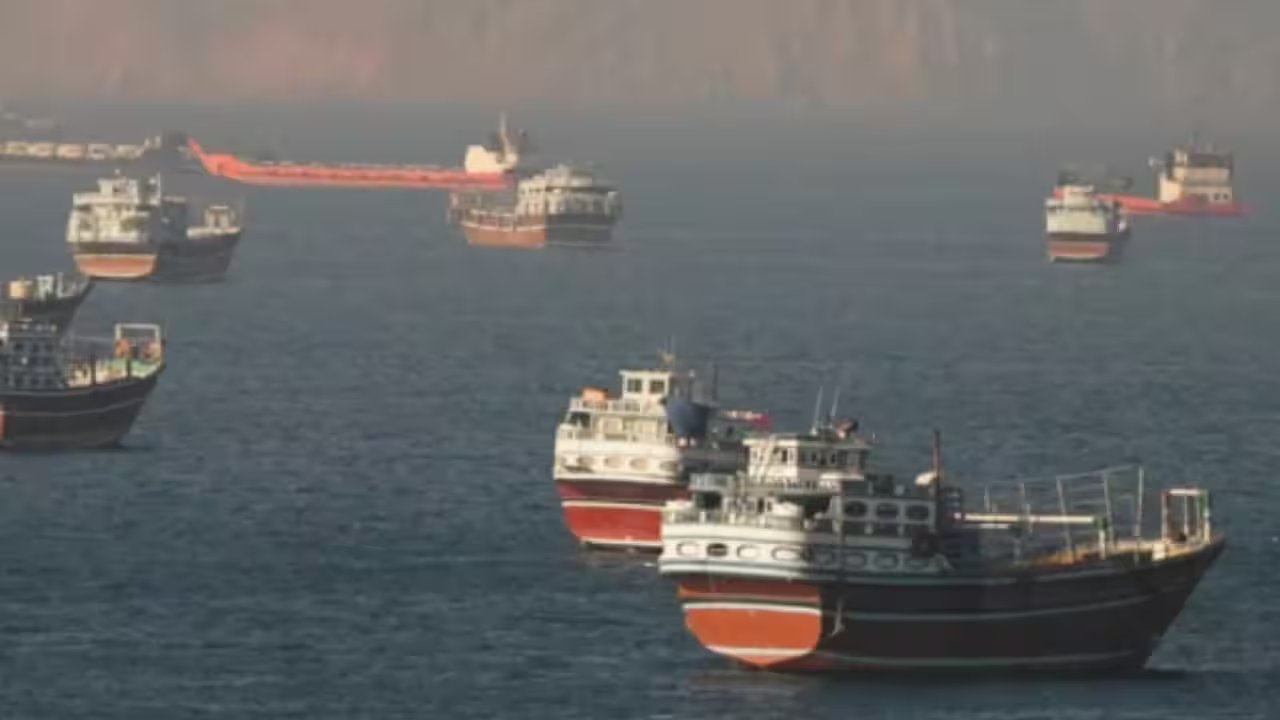
Shipments through the Strait of Hormuz averaged 14 million barrels a day in the week ending Oct. 18, a drop to 82% of prewar volumes, Kpler data shows.
In October alone, 30 vessels fell under missiles or drones, accounting for about 20% of all ship attacks recorded during the conflict, senior analyst Michelle Wiese Bockmann said.
To skirt danger, tankers now berth briefly in the Gulf of Oman, offload to smaller craft, and transfer cargo near the Omani coast, a maneuver aided by U.S. air cover that patrols a corridor thirty miles offshore. Pipelines across Saudi Arabia and the UAE have also been rerouted, so 40% of non‑Iranian crude shipped out of the Gulf in September used routes that bypass Hormuz.
The incentive is clear: traders can tack on roughly $20 per barrel by reselling Iraqi crude, a premium that translates to about $40 million on a two‑million‑barrel supertanker, and shipowners are offering crews up to $25,000 for the perilous crossings.
The Tanzania‑flagged supertanker Loyalty, loaded two million barrels of Iraqi crude, was struck by a rocket‑propelled grenade on Oct. 16, damaging a freshwater tank while still full, Vanguard said. Freight for a supertanker carrying Gulf crude to China approached a record $37.37 per barrel this week, and war‑risk insurance premiums have leapt to 10% of a vessel’s value from less than 3% before the war, Windward reports. Analysts now expect freight rates to hit $40 per barrel by year‑end, reflecting the heightened risk premium.
Brent crude swelled to $108 per barrel on Tuesday amid fears that the uptick in flows may not endure if fighting flares again, and global inventories have thinned to a point where a renewed disruption could leave markets scrambling. With Iran’s maritime blockade tightening, Tehran’s ability to deter regional shipments has weakened, forcing it to consider more aggressive tactics if it wishes to stall the corridor.