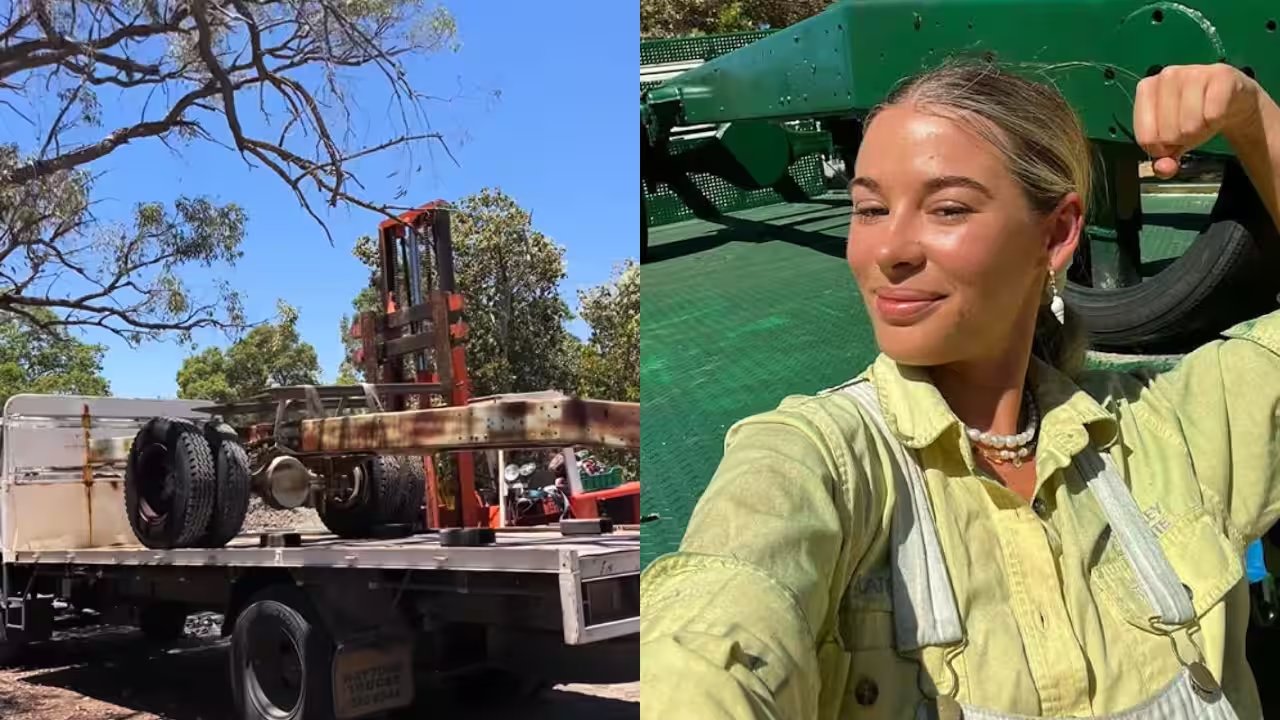
Forget the showroom floor. Kia Humberstone’s latest project isn’t about horsepower or infotainment screens; it’s about square footage per dollar. At 26, the Margaret River resident has bought a 1988 Isuzu truck and trailer for just A$5,000. The goal? Build a 13-metre mobile home for roughly A$40,000. It’s a stark contrast to the average Australian mortgage, which often stretches into the 40s or 50s. For Humberstone, this isn’t a lifestyle choice born of excess, but a direct response to unaffordable housing. She’s trading equity buildup for immediate ownership and the ability to move when she pleases.
The build is far from glamorous. After stripping the truck, Humberstone found extensive rust. The fix involved grinding away corrosion, patching holes with fibreglass, and sanding everything smooth before painting it a glossy green. It’s manual labor that no dealership offers. She’s handling the restoration herself to keep costs down, working three jobs to fund the estimated A$40,000 budget. This figure includes recycled materials, a smart move that keeps the project viable while reducing waste. The interior will feature a bedroom, bathroom, kitchen, and lounge room—compact, but functional.
This isn’t her first rodeo. During the pandemic, she built a tiny home on her parents’ property for A$12,000. She lived in it rent-free for two years and later sold it for A$35,000. That profit funded a two-year camping trip across Australia. Now, she’s applying that same DIY logic to a larger scale. The previous build proved the concept: you can live comfortably without a landlord or a bank holding your keys. Her current project aims to create a home base she can return to between trips, blending stability with the freedom of a nomadic existence.
Timing is delicate. As of February 2026, the home is still under construction. Humberstone hopes to move in with the essentials within two months, but the complete project could take another year. The A$40,000 is an estimate, not a guarantee. Costs can creep up, especially with older vehicles. Yet, the potential payoff is clear: a fully owned, mobile asset in a market where renting is becoming a permanent state for many young Australians. It’s a niche solution, but for those willing to do the work, it’s a viable alternative to the traditional housing trap.
For the broader market, Humberstone’s story highlights a growing trend: the rejection of conventional housing paths in favor of flexible, low-cost options. Isuzu trucks, particularly older models, are becoming popular bases for these builds due to their durability and low purchase price. The 1988 model year is a sweet spot—old enough to be affordable, robust enough to handle the weight of a full interior build. As housing affordability continues to squeeze younger buyers, expect to see more of these DIY mobile homes hitting the roads. They’re not for everyone, but they’re a realistic option for those ready to trade comfort for autonomy.