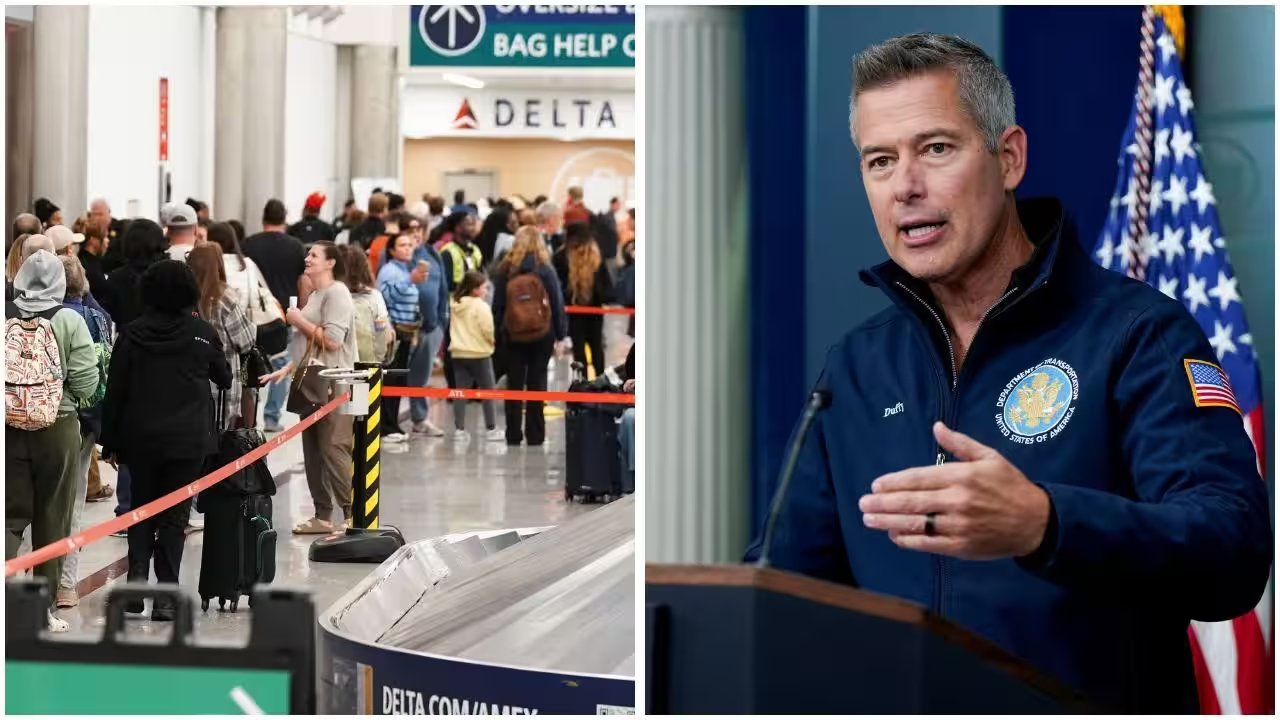
The Federal Aviation Administration lifted a nationwide ground stop at 8:15 pm Eastern Time on Friday, reopening American airspace after an air traffic communications and radar breakdown paralyzed operations across the country. Departures froze. For nearly five hours, the nation's aviation corridors ground to a halt, leaving travelers stranded across terminals from coast to coast while airlines scrambled to locate planes and personnel.
Systemic instability struck air traffic control centres and Terminal Radar Approach Control (TRACON) facilities nationwide at 3:36 pm Eastern Time. Data feeds flickered. Controllers suddenly confronted inconsistent radar tracking and degraded radio channels to cockpits, forcing aviation regulators to trigger emergency safety protocols. More than 3,500 commercial and private aircraft were cruising at altitude when the order landed. Most pilots guided their planes down safely at scheduled destinations, shrinking the airborne fleet to fewer than 400 within hours. Regulators carved out immediate exemptions for life-critical missions—clearing medical evacuation flights, law enforcement aircraft, and cargo carriers hauling emergency pharmaceuticals to operate through the disruption.
US Transportation Secretary Sean Duffy confronted the breakdown directly, laying blame squarely on decaying hardware that buckled under operational strain. The infrastructure is ancient. Decades-old computer systems still manage the continent's skies, leaving operations vulnerable to sudden overloads.
Does that mean every flight is going to fly right now? It's going to be slow. We're going to try to move as many of those as we can tonight if we have the capacity with crews to move those flights. If not, we're going to start tomorrow morning with our airline partners, moving those aircraft. But it's going to take us some time to unwind what's happened this afternoon.
Sean Duffy, US Transportation Secretary
Duffy pointed to recurring disruptions at major transit hubs in New York and Newark as proof that the agency's technical backbone has reached its breaking point. While the FAA avoided a total collapse of radar and TRACON capabilities, controllers could not risk moving metal without guaranteed tracking fidelity. And the vulnerabilities run deep. Technicians still source replacement components off internet auction websites to keep aging mainframes running. In more than 400 air traffic control facilities, personnel continue to rely on physical floppy disks to distribute weather updates and critical aeronautical data—a fragile setup the FAA plans to phase out by the end of 2028.
The operational meltdown ignited a rapid escalation on Capitol Hill. Late Friday, the Trump administration ratcheted up its federal aviation modernization request to $50 billion, turning the transit emergency into a high-stakes fiscal ultimatum.
Just hours earlier, Duffy and the White House had submitted a $30.1 billion package to overhaul aging runways, terminals, and communication lines. Friday's outage obliterated that baseline. "This is an emergency," Duffy insisted. "What's more important than having an air traffic control system that actually works?"
| Allocation Category | Budgetary Scope & Status | Focus Infrastructure |
|---|---|---|
| Emergency Modernisation Bid | $50.0 Billion (Updated Request) | System-wide air traffic overhaul |
| Initial White House Proposal | $30.1 Billion (Original Request) | ATC systems, towers, and terminals |
| ATC Modernisation & Automation | $10.1 Billion (Earmarked) | Cloud computing, controller workstations |
| FAA Control Towers | $2.0 Billion (Earmarked) | Replacement and facility upgrades |
The initial $30.1 billion framework set aside $10.1 billion specifically to build a common automation platform, migrate operations onto cloud computing, and upgrade controller workstations. Another $2 billion targeted crumbling physical towers, while $18 billion would finance terminal overhauls. Congress had already approved $12.5 billion in July 2025 to recruit air traffic controllers and accelerate modernization, alongside a separate $1.9 billion package to replace aging en route tracking hubs.
The Senate Commerce Committee emphasized that Friday's debacle highlighted the acute need to prioritize en route centers, which orchestrate traffic corridors between regional hubs. The FAA confirmed it has converted 68% of its legacy copper network to modern high-speed optical fiber, but progress has arrived too slowly to prevent systemic interruptions.
Reopening the sky did not clear the runways. Disruptions spilled outward across international borders within minutes of the federal order. Air Canada cancelled every inbound and outbound flight connecting to the United States for the rest of Friday night, warning that cascading equipment bottlenecks would ripple across routes serving the Caribbean and South America.
Airlines now turn their focus to Saturday morning operations, coordinating directly with federal dispatchers to reposition idle fleets and reassemble legal crew rotations across national hubs.
| Airport Terminals & Grounds |
| $18.0 Billion (Earmarked) |
| Modernisation of legacy passenger hubs |
| Prior Congressional Allotment | $12.5 Billion (Approved July 2025) | Controller hiring and tech upgrades |
| En Route Centres Modernisation | $1.9 Billion (Approved by Congress) | Inter-airport traffic control facilities |