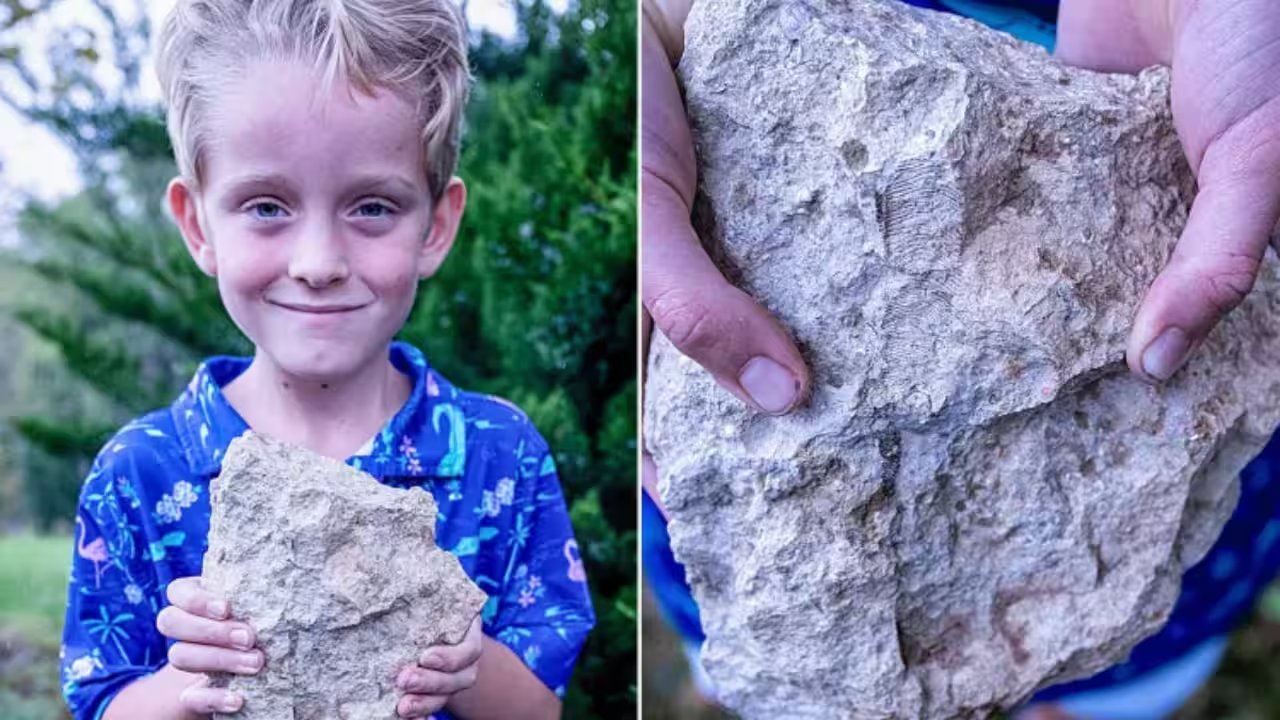
Leo Youngdahl turned over a large rock at Schramm Park State Recreation Area near Gretna and found the imprint of a conulariid, an ancient marine animal that has not been recorded in Nebraska for more than 55 years. The six-year-old, who lives in Eagle, was attending a 'Rafting and Rocks' event when he noticed an unusual pattern on the underside of the stone. He described it as resembling the scales on a garter snake's belly, a detail that caught the eye of Kelly Ekue, an outdoor education specialist at the nearby Schramm Education Centre.
Ekue, who has led programs at the outcrop for seven years, immediately recognized that the imprint did not match any of the six common fossil types found at the site. It was larger than typical specimens and appeared almost fish-like, a confusing trait for a formation known for marine invertebrates. Uncertain of its identity, Ekue emailed a photograph to a geologist, who forwarded it to other experts, including Shane Tucker, a palaeontologist at the University of Nebraska State Museum, and Bob Diffendal. They identified the specimen as a conulariid, identified by its distinctive herringbone-shaped pattern preserved in the limestone.
Conulariids are ancient marine creatures with jellyfish-like bodies shaped like upside-down pyramids, having lived in what is now Nebraska between approximately 200 million and 500 million years ago. Their fossils are exceptionally rare because the animals had soft bodies and thin skeletons that typically disintegrated before preservation could occur. The only other known conulariid fossils in the state were discovered more than 55 years ago in Louisville and Weeping Water, making Leo's find a significant gap-filler in the regional geological record.
For Leo, the discovery carried personal weight; it was his first complete fossil find, and he was told it was "rarer to find than a mammoth bone." He does not plan to take the rock home. Staff at Schramm Park intend to keep the fossil on display to educate visitors about the region's prehistoric marine environment, ensuring that the luck of a six-year-old's curiosity becomes a lasting lesson for the state.