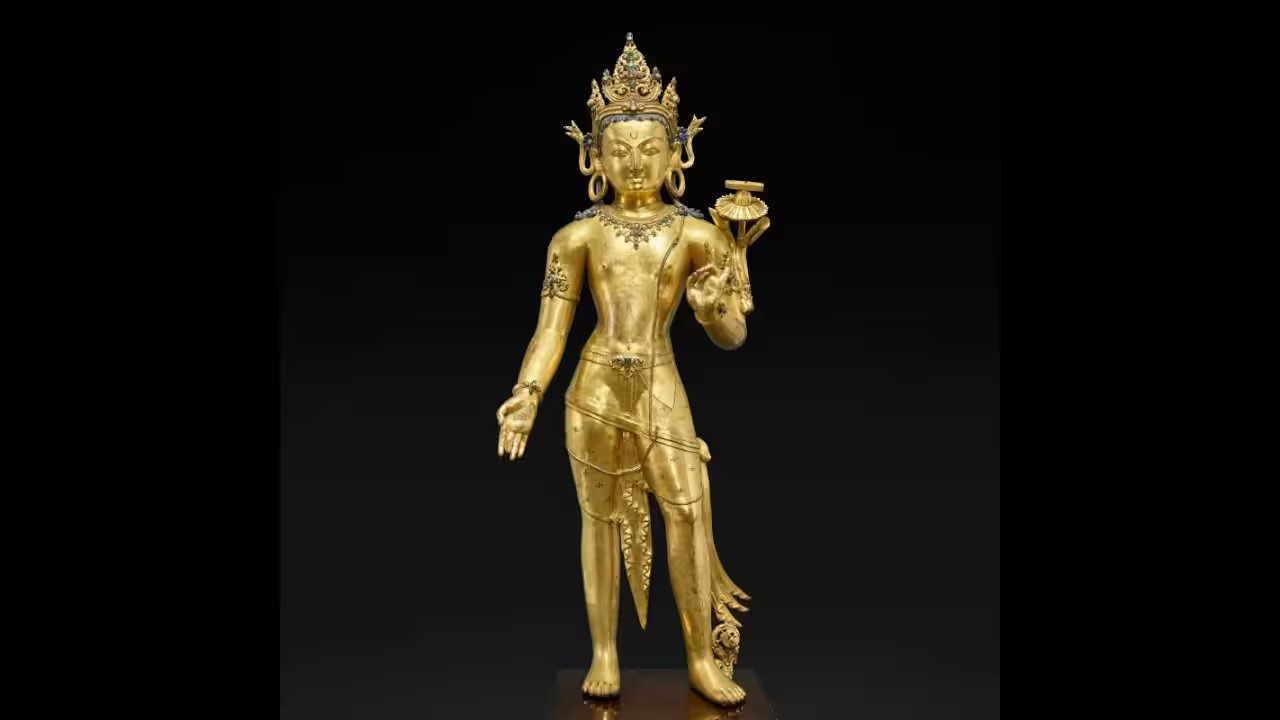
The 93-centimetre gilded copper figure of Manjushri, the Bodhisattva of Transcendent Wisdom, fetched approximately ₹166 crore at a 2026 auction. This transaction sets a new record for Himalayan gilt-bronze art, confirming the massive premium collectors will pay for exceptional Newar craftsmanship.
Created in the Kathmandu Valley during the 12th century, the sculpture stands nearly a metre tall. Its surface is covered in gold, a result of the mercury gilding technique mastered by Newar artisans between the 9th and 12th centuries. These craftsmen fused Indian classical ideals with distinct Nepalese proportions, creating deities that appeared both princely and spiritually potent.
The statue’s value lies in its rarity and historical reach. Few monumental bodhisattvas from this era survive in such condition. Comparable works reside in the British Museum, the Victoria and Albert Museum, and monasteries like the Potala Palace. The Newar tradition did not stay local; it traveled to Tibet during the Later Diffusion of Buddhism and later influenced the Yuan dynasty court in China through artists like Anige.
Art historians note the sculpture’s ‘tribhanga’ pose—three bends in the body—which creates a sense of ethereal movement. This specific aesthetic, combined with the intricate detailing of the Prajnaparamita Sutra lotus at the shoulder, distinguishes it from lesser examples. The sale underscores how a single, well-preserved object can anchor the valuation of an entire artistic lineage.
The market for Himalayan Buddhist art continues to tighten, with institutions and private collectors competing for the few remaining high-quality pieces. No further details on the buyer were disclosed in the initial reports, but the record price signals a sustained, high-level demand for pre-modern South Asian metalwork.