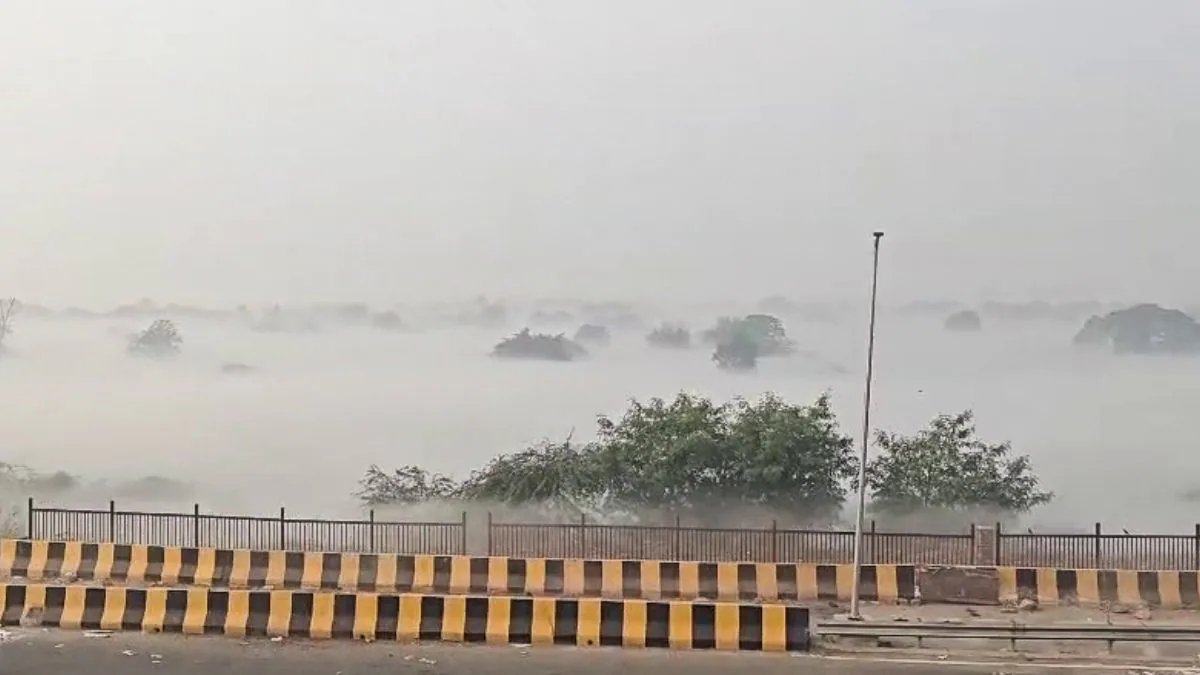
LONI — Just thirty kilometres northeast of central Delhi, the border town of Loni woke Monday to suffocating grey haze. Air quality monitors recorded annual average PM2.5 concentrations of 112.5 micrograms per cubic metre. That figure dwarfs the World Health Organisation's recommended annual ceiling of five micrograms by more than twenty-two times. The town now ranks among the twenty most polluted urban settlements on earth, according to annual global air quality datasets compiled by Swiss monitoring group IQAir.
Post-Diwali emissions tipped the scales into immediate crisis. Delhi's official air quality index touched 483 at 8:10 a.m. on Monday, but sensors in adjacent eastern pockets recorded spikes breaching the 1,000 threshold. The air was thick, acrid, and unbreathable.
Yet festive fireworks merely ignited an existing powder keg. Loni sits wedged between Delhi, Ghaziabad, and Baghpat, enduring an unrelenting combination of informal metallurgy, heavy freight corridors, and unpaved terrain. Small-scale manufacturing units operate out of dense residential colonies, running clandestine furnaces that melt scrap metals and belch chemical fumes into narrow alleyways. Around-the-clock transit compounds the crisis. Freight haulers bypassing Delhi roar through the newly constructed Eastern Expressway and the Delhi-Dehradun Highway corridor, churning up fine dust from broken arterial roads. Uncollected domestic and commercial waste burns openly along roadsides, releasing toxic dioxins directly into the breathing zone.
Nature amplifies the man-made damage. Perched directly along the low-lying floodplains of the Yamuna River, Loni records surface temperatures noticeably cooler than the concrete core of Delhi. The physics are unforgiving. As ground-level heat drops, the planetary mixing height plunges with it. Dense moisture locks heavy particulates near the earth, creating a low-hanging atmospheric lid that prevents dispersal. Farm fires across nearby western Uttar Pradesh fields deliver fresh waves of agricultural smoke, while hundreds of traditional brick kilns across neighbouring Baghpat pump soot across the perimeter. Atmospheric ammonia, sulfur dioxide, and nitrogen oxides react directly with suspended mineral dust, forming lethal secondary aerosol compounds.
| Air Quality Parameter | Recorded Value / Status | WHO Annual Baseline Threshold | Exceedance Multiplier |
|---|---|---|---|
| Loni 12-Month PM2.5 Average | 112.5 µg/m³ | 5.0 µg/m³ | 22.5x Above Limit |
| Delhi Peak Morning AQI | 483 (Severe) | 0–50 (Good) | Critical Category |
| Global Toxicity Standing | Top 20 Most Polluted Worldwide | Safe Air Standard | Catastrophic Risk |
Physicians warn that sustained exposure to this chemical cocktail drives catastrophic long-term morbidity. Fine particulate matter under 2.5 microns breaches the pulmonary blood-air barrier, entering the bloodstream to trigger irreversible arterial damage, chronic cardiovascular trauma, and malignant lung cancers.
With winter inversions settling permanently across northern India through January, regional enforcement authorities face an immediate test. Without aggressive shutdowns of unregulated smelting units, mandatory dust suppression on highway construction sites, and an ironclad clampdown on municipal waste fires, Loni's residents remain trapped in one of the most toxic atmospheric cauldrons on the planet.