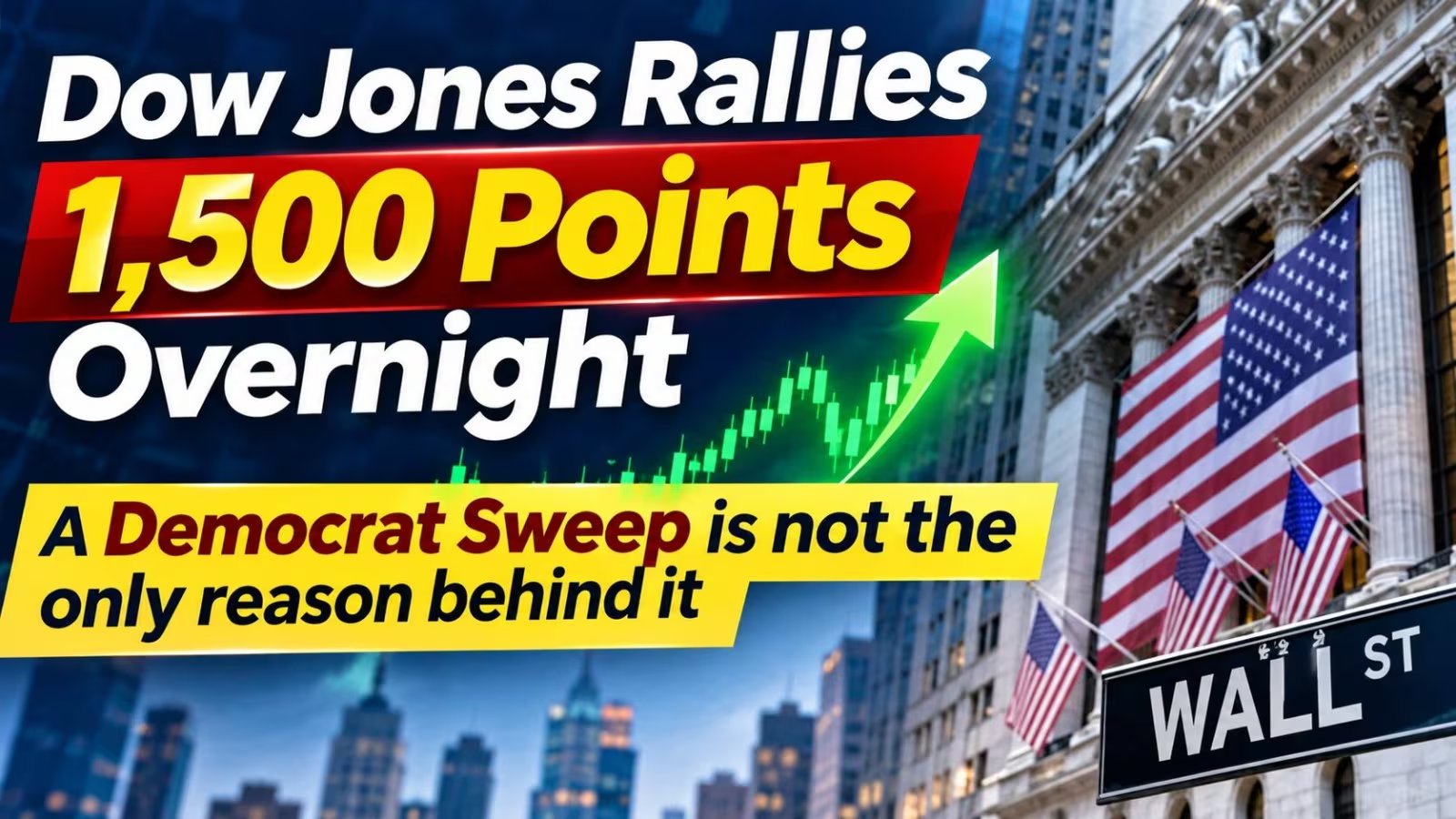
Wall Street tore through overnight panic to engineer a ferocious broad-market turnaround. The Dow Jones Industrial Average leaped over 1,500 points—a 3% advance—to close above 53,000 for the first time since September 8. It marked the blue-chip index's steepest single-day climb since April 9 of last year, when US President Donald Trump ordered a pause on reciprocal tariffs.
Panic had ruled the pre-market tape. Dow futures had slumped 450 points as early returns showed Democrats securing control of both the House of Representatives and the Senate. Nasdaq futures suffered an even worse dislocation, plunging 650 points before institutional desks stepped in to buy the dip. By the closing bell, the S&P 500 had gained 1.5% while the tech-heavy Nasdaq Composite rose 1.6%.
The sudden rally surprised traders braced for protracted gridlock. The catalyst was not merely the election outcome itself, but Donald Trump's unexpected willingness to accept the congressional results and partner with the incoming Democratic majority. Trump had previously hinted at contesting an unfavorable vote count, unsettling capital markets. His change in tone instantly wiped away the immediate threat of a contested transfer of legislative power.
Deutsche Bank Head of FX Research George Saravelos noted that institutional desks took deep comfort in Trump's concession, emphasizing that the move places a firm check on extreme policy swings while driving down sovereign risk premiums across asset classes.
Yet professional money managers remain guarded. A survey of 30 fund managers, strategists, and economists revealed that 63% view prolonged uncertainty from lingering legal challenges as a direct market risk, up from 61% in September. Another 14% categorized that threat as "significant," double the 7% recorded two months prior. The market could finish the year on strong footing if Washington delivers legislative cooperation, but portfolio managers continue to treat Trump as an unpredictable variable capable of upending policy within minutes.
A collapse in the energy complex supplied the rally's second major engine. Both Brent crude and West Texas Intermediate tumbled 8%, breaking cleanly below $100 a barrel as political leaders linked GOP losses directly to the fallout from the Iran conflict. Investors bet the electoral setback will force the White House to negotiate a diplomatic deal with Tehran, though analysts caution that the risk of regional military escalation remains elevated.
Trading desks now face a dual test of tech valuations and macroeconomic policy. In extended trading, semiconductor heavyweight Qualcomm slid 7% after delivering disappointing financial results. Market focus turns immediately to the morning session, when the Labor Department releases initial jobless claims figures alongside a scheduled address from Cleveland Federal Reserve Chief Beth Hammack.